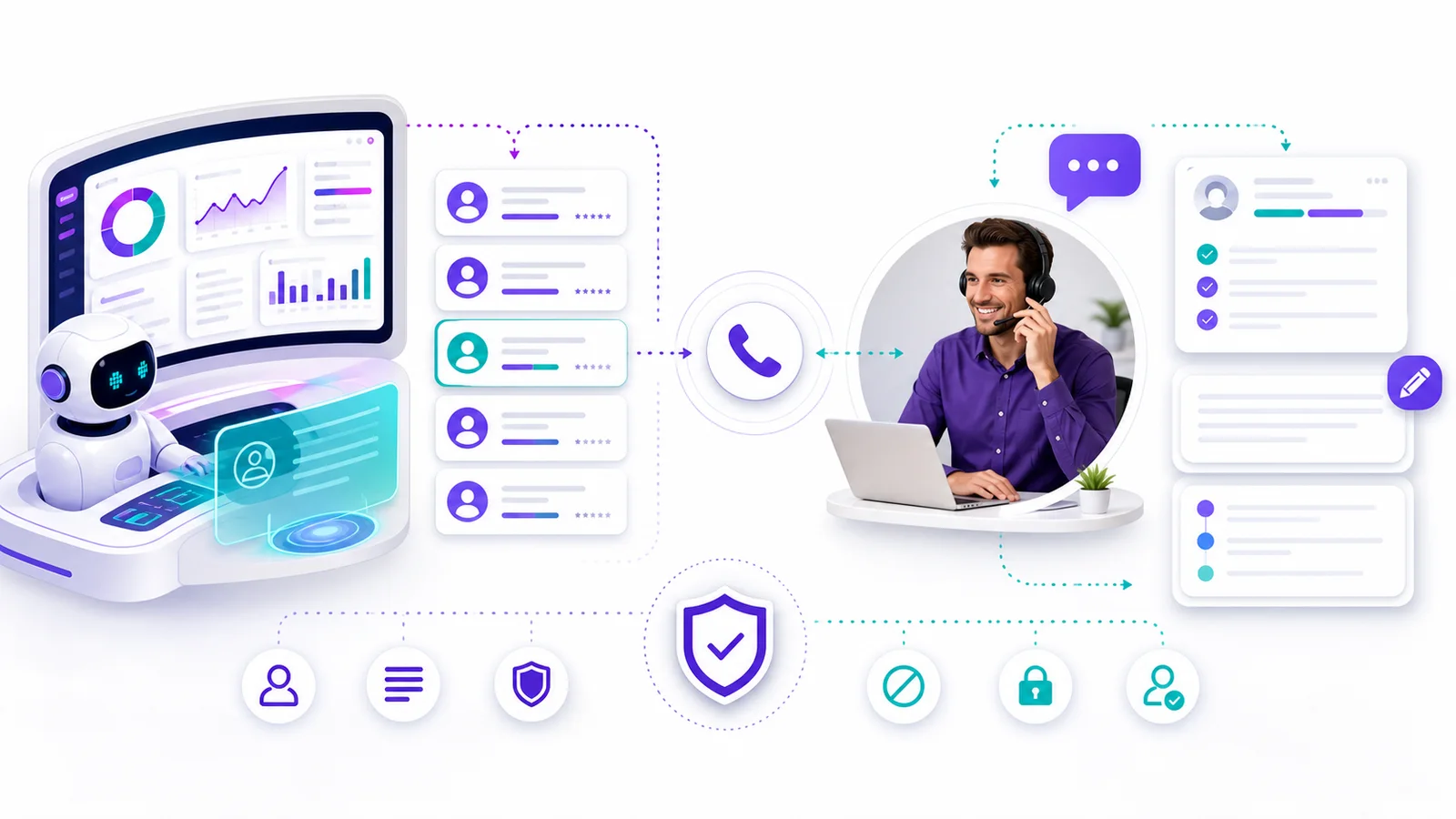
AI cold calling uses artificial intelligence to prepare, prioritize, script, place, analyze, or sometimes conduct outbound sales calls. The practical version is not a robot dialing every possible buyer. It is an outbound system that uses AI to choose the right accounts, research the contact, prepare a relevant reason to call, guide the rep during the conversation, and capture follow-up. In some cases, AI voice agents can handle simple phone conversations, but regulated outbound calling needs consent, disclosure, opt-out handling, and human oversight.
For most B2B teams, the best use of ai cold calling is not replacing every SDR. It is giving human sellers better call targets, better context, better follow-up, and stricter guardrails.
Key Takeaways
– AI cold calling can mean AI-assisted human calling, AI voice agents, or AI around the call workflow.
– The highest-value use case is outbound prioritization: sourcing, enrichment, scoring, research, messaging, and follow-up before a human rep calls.
– Fully automated AI voice calls carry higher compliance and brand risk, especially in the United States.
– Human SDRs still matter for trust, permission, complex discovery, negotiation, sensitive objections, and strategic accounts.
– GrowthEffect’s outbound fit is Vera: she builds the outbound pipeline system around the call, while humans own live selling moments that require judgment.
What Is AI Cold Calling?
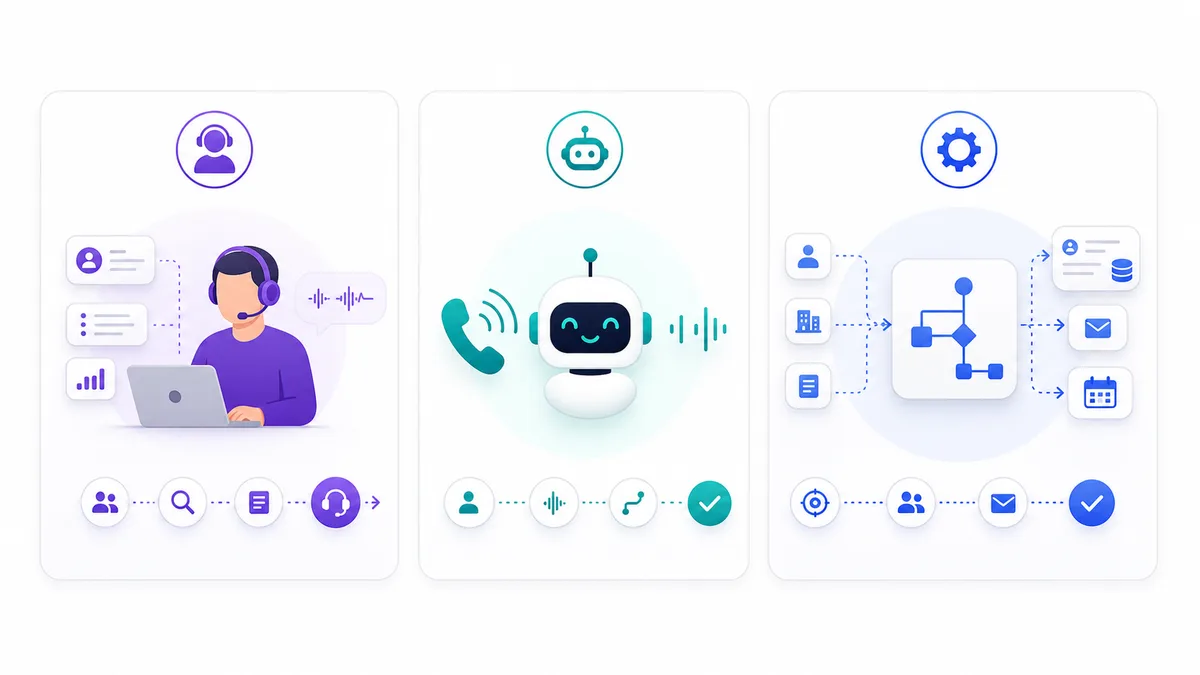
AI cold calling is the use of AI in outbound phone-based prospecting. The phrase is often used loosely, so it helps to separate three different operating models.
| Model | What AI does | Best fit | Main risk |
|---|---|---|---|
| AI-assisted human calling | Researches accounts, prioritizes leads, drafts talk tracks, summarizes calls, writes follow-ups | Most B2B outbound teams | Weak results if targeting is still poor |
| AI voice agent calling | Speaks with prospects directly using synthetic or generated voice | Narrow, consented, repeatable conversations | Compliance, trust, disclosure, brand damage |
| AI workflow around calling | Sources, enriches, scores, sequences, routes replies, triggers human calls | Teams building a scalable outbound engine | Requires clean ICP and handoff rules |
The third model is where most serious B2B teams should start.
Cold calls fail less because a rep cannot speak and more because the system before the call is weak. The list is too broad. The timing is random. The rep has no reason for the interruption. The follow-up is generic. The CRM notes are missing. AI can fix those upstream and downstream problems before you automate the voice itself.
That is the GrowthEffect view of outbound. Vera, GrowthEffect’s outbound AI sales representative, is designed around the pipeline work that makes a call worth placing: ICP-based sourcing, enrichment, scoring, research, positioning, personalized outreach, and follow-up. The live phone moment can still belong to a human SDR or AE when the account is valuable, sensitive, or complex.
How AI Cold Calling Works
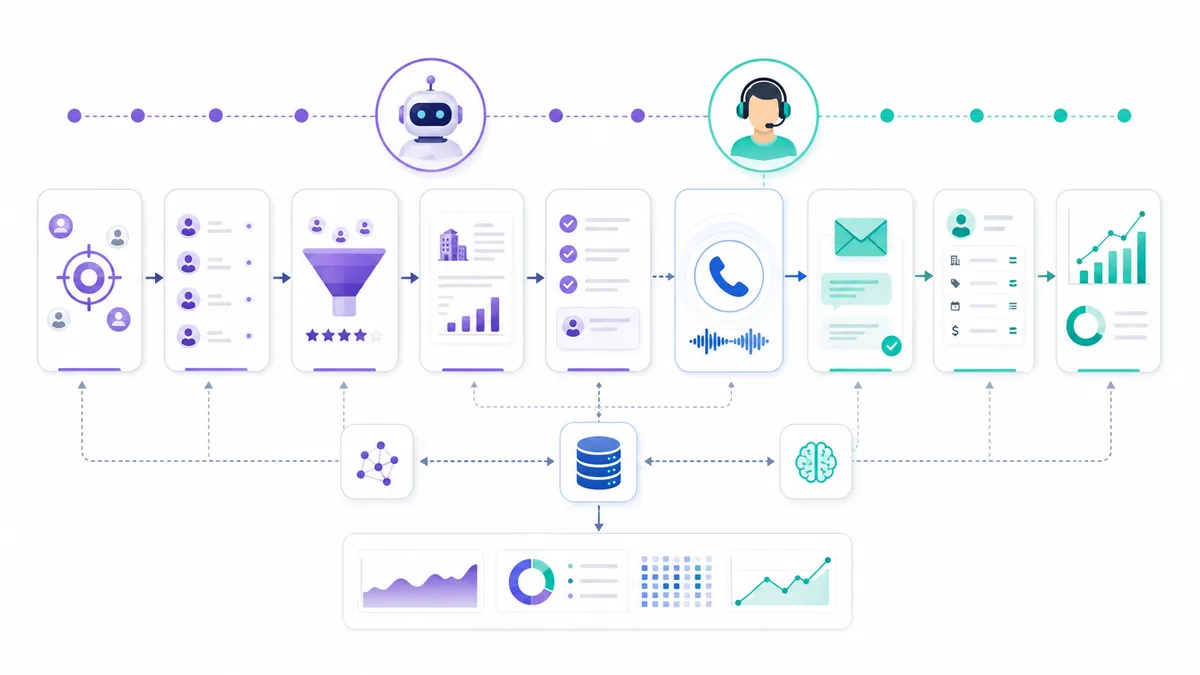
A production-grade AI cold calling workflow has more parts than “AI makes a call.”
It usually follows this path:
- Define the ICP and exclusion rules.
- Source accounts and contacts.
- Enrich company, role, location, email, phone, and account context.
- Score fit, intent, timing, and risk.
- Decide whether the next touch should be email, LinkedIn, phone, or human review.
- Prepare the call reason, opening, objection paths, and follow-up.
- Place the call through a human rep or approved AI voice workflow.
- Capture the outcome, update the CRM, and trigger the next step.
Modern voice technology can support low-latency spoken AI agents. OpenAI’s voice agent documentation describes architectures where agents can run speech-to-speech sessions or chained voice pipelines for spoken interactions, with tools, handoffs, and guardrails attached to the agent workflow. Twilio also describes conversational AI components for voice interactions, including natural turn-taking, barge-in, routing, escalation, and conversation intelligence.
That technical capability is real. The business question is different:
“text Should this specific prospect receive an AI-handled cold call, or should AI prepare a better human sales interaction? “
For outbound B2B, that question matters because the phone is an interruption channel. The more senior the buyer, the more the experience needs to feel relevant, transparent, and respectful.
The Compliance Reality: AI Voice Is Not a Free Pass
AI cold calling is not just a sales automation decision. It is also a consent, privacy, and brand-risk decision.
In the United States, the FCC’s February 2024 declaratory ruling confirmed that TCPA restrictions on “artificial or prerecorded voice” apply to current AI technologies that generate human voices. The ruling states that calls using those technologies fall under TCPA rules and require prior express consent unless an emergency purpose or exemption applies. For telemarketing calls, the FCC also points to prior express written consent requirements.
The FTC’s Telemarketing Sales Rule and Do Not Call guidance matter too. The FTC says the TSR includes Do Not Call rules and provisions banning nearly all telemarketing robocalls to consumers, and its business guidance notes that companies must maintain records for required consent and agreements. The National Do Not Call Registry also remains a major operating constraint for sales calls to consumer numbers.
This article is not legal advice. The practical sales takeaway is simple:
- Do not treat “AI voice” as a loophole.
- Do not run broad AI voice blasts to scraped numbers.
- Do not hide that AI is involved when disclosure is required or expected.
- Do not outsource compliance judgment to the model.
- Do maintain consent, opt-out, suppression, and call-record policies.
- Do involve counsel before automated voice, prerecorded voice, autodialing, or consumer-number campaigns.
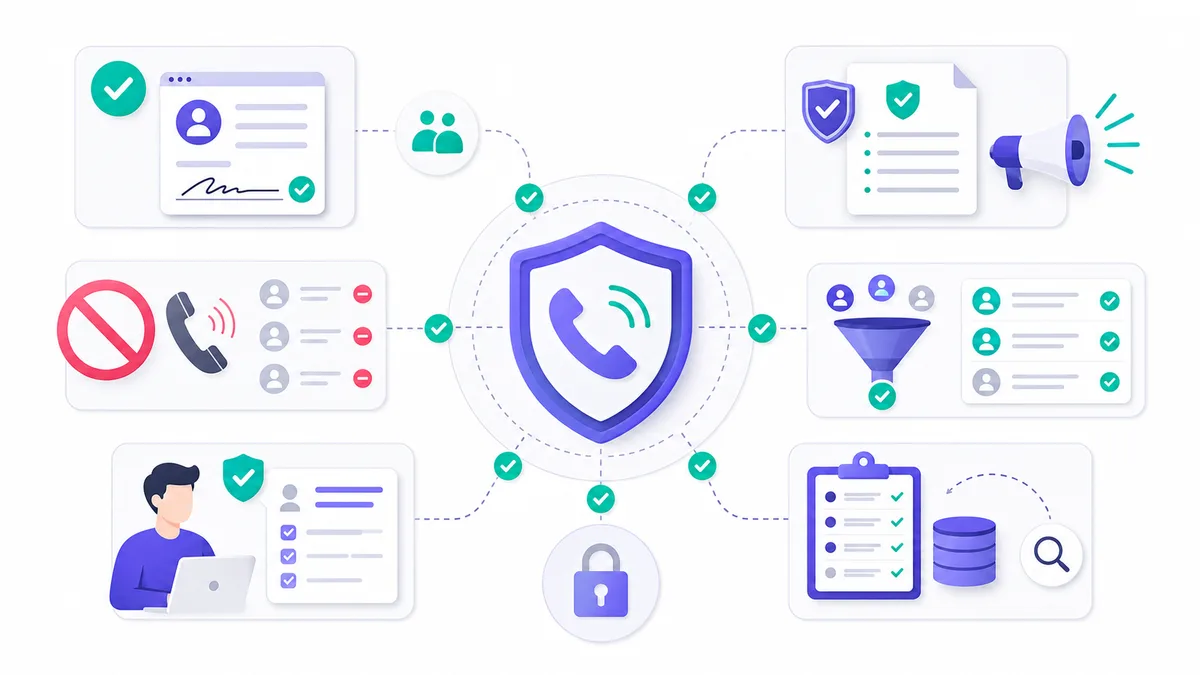
For many B2B teams, this makes a human-in-the-loop model more practical than fully autonomous AI cold calling. AI can decide who is worth calling, why now, what context matters, and what follow-up should happen. Humans can handle the live call when legal, commercial, or brand risk is high.
When AI Cold Calling Makes Sense
AI cold calling works best when the call is not a random first touch.
Use it when the AI has enough context to make the interruption useful.
1. Warm outbound from a clear signal
The strongest use case is signal-based outbound.
Examples:
- A target account hired a new VP Sales.
- A company is expanding into a market you serve.
- A prospect engaged with your content.
- A dormant CRM lead became active again.
- A previous opportunity has a new trigger.
Vera fits this motion because the call should start before the call. The system needs to find the signal, match it to the ICP, research the account, score fit, and create a relevant angle. A human can then call with a reason that is specific enough to earn the interruption.
2. Human-assisted calling for high-fit accounts
AI is useful when reps are calling fewer, better accounts.
Instead of asking SDRs to dial through weak lists, AI can prepare account briefs, recommend call priority, draft openers, and write follow-up emails. Salesforce’s State of Sales research says prospecting remains a pain point for sales teams and that sales teams with AI agents use them for prospecting. Gartner also frames AI in sales around action-level support: understanding sales workflows, linking data signals to sales behavior, recommending next best actions, and automating labor-intensive work.
That is the right frame. AI should reduce the work around the call so human reps can spend more energy on the conversation.
3. Consented callbacks and reactivation
AI voice or AI-assisted calling is much safer when there is an existing relationship, consent, or explicit callback request.
For example:
- A lead asked to be contacted.
- A webinar attendee requested follow-up.
- A customer wants renewal or expansion information.
- A dormant opportunity previously engaged and can be contacted under your rules.
This is where teams should be careful with language. If the lead came through a form, chat, WhatsApp message, or inbound channel, that is not really cold calling. It is inbound follow-up. Alim, GrowthEffect’s inbound AI sales representative, is the better product concept for inbound response and qualification. Vera is the outbound system for creating new conversations.
4. Post-call follow-up and CRM hygiene
AI does not need to speak on the call to create value.
Some of the highest-leverage use cases happen after the call:
- summarize the conversation
- extract objections and buying criteria
- update CRM fields
- trigger the next follow-up
- draft a recap email
- route a qualified lead to an AE
- flag “do not contact” or low-fit accounts
This is where AI protects consistency. The rep can focus on the live conversation while the system keeps the process clean.
When AI Cold Calling Is a Bad Idea
AI cold calling is a bad fit when automation increases volume faster than relevance, trust, or control.
Avoid it in these situations:
| Situation | Why it is risky | Better approach |
|---|---|---|
| Scraped lists with weak ICP | More calls only creates more annoyance | Tighten sourcing and scoring first |
| Consumer-number campaigns | TCPA, TSR, DNC, state law, consent, and opt-out risk | Get legal review and documented consent |
| Strategic enterprise accounts | Brand damage from awkward automation is expensive | Human SDR or founder-led call with AI prep |
| Complex technical buying committees | AI voice may not handle nuance or politics | AI research plus human discovery |
| Regulated or sensitive claims | Misstatements create legal and trust risk | Approved talk tracks and human escalation |
| No CRM discipline | AI creates activity without learning | Fix data capture and follow-up rules first |
The failure mode is predictable. A team buys an AI calling tool, loads a broad list, launches volume, gets low-quality conversations, triggers complaints, and concludes that “AI cold calling does not work.”
The real issue is usually not the voice model. It is bad outbound design.
The Vera-Led Operating Model for AI Cold Calling
The safest outbound model is not AI replacing the whole SDR. It is AI owning the repeatable pipeline work and humans owning the moments where judgment matters.
For GrowthEffect, that means Vera leads the outbound system before and after the call.
| Outbound step | Vera’s role | Human SDR or AE role |
|---|---|---|
| ICP definition | Applies target criteria and filters bad-fit accounts | Approves market, personas, and exclusions |
| Sourcing | Finds companies and leads by role, industry, size, location, and signal | Reviews strategic account lists |
| Enrichment | Adds company, role, and contact context | Confirms sensitive or high-value records |
| Scoring | Prioritizes fit and outreach readiness | Overrides scoring for named accounts |
| Research | Builds account context and relevance | Turns context into live judgment |
| Positioning | Suggests the outbound angle | Chooses the commercial point of view |
| Pre-call prep | Drafts opener, talk track, objections, and follow-up | Makes the call when human trust is needed |
| Follow-up | Writes email or LinkedIn next step and logs context | Handles replies, negotiation, and closing |
| Learning | Tracks what gets responses and what should stop | Reviews quality and changes strategy |
This keeps AI where it is strongest: consistency, research, pattern detection, personalization drafts, and workflow execution.
It keeps humans where they are strongest: permission, judgment, trust, nuance, negotiation, and relationship depth.
If a company wants to evaluate GrowthEffect’s outbound AI sales representative, the right question is not “Can AI make phone calls?” The better question is:
“text Can Vera make every outbound call, email, and LinkedIn touch more targeted, more relevant, better timed, and easier for humans to convert? “
That is a more valuable problem than automating a bad dial list.
Where Human SDRs Still Matter
AI changes SDR work. It does not erase every part of it.
Human SDRs still matter in five areas.
1. Earning permission
A cold call is an interruption. A human can sense resistance, slow down, ask permission, and exit cleanly.
AI can be scripted to do this, but human judgment still carries more trust in complex B2B sales. This is especially true when the buyer is senior, skeptical, or already overloaded.
2. Handling ambiguity
Prospects do not always follow neat scripts.
They ask half-formed questions. They reveal politics inside the buying committee. They mention a budget issue indirectly. They test whether the seller understands the business.
AI can help the rep prepare for these patterns, but a human should own the conversation when ambiguity matters.
3. Protecting brand voice
Bad cold calls damage trust quickly.
An awkward AI voice, wrong pronunciation, irrelevant opener, or fake familiarity can make the company look careless. Human SDRs protect tone, timing, and judgment on accounts where reputation matters.
4. Qualifying beyond surface answers
AI can ask qualification questions. Humans can read what is behind the answer.
For example, a prospect may say “budget is not the issue,” while clearly signaling internal risk, timing pressure, or political resistance. That is not just data capture. It is sales judgment.
5. Creating the handoff to closing
The best SDRs do more than book meetings. They create context for the AE.
They explain why the account matters, what the buyer cares about, what was said on the call, where risk sits, and how the closer should open the next conversation. AI can summarize and standardize that handoff, but humans still improve it for complex deals.
This is why GrowthEffect should be understood as human plus AI. The AI sales team handles repetitive first-touch work. Human sellers handle closing, relationships, negotiation, and strategic judgment.
AI Cold Calling vs Cold Email vs LinkedIn Outreach
AI cold calling should not be evaluated in isolation. It is one channel inside outbound.
| Channel | Strength | Weakness | Best AI role |
|---|---|---|---|
| Phone | Fast feedback, human nuance, urgency | Interruptive, compliance-sensitive, hard to scale well | Prioritize, prep, summarize, route |
| Cold email | Scalable, asynchronous, easy to test | Crowded inboxes, deliverability risk | Research, personalization, sequencing |
| Context-rich, relationship-oriented | Manual limits, slower velocity | Profile research, message drafts, follow-up logic | |
| AI voice | Always-on, repeatable, consistent | Trust and compliance risk | Narrow, consented, scripted conversations |
For outbound, the better question is not “Which channel should AI replace?” It is “Which channel should happen next for this account?”
Vera’s outbound role is strongest when she helps answer that question. Some accounts should receive a personalized email first. Some should get a LinkedIn touch. Some should be reviewed by a human before anyone calls. Some should be excluded entirely.
That last group matters. Good AI outbound is not just more outreach. It is more intelligent suppression.
A Practical Decision Framework
Use this framework before buying or deploying an AI cold calling tool.
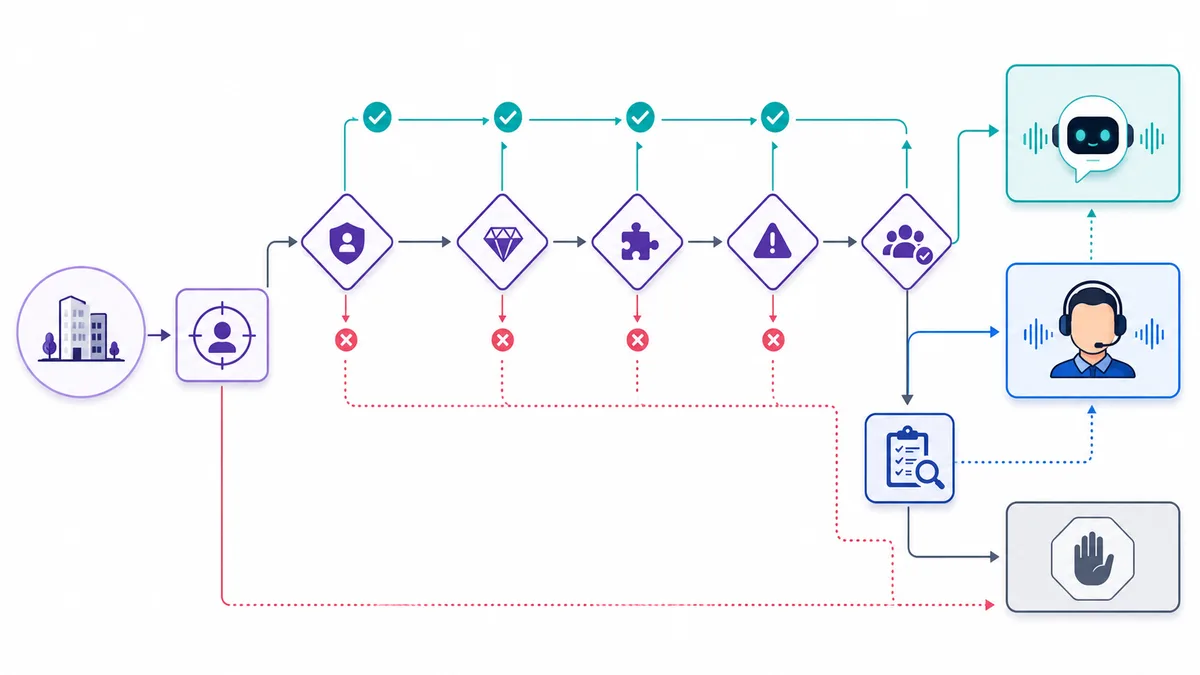
Use AI to assist the call when:
- Your ICP is clear.
- The contact data is reliable.
- The account has a relevant trigger.
- The prospect is commercially meaningful.
- Your reps need better prep, not more random dials.
- You can capture outcomes and improve the workflow.
Use an AI voice agent only when:
- Consent, disclosure, opt-out, and recording rules are understood.
- The conversation is narrow and repeatable.
- The script has approved boundaries.
- A human escalation path exists.
- The brand risk is acceptable.
- The system logs transcripts, outcomes, and suppression signals.
Keep the call human when:
- The account is strategic.
- The prospect is senior.
- The offer is complex.
- The conversation may involve legal, pricing, procurement, or sensitive claims.
- The rep needs to negotiate or build trust.
- The cost of a bad interaction is higher than the labor saved.
This is also the right buying lens for GrowthEffect. If your outbound problem is inconsistent prospecting, weak research, generic messaging, and poor follow-up, Vera is the relevant digital worker. If your problem is inbound leads waiting too long after a form or chat request, Alim is the relevant worker. Do not mix the two motions just because both use AI.
Metrics That Matter
AI cold calling should be measured by quality and workflow impact, not call volume alone.
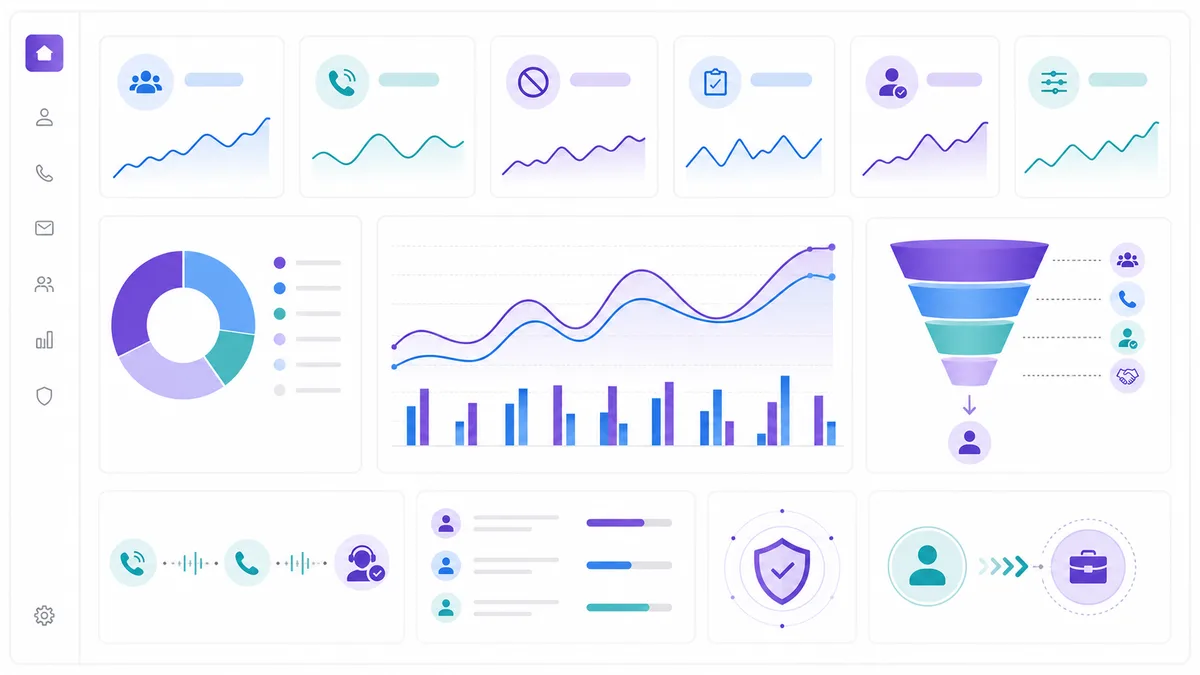
Track these metrics:
- percent of contacts excluded before outreach
- call-ready leads created
- connect rate by source and segment
- meetings booked from AI-assisted calls
- positive reply or callback rate after AI-prepared touches
- opt-out and complaint rate
- human override rate
- call summary accuracy
- CRM field completion
- conversion from first conversation to qualified opportunity
- AE acceptance rate after handoff
Do not celebrate “AI made 5,000 calls” without looking at complaints, fit, conversion, and downstream pipeline quality.
The Salesforce State of Sales report also reinforces the capacity problem: sales reps report heavy prospecting workload, and sales teams are adopting AI agents across the sales cycle. McKinsey’s State of AI research shows organizations often use generative AI in marketing and sales, among other high-value functions. Adoption is not the hard part anymore. Operational discipline is.
Final Recommendation
AI cold calling is useful when it improves the outbound system, not when it simply automates interruption.
Start with AI-assisted outbound. Let AI source, enrich, score, research, draft, prioritize, summarize, and follow up. Keep humans on the live call when the account is important, the conversation is complex, or the legal and brand risk is high. Use fully automated AI voice only in narrow, consented, well-governed workflows.
For GrowthEffect buyers, the practical path is Vera-led outbound:
“text Vera builds the outbound pipeline. Humans handle the moments that require trust. The CRM captures the learning. The next campaign gets sharper. “
That is the version of ai cold calling worth building: fewer random dials, more relevant conversations, cleaner handoffs, and a sales team that spends more time selling.
See how Vera builds outbound pipeline, or book a GrowthEffect demo to map where AI should assist your outbound motion and where humans should stay in control.
FAQ
What is AI cold calling?
AI cold calling is the use of AI to support or conduct outbound sales calls. It can include lead scoring, call prioritization, account research, talk-track generation, live coaching, call summaries, follow-up drafts, or AI voice agents that speak with prospects directly.
Is AI cold calling legal?
It depends on the jurisdiction, call type, number type, consent status, disclosure rules, opt-out handling, and whether the call uses autodialing, artificial voice, prerecorded voice, or telemarketing content. In the United States, the FCC has confirmed that TCPA restrictions on artificial or prerecorded voice apply to AI-generated human voices. Get legal review before using automated AI voice for outbound calling.
Can AI cold calling replace SDRs?
AI can replace or reduce repetitive SDR tasks, but it should not replace every SDR responsibility. AI is strong at sourcing, enrichment, research, scoring, prep, summaries, and follow-up. Humans still matter for trust, permission, complex discovery, negotiation, and strategic account handling.
What is the safest way to use AI for cold calling?
The safest starting point is AI-assisted human calling. Use AI to identify the right accounts, prepare the rep, summarize calls, write follow-up, and update CRM records. Move to AI voice only for narrow, consented, well-governed workflows with clear escalation and opt-out handling.
How does Vera relate to AI cold calling?
Vera is GrowthEffect’s outbound AI sales representative. In an AI cold calling workflow, Vera should be understood as the outbound engine around the call: sourcing, enrichment, scoring, research, positioning, personalization, follow-up, and learning. Human SDRs or AEs should still own live calls when judgment, trust, or compliance risk is high.
Should outbound teams use phone, email, or LinkedIn first?
It depends on the account, signal, buyer role, relationship, and compliance constraints. AI should help choose the next best channel. Some prospects should get a researched email first. Some should receive a LinkedIn touch. Some high-fit accounts deserve a human call. Some records should be suppressed.
Information Gain QA
What does this article add that a generic SERP summary does not?
This article adds a GrowthEffect-specific operating model for AI cold calling: Vera owns the repeatable outbound system around the call, while human SDRs and AEs own live selling moments that require trust, judgment, and compliance awareness. It also separates three meanings of AI cold calling, provides a channel decision framework, and gives explicit bad-fit criteria so buyers do not confuse “AI can talk on the phone” with “AI should cold-call every prospect.”
What should be checked before publishing?
- Confirm current GrowthEffect public product copy for Vera and Alim.
- Confirm legal language with counsel if using this article in a US paid acquisition campaign.
- Replace planned image filenames with final generated assets only after image production.
- Verify all external source URLs still support the cited claims.
Source List
- FCC Declaratory Ruling FCC 24-17 on AI-generated voices and TCPA
- FCC Notice of Proposed Rulemaking FCC 24-84 on AI-generated calls and disclosure
- FTC: Complying with the Telemarketing Sales Rule
- FTC: New protections against AI-enabled scam calls
- FTC: The Do Not Call Registry
- OpenAI API docs: Voice agents
- Twilio: Conversational AI
- Gartner: The role of AI in sales
- Gartner: B2B buyers and human interaction in AI-era sales
- Salesforce: State of Sales, 7th Edition
- McKinsey: The State of AI, 2025
Leave a Reply