
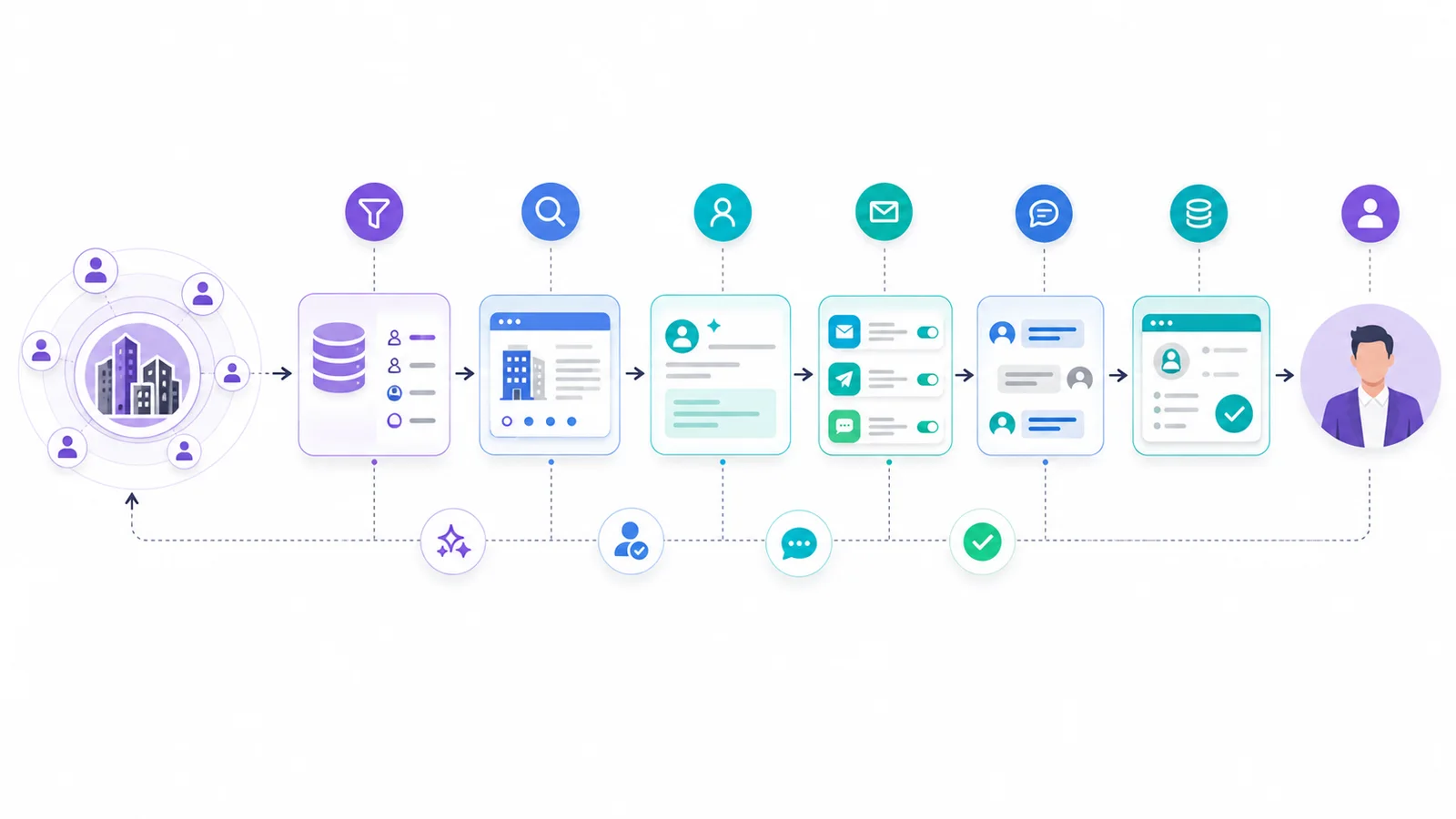
AI outbound sales is the use of AI agents to run the repeatable work behind outbound pipeline: sourcing accounts, enriching prospects, researching fit, writing personalized outreach, sequencing follow-ups, classifying replies, updating the CRM, and handing qualified conversations to humans. The point is not to let AI “sell for you” in isolation. The point is to remove the slow manual work that keeps sales teams from consistently starting the right conversations.
For B2B teams, outbound usually breaks in the same places: weak lists, shallow personalization, missed follow-ups, messy CRM fields, and replies that sit too long before a human reacts. A good AI outbound sales system treats those as one operating workflow, not as disconnected tools.
Key Takeaways
– AI outbound sales works when the agent owns a defined pipeline job, not a vague “send more emails” task.
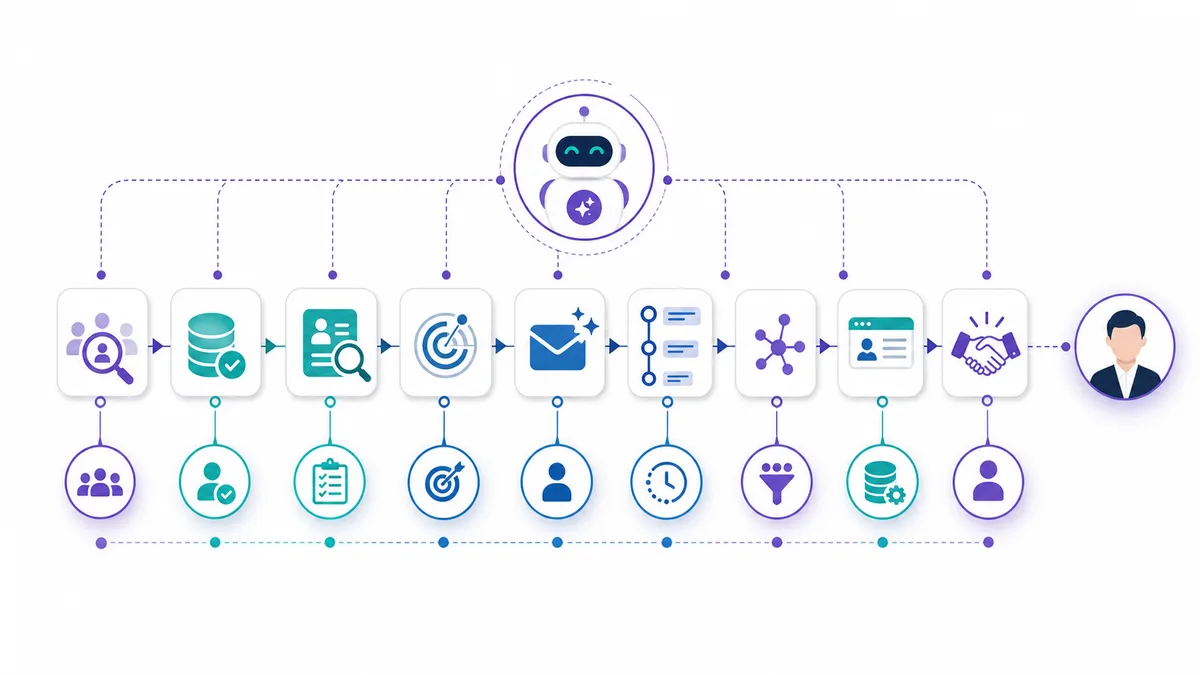
– The useful workflow is source, enrich, research, score, personalize, sequence, classify replies, update CRM, and hand off.
– Vera is GrowthEffect’s outbound digital sales employee for sourcing, enrichment, research, scoring, personalized outreach, follow-up, and pipeline generation.
– Data quality is not a side issue. Salesforce’s 2026 sales research says 74% of sales professionals are focusing on data cleansing to get more value from AI.
– Human review still matters for strategic accounts, pricing questions, unclear replies, opt-outs, sensitive claims, and late-stage sales judgment.
What Is AI Outbound Sales?
AI outbound sales is an agent-led sales development workflow where AI handles the front-end work needed to create qualified outbound conversations. That includes deciding which accounts to pursue, finding the right contacts, enriching missing fields, researching the account, writing relevant outreach, running follow-up steps, and routing replies to the right human.
It is different from a normal sequence tool. A sequence tool mostly sends predefined messages on a schedule. An AI outbound sales agent should make decisions before and after the send: whether a prospect fits, what angle is relevant, whether the message is safe to send, how to classify the reply, what should happen in the CRM, and when a human should take over.
That distinction matters because outbound is not one task. It is a chain of tasks. If any link is weak, the campaign leaks pipeline.
| Outbound stage | What usually breaks | What an AI agent should do |
|---|---|---|
| Sourcing | Lists are too broad or outdated | Build from ICP rules, exclusions, and segment logic |
| Enrichment | Records miss email, role, company, or LinkedIn context | Add fields with source and confidence |
| Research | Reps skim websites and write generic notes | Find useful company signals and buyer context |
| Personalization | Copy sounds relevant only on the surface | Connect the signal to a business reason to reply |
| Sequencing | Follow-ups are either forgotten or robotic | Continue only while suppression and reply rules allow it |
| Reply handling | Positive replies, objections, and opt-outs get mixed together | Classify intent, pause automation, and route the next action |
| CRM updates | Activity is not captured cleanly | Write structured fields, notes, status, and tasks |
HubSpot defines AI sales prospecting as software that uses AI to identify, research, and engage potential customers faster than manual methods. Salesforce’s 2026 State of Sales announcement says 87% of sales organizations already use some form of AI for work such as prospecting, forecasting, lead scoring, or drafting emails. McKinsey also points to next-best-action guidance, lead prioritization, and personalized outreach as practical B2B sales use cases for gen AI.
The lesson for operators is simple: AI outbound sales is becoming normal, but it only creates pipeline when it is attached to a clean sales process.
The AI Outbound Sales Workflow from Source to Handoff
Vera, GrowthEffect’s outbound AI sales representative, is designed around the full outbound workflow. She does not start at “write an email.” She starts where outbound actually starts: deciding who is worth contacting.
1. Start with ICP-based sourcing
Bad outbound usually begins before the first message. The team defines the ICP loosely, pulls a broad list, and asks reps to make it work with better copy. AI cannot fix that. It will only scale the targeting error.
The workflow should begin with a clear ICP:
- company size, industry, geography, and revenue motion
- buyer roles and seniority
- excluded accounts, customers, open opportunities, competitors, and bad-fit segments
- trigger events such as hiring, funding, expansion, new product launches, tech changes, or role changes
- channel constraints for email, LinkedIn, or both
Vera uses this logic to build an outbound list that is smaller, cleaner, and easier to personalize. For a founder or head of sales, this is the first commercial win: the team stops asking reps to burn time on accounts that should never have entered the campaign.
2. Enrich the record before a human touches it
Outbound reps lose hours switching between data providers, LinkedIn, company websites, and CRM tabs. Enrichment should happen before manual review.
An AI outbound sales agent should enrich records with fields such as title, seniority, company domain, LinkedIn URL, location, industry, headcount band, email status, existing CRM relationship, and campaign eligibility. It should also retain source and confidence. If a field is uncertain, the agent should flag it instead of silently treating it as fact.
This is where CRM discipline becomes practical. Salesforce reports that 51% of sales leaders with AI say disconnected systems are slowing their AI initiatives, and 74% of sales professionals are focusing on data cleansing. Outbound agents need clean, connected records because every later step depends on them.
3. Research the account, not just the person
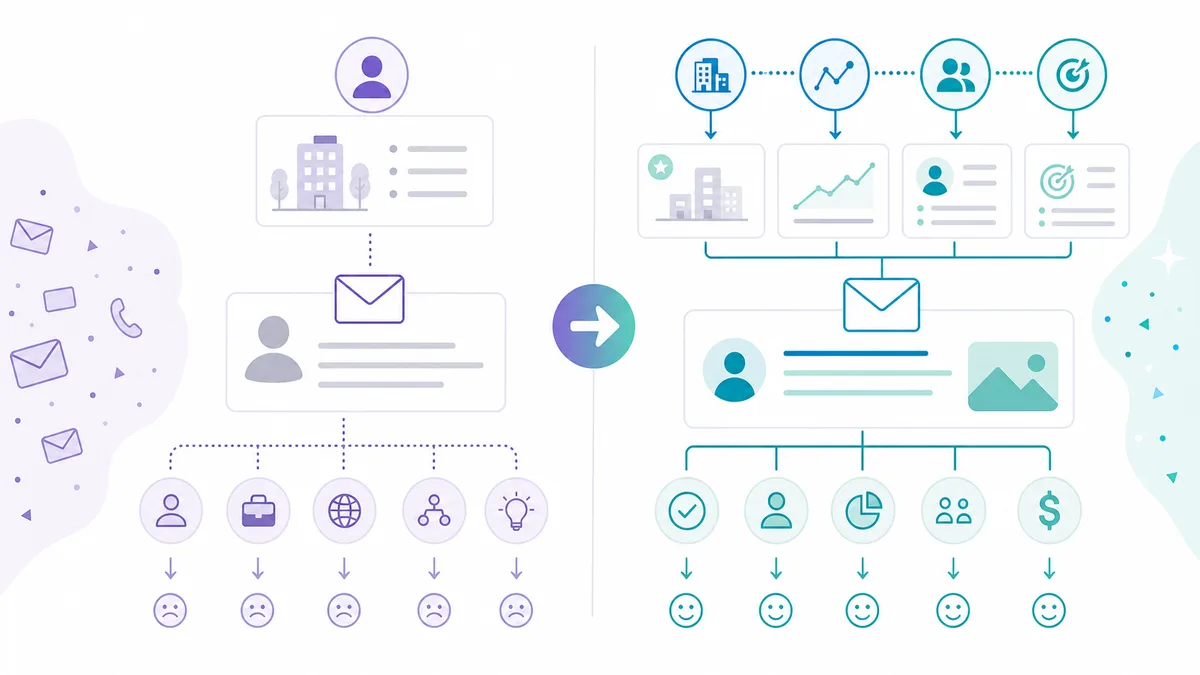
Personalization fails when it becomes trivia. “I saw your post” does not create urgency unless it connects to a business problem.
Useful AI outbound research should answer four questions:
- Why this account?
- Why this buyer?
- Why now?
- Why should this message come from us?
That means Vera should look for account-level context: growth signals, hiring patterns, GTM changes, product launches, market expansion, recent content, website positioning, and CRM history. Then she should convert that research into a short outreach angle.
McKinsey describes gen AI’s ability to process disparate data sources and recommend next-best actions as a way to help sellers prioritize opportunities. For outbound, the practical version is not a generic recommendation engine. It is a reason to contact this specific prospect now.
4. Score fit and choose the channel
Not every enriched prospect should receive outreach. Some should be suppressed. Some should be routed to human review. Some should move into a lower-intensity nurture path.
A useful Vera-style score should combine hard filters and AI judgment:
- Hard fit: company size, industry, geography, role, seniority, and disqualifiers.
- Signal strength: whether there is a current reason to reach out.
- Data confidence: whether the identity and company match are reliable.
- Commercial relevance: whether GrowthEffect’s outbound value proposition maps to the account’s likely pain.
- Risk controls: opt-out status, duplicate outreach, existing customer status, active opportunity ownership, and sensitive account rules.
The output should be easy for a human to audit: pursue, review, suppress, or nurture. The reason matters as much as the score.
Personalization and Sequences Need Guardrails
AI outbound sales should make messages more relevant, not simply more numerous. High-volume generic outreach creates a deliverability problem, a brand problem, and a sales quality problem.
Vera’s role is to turn research into a sequence that fits the buyer, the account, the channel, and the sender’s voice. That includes the first message, follow-ups, LinkedIn touches where appropriate, and stop rules.
A good outbound sequence has these controls:
| Control | Why it matters |
|---|---|
| Claim safety | Prevents unsupported ROI, pricing, customer, compliance, or technical claims |
| Sender voice | Keeps the message sounding like the real person or brand |
| Channel fit | Keeps LinkedIn, email, and CRM tasks from behaving like the same channel |
| Suppression checks | Prevents outreach to opted-out, blocked, duplicate, customer, or active-opportunity records |
| Frequency limits | Reduces inbox fatigue and account risk |
| Human review | Adds judgment for strategic accounts, sensitive industries, and new campaigns |
Email also has rules outside the CRM. The FTC’s CAN-SPAM guidance says commercial email, including business-to-business email, must avoid misleading headers and subject lines, identify the sender, include a valid physical postal address, provide opt-out instructions, and honor opt-outs within 10 business days. Google’s sender guidelines also require authentication practices such as SPF or DKIM for all senders to Gmail accounts, and SPF, DKIM, DMARC, low spam rates, and one-click unsubscribe for higher-volume senders.
LinkedIn requires separate caution. LinkedIn’s own help page says it does not permit third-party software, crawlers, bots, browser plug-ins, or extensions that scrape, modify, or automate activity on LinkedIn’s website. For AI outbound sales, that means LinkedIn workflows should be designed around compliant, reviewable human workflows and approved tools, not blind automation.
The operational point is not “never automate.” It is “do not automate past the guardrails.” Vera should draft, score, classify, and prepare the next action. Humans should stay involved where risk, judgment, or relationship quality is high.
Reply Handling Is Where Pipeline Is Won or Lost
Outbound teams often optimize the send and neglect the reply. That is backwards. The reply is the first real signal from the buyer.
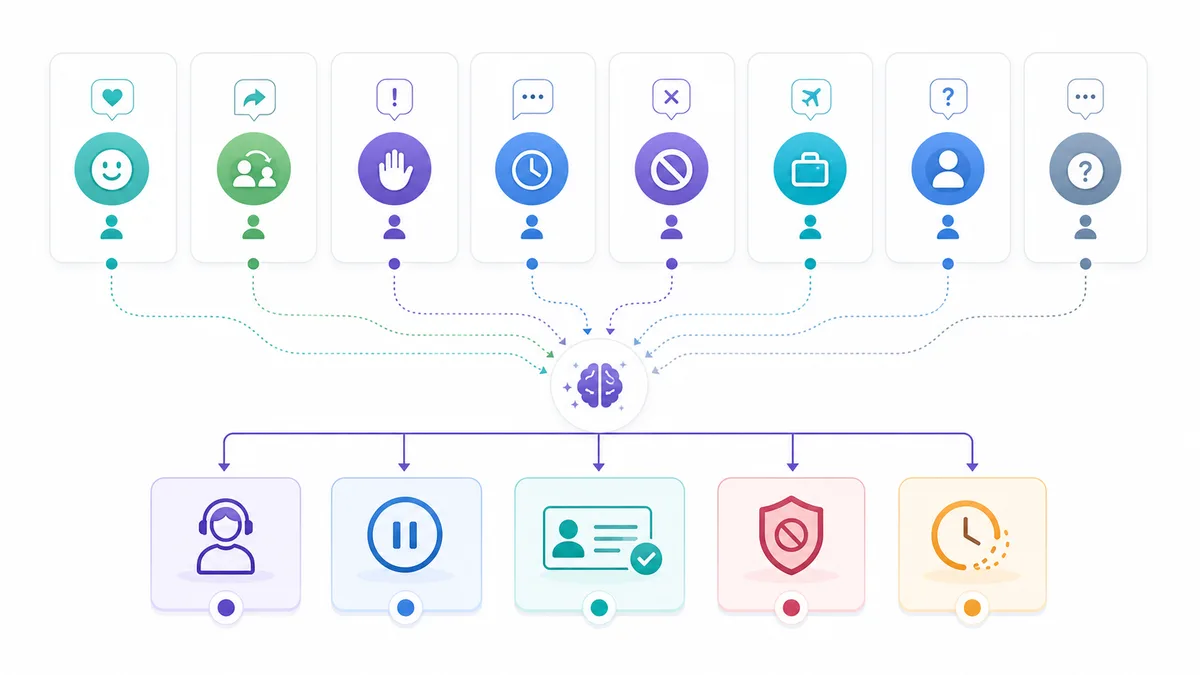
An AI outbound sales agent should classify replies immediately:
- positive interest
- referral to another person
- objection
- pricing question
- timing issue
- not now
- unsubscribe or stop request
- out of office
- wrong person
- negative or complaint
- unclear intent
Each class needs a different next action. A positive reply should create a human task and pause the sequence. A referral should update the contact map. A pricing question should route to a human with context. A stop request should suppress future outreach. An out-of-office reply may need a delayed follow-up. An unclear reply should go to review instead of letting automation guess.
This is one reason the “AI replaces SDRs” framing is too blunt. The stronger model is human plus AI. Vera handles the high-volume monitoring and classification work. Humans handle judgment, negotiation, relationship building, procurement, and closing.
For sales leaders, reply handling should have its own SLA. Measure how quickly positive replies reach a human, how accurately opt-outs are suppressed, how often objections are categorized, and whether CRM status changes match the real conversation.
CRM Updates Turn AI Activity into a Sales System
AI outbound sales creates value only if the CRM reflects what happened. Otherwise, the team gets activity without operating control.
Every outbound action should produce structured CRM updates:
- lead or contact source
- campaign membership
- ICP segment
- fit score and score reason
- enrichment status and confidence
- research summary
- outreach angle
- sequence status
- last touch date
- reply classification
- owner task
- human handoff notes
- suppression or disqualification reason
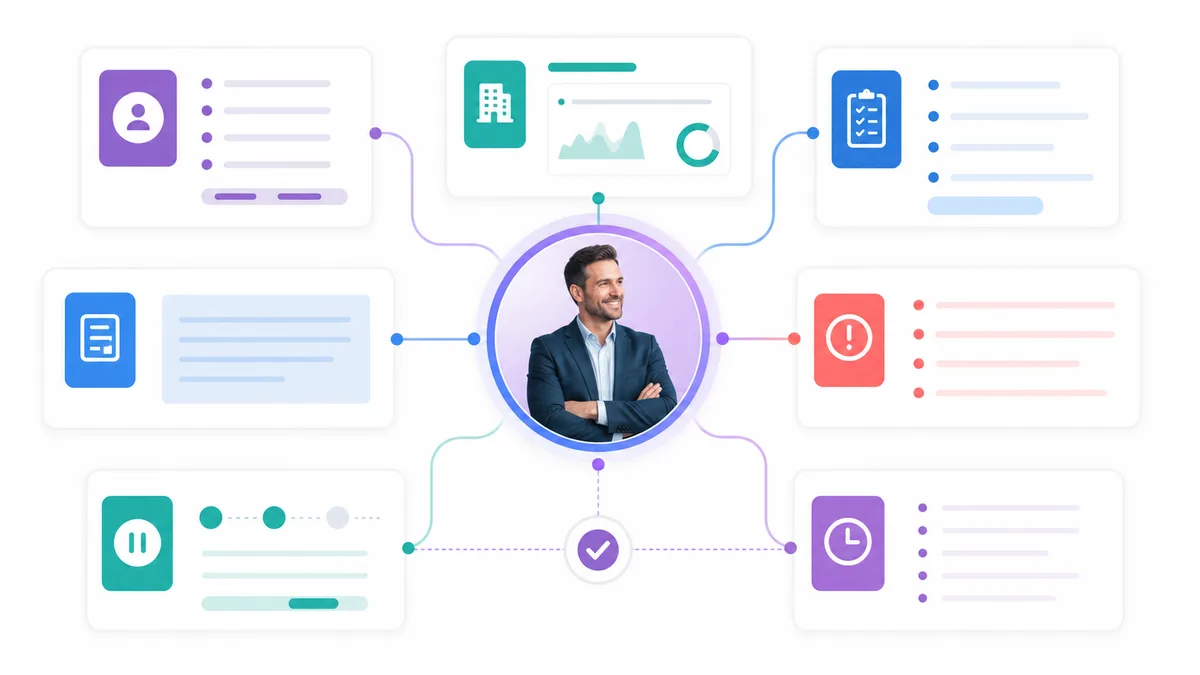
This matters for RevOps and finance as much as sales. If Vera creates conversations but the CRM does not capture source, segment, score, status, and handoff outcome, leadership cannot tell which markets, messages, or channels are working.
The CRM should also protect high-value fields. AI can suggest updates to company size, industry, title, or segment. But ownership, lifecycle stage, opportunity amount, close date, and disqualification reason should be governed by clear rules and review thresholds.
This is where GrowthEffect’s positioning as an AI sales team matters. Vera is not just a copy generator. She is a digital sales employee that performs outbound work and leaves the operating record behind.
Related GrowthEffect Workflow
If outbound pipeline is the blocked step, Vera is the GrowthEffect AI sales representative built for sourcing, enrichment, account research, fit scoring, personalized outreach, follow-up, reply classification, and CRM handoff.
Use this path when the problem is not writing one cold email, but running the outbound workflow consistently enough to create qualified conversations.
If you are still not sure whether the leak is targeting, reply handling, or CRM context after the reply, start with the GrowthEffect revenue leak scan. It helps separate list-quality problems from execution and handoff problems.
When Vera Should Hand Off to a Human
AI outbound sales should not try to close complex deals without people. The handoff is part of the product, not a failure of automation.
Vera should hand off when:
- a prospect replies with interest
- a prospect asks about pricing, procurement, security, legal, or implementation
- the account is strategic or high-value
- the research signal is ambiguous
- the reply contains an objection that needs judgment
- a referral introduces a new stakeholder
- the prospect asks to stop receiving messages
- the message would require a strong customer, ROI, or compliance claim
- the CRM record conflicts with enrichment data
The handoff should include the account, person, original trigger, research summary, sent messages, reply classification, suggested next step, CRM fields updated, and any uncertainty. A human closer should not have to reverse-engineer what the agent did.
This is also the right place to be honest about fit. AI outbound sales is not for every company. If your ICP is undefined, your offer is unclear, your CRM is unusable, or your team cannot agree on handoff rules, start there first. Vera can scale outbound execution, but she still needs a real sales motion to execute.
Where GrowthEffect Fits
GrowthEffect builds digital sales employees for first-touch sales work. Alim handles inbound. Vera handles outbound. This article is about Vera.
Vera is built for companies that need outbound pipeline without asking human reps to spend most of their week on manual list building, enrichment, research, first drafts, follow-ups, and CRM cleanup. She works best for B2B SaaS, agencies, consulting firms, high-ticket service businesses, and sales-led teams with a clear ICP and an active sales motion.
The practical Vera workflow is:
- define the ICP and campaign rules
- source target accounts and prospects
- enrich records and check exclusions
- research company context and buying signals
- score fit and choose outreach eligibility
- draft personalized email and LinkedIn messages
- run approved sequence steps with stop rules
- classify replies and pause automation when needed
- update CRM fields, notes, tasks, and statuses
- hand qualified conversations to humans with context
If you want to compare outbound systems before choosing a stack, read GrowthEffect’s guide to AI sales automation tools. If you want examples across inbound, outbound, CRM, and handoff workflows, see AI sales automation examples. For a broader diagnosis of where pipeline is leaking, use the revenue leak scan.
For teams ready to map Vera to a real campaign, book a GrowthEffect demo. Bring one ICP, one outbound offer, one existing sequence, and one CRM handoff problem. That is enough to see whether AI outbound sales will create cleaner pipeline or just more activity.
Lead magnet recommendation: Outbound Pipeline Audit
Follow-up path:
- review ICP clarity, suppression rules, and data confidence
- inspect one live outbound sequence for research depth and reply routing
- map Vera’s outbound workflow against your CRM handoff requirements
FAQ
What is AI outbound sales?
AI outbound sales is an agent-led workflow where AI handles outbound sales development tasks such as sourcing, enrichment, research, fit scoring, personalized outreach, follow-up, reply classification, CRM updates, and human handoff.
How is AI outbound sales different from a sequence tool?
A sequence tool mostly sends predefined messages on a schedule. An AI outbound sales agent should decide who qualifies for outreach, what angle is relevant, when to suppress a contact, how to classify replies, what to update in the CRM, and when a human should step in.
Should AI outbound sales messages be fully automated?
Not by default. Fully automated sending can work only after ICP rules, suppression checks, deliverability requirements, claim safety, and reply handling are reliable. New campaigns, strategic accounts, sensitive claims, pricing questions, and unclear replies should require human review.
What does Vera do in AI outbound sales?
Vera is GrowthEffect’s outbound digital sales employee. She sources prospects, enriches records, researches accounts, scores fit, drafts personalized email and LinkedIn outreach, follows up, classifies replies, updates CRM records, and hands qualified conversations to humans.
What CRM fields should an AI outbound sales agent update?
At minimum, update campaign membership, ICP segment, fit score, enrichment status, research summary, outreach angle, sequence status, reply classification, owner task, handoff notes, and suppression or disqualification reason. High-impact fields such as owner, lifecycle stage, opportunity amount, and close date should follow review rules.
Internal Links
- GrowthEffect AI sales team
- Vera outbound AI sales representative
- AI sales automation tools
- AI sales automation examples
- Revenue leak scan
- Book a GrowthEffect demo
Source List
- Salesforce: State of Sales Report for 2026 announcement
- McKinsey: Unlocking profitable B2B growth through gen AI
- HubSpot: AI sales prospecting guide
- Federal Trade Commission: CAN-SPAM Act compliance guide for business
- Google Workspace Admin Help: Email sender guidelines
- LinkedIn Help: Prohibited software and extensions
Leave a Reply