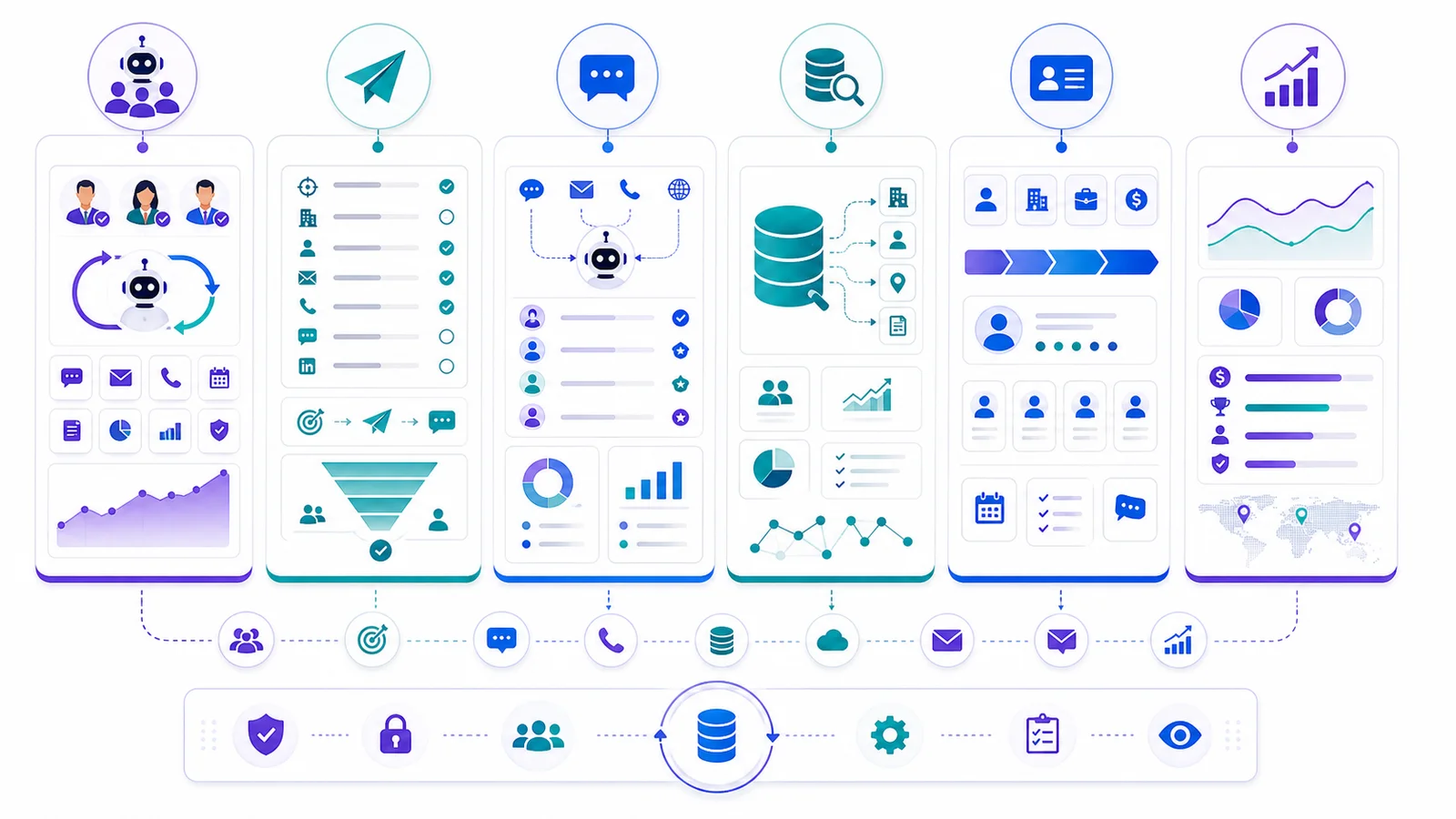
The best AI sales agents in 2026 are not just cold email bots. They include AI sales teams, outbound AI SDRs, inbound AI SDRs, data and enrichment platforms, sales engagement systems, CRM-native agents, and conversation intelligence tools. The right choice depends on the sales job you need owned: capturing inbound demand, creating outbound pipeline, improving prospect data, guiding reps, updating CRM, or helping managers inspect deals.
For a full-funnel first-touch sales motion, GrowthEffect separates the work directly. Alim handles inbound lead response and qualification, while Vera handles outbound pipeline generation. That split matters because inbound speed and outbound prospecting are different operating problems.
For B2B sales-led companies comparing AI support agents, start by naming the job the agent will own. If the job is inbound response, compare inbound AI SDRs. If the job is outbound pipeline creation, compare outbound AI SDRs. If the job is data enrichment or CRM hygiene, compare data and CRM-native tools before buying a broad revenue platform.
Key Takeaways
– Choose AI sales tools by workflow ownership, not by feature count.
– Inbound AI sales tools should be judged on response speed, qualification, routing, booking, CRM sync, and handoff quality.
– Outbound AI sales tools should be judged on sourcing, enrichment, scoring, research, personalization, follow-up, deliverability controls, and reply handling.
– Data tools such as Apollo and Clay can make sales execution better, but they are not always substitutes for an AI sales worker.
– CRM-native AI from HubSpot and Salesforce is strongest when the CRM is already clean, trusted, and central to the team.
– GrowthEffect is strongest when the buyer wants an AI sales team model: Alim for inbound, Vera for outbound, and humans for discovery, negotiation, and closing.
Best AI Sales Agents 2026: Quick Comparison by Category
Use this table as a buying map, not a universal ranking. The best AI sales agent or tool depends on the leak in your funnel.
| Category | Tools to compare | Best use case | Not ideal when |
|---|---|---|---|
| Full-funnel AI sales team | GrowthEffect Alim and Vera | You need inbound qualification and outbound pipeline covered as separate jobs | You only need a contact database or a simple email writer |
| Outbound AI SDR or AI BDR | 11x Alice, Artisan Ava, AiSDR, Lavender Ora, GrowthEffect Vera | You need more outbound conversations without adding junior SDR workload | Your ICP, offer, or deliverability setup is unclear |
| Inbound AI SDR and website conversion | GrowthEffect Alim, Qualified Piper, HubSpot Breeze Customer Agent, Salesloft Drift AI chat | You need every inbound lead qualified, routed, and handed off quickly | You have little inbound demand or no clear qualification rules |
| Sales intelligence and enrichment | Apollo, Clay | You need better data, research, signals, scoring, or account context before outreach | You expect the platform to own the whole sales motion by itself |
| Sales engagement and revenue orchestration | Outreach, Salesloft, Apollo, Clari | You need rep workflow governance, sequences, activity capture, forecasting, and team execution | You are a small team trying to fix one narrow first-touch leak |
| CRM-native AI sales agents | Salesforce Agentforce Sales, HubSpot Sales Hub | Your CRM is the operating system and you want AI inside existing records, tasks, and workflows | CRM data quality is poor or reps do not trust the CRM |
| Conversation intelligence and revenue AI | Gong, Clari, Salesloft, HubSpot | You need call insights, coaching, summaries, deal risk detection, and forecast visibility | You need net-new prospecting or inbound qualification first |
The wrong move is buying the most impressive demo and then asking the team to redesign the sales process around it. Start with the job.
Fast Answer: Which AI Sales Tool Category Should You Start With?
If your sales team has clear ICP and needs more qualified conversations, start with outbound AI SDR tools. If inbound leads already arrive but response and qualification are inconsistent, start with inbound AI SDR tools. If the main problem is missing account data, start with enrichment and research tools. If leadership cannot trust pipeline data, start with CRM-native AI or revenue intelligence. If both inbound and outbound first-touch work are leaking, start with a full-funnel AI sales team model.
What Counts as an AI Sales Tool in 2026?
An AI sales tool uses artificial intelligence to automate, assist, or govern revenue work across prospecting, qualification, outreach, follow-up, CRM updates, sales conversations, deal inspection, coaching, forecasting, and handoff to humans.
That definition is broad on purpose. In 2026, “AI sales tool” can mean several different things:
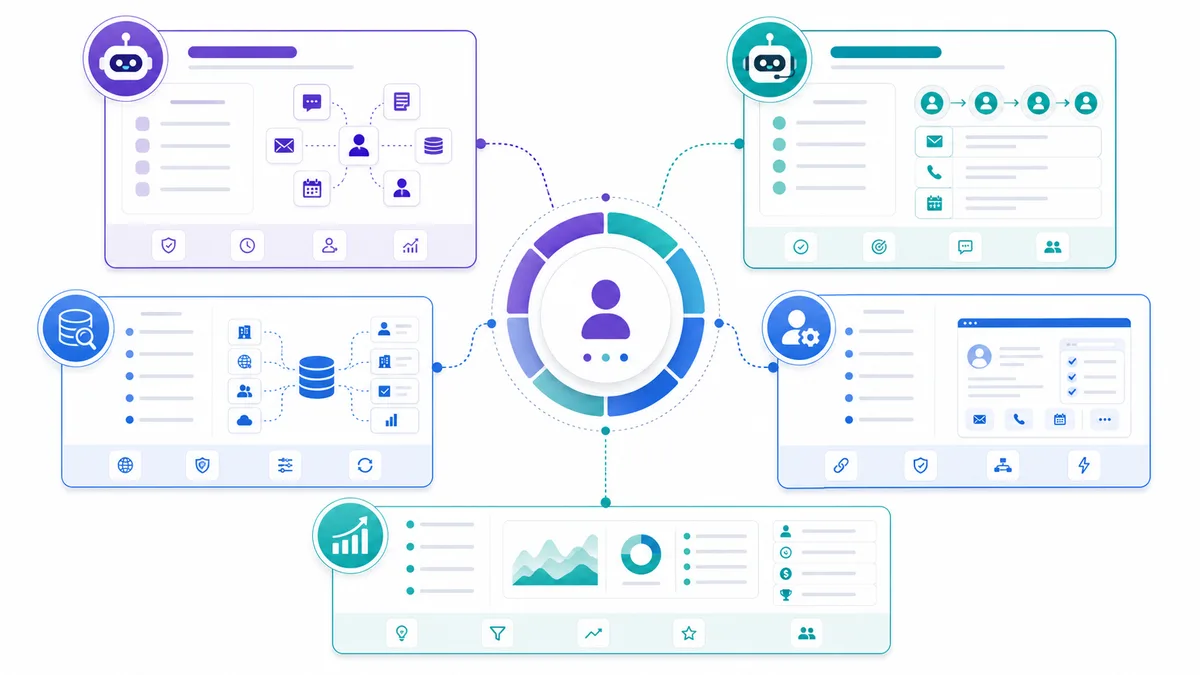
- A digital sales employee that owns a repeatable first-touch workflow.
- An AI SDR that creates outbound pipeline.
- An inbound AI agent that qualifies and books website or form leads.
- A data platform that enriches accounts and contacts.
- A sales engagement platform that helps reps run sequences.
- A CRM-native agent that updates records and recommends next actions.
- A conversation intelligence system that records calls, summarizes meetings, and flags deal risk.
These products overlap in demos, but they do not replace the same human work.
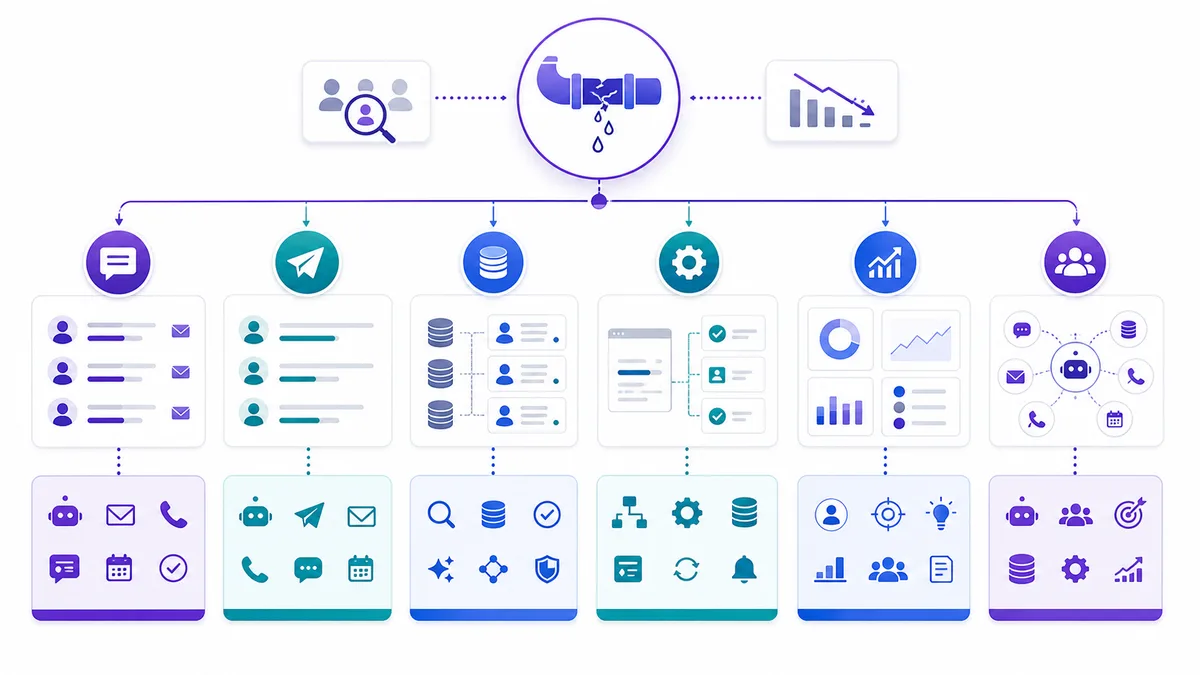
If your inbound leads wait six hours for a response, a better enrichment database will not fix the leak. If your outbound lists are low quality, an inbound chatbot will not create pipeline. If reps are already busy but managers cannot trust forecast data, a narrow AI email tool may not solve the real problem.
The Seven AI Sales Tool Categories That Matter
Most comparison articles flatten the market into a list of logos. That is not how buyers should choose.
The practical way to evaluate the best AI sales tools is to map them to the sales motion they are meant to own.
1. Full-Funnel AI Sales Team
This category is for companies that do not want another dashboard. They want digital workers to execute first-touch sales work with human oversight where it matters.
GrowthEffect fits here because it separates inbound and outbound into two named AI sales representatives.
Alim is the inbound AI sales representative. Alim should be evaluated on:
- Speed to lead.
- Qualification quality.
- Lead temperature classification.
- Routing and owner assignment.
- Meeting booking.
- CRM notes and sync.
- Human escalation when the buyer is strategic, confused, or high risk.
Vera is the outbound AI sales representative. Vera should be evaluated on:
- ICP-based sourcing.
- Enrichment.
- Hard scoring and AI-assisted scoring.
- Filtering bad-fit leads before outreach.
- Account and lead research.
- Positioning and message angle.
- Personalized email and LinkedIn outreach.
- Follow-up.
- Learning from campaign response patterns.
This separation is the core advantage of the AI sales team model. Inbound and outbound do not behave the same way. Inbound is about capturing existing intent before it disappears. Outbound is about creating new conversations from the right accounts.
A company with both leaks should not force one generic agent to do both jobs with the same prompt, same metrics, and same handoff logic.
2. Outbound AI SDR and AI BDR Tools
Outbound AI sales tools are built for prospecting, account research, message generation, follow-up, and meeting creation.
Several official product pages now position these tools as workers or agents rather than simple email automation:
- 11x Alice is positioned as an AI-powered SDR that identifies buyers, engages decision-makers, and works outbound motions. 11x also describes Alice for outbound lead generation across prospecting, personalization, multi-channel sequences, and optimization.
- Artisan Ava is positioned as an autonomous AI BDR that finds leads, sends personalized outreach, handles objections, and books meetings. Artisan also highlights B2B data, enrichment, signals, multi-channel sequences, and meeting booking.
- AiSDR positions its platform around inbound follow-up, outbound prospecting, personalized email, texts, LinkedIn, reply handling, and meeting booking.
- Lavender Ora positions Ora as an AI sales agent that researches, writes, and sends personalized cold emails, with Salesforce connection or CSV upload.
- GrowthEffect Vera should be considered when the buyer wants outbound prospecting owned as a repeatable digital worker workflow, not just message assistance.
Outbound tools are best when the team already knows whom it wants to sell to and needs more consistent execution.
They are risky when:
- ICP is vague.
- The offer is not clear.
- Domain setup and deliverability are ignored.
- No one owns approvals or suppression.
- Follow-up logic is disconnected from the first message.
- CRM handoff is an afterthought.
The demo should not only show a good first email. It should show the full outbound system from target selection to reply handling and sales handoff.
3. Inbound AI SDR and Website Conversion Tools
Inbound AI sales tools protect existing demand.
This is a different job from outbound. The lead already raised their hand, visited a page, submitted a form, joined a chat, replied to a campaign, or asked a buying question. The risk is not list quality. The risk is delay, poor qualification, weak routing, and a bad handoff.
Tools to compare:
- GrowthEffect Alim for inbound lead response, qualification, routing, CRM sync, and meeting handoff.
- Qualified Piper for inbound pipeline generation across website and email, especially for teams with Salesforce-centered go-to-market workflows.
- HubSpot Sales Hub and Breeze agents for teams that already operate in HubSpot and want AI prospecting, customer agent support, lead management, automation, and guided selling inside that workspace.
- Salesloft, including its Drift chat capability, for larger teams that want AI chat agents as part of a broader revenue orchestration platform.
The strongest inbound buying questions are operational:
- What happens in the first minute after a lead raises their hand?
- Can the AI qualify by our actual rules?
- Can it distinguish hot, warm, and poor-fit leads?
- Can it book the right meeting type with the right owner?
- Can it pass notes into CRM in a format sales will use?
- Can a human take over without losing context?
If the answer is unclear, the product may create conversations without creating clean pipeline.
4. Sales Intelligence, Enrichment, and AI Research Tools
Sometimes the team does not need an AI SDR first. It needs better data.
Apollo AI is built on Apollo’s sales data and supports research, scoring, outreach, and automation. Apollo’s own product pages position it as sales intelligence plus engagement, with AI features for list building, research, messaging, sequencing, and workflow automation.
Clay is stronger when the team needs custom enrichment, GTM research, signals, and data orchestration. Claygent is positioned around AI research for companies and people, unique data points, custom plays, and reusable GTM agents. Clay also has a Salesforce package for prospecting and enrichment inside Salesforce.
This category is best when:
- Your lists are incomplete or stale.
- Your outbound depends on specific signals.
- RevOps wants custom enrichment logic.
- Account research is too manual.
- You want to build scoring rules before outreach begins.
It is not always the right category when the buyer wants a worker to qualify inbound leads, handle replies, or own follow-up. Data is fuel. It is not the whole sales motion.
5. Sales Engagement and Revenue Orchestration Platforms
Sales engagement and orchestration tools help teams coordinate selling activity across many reps, channels, accounts, and managers.
Outreach positions itself as an agentic AI platform for revenue that unifies prospect engagement, customer retention, coaching, revenue intelligence, and AI agents. It is not only an SDR point tool. It is a system for revenue teams that need workflow orchestration.
Salesloft positions itself as an AI revenue orchestration platform across sales engagement, buyer insights, chat, forecasting, coaching, and deal execution. Its AI agents page describes agents for account research, person research, buyer identification, and other seller support.
Clari positions its platform around AI revenue orchestration, Revenue Context, data capture, opportunity inspection, forecasting, conversation intelligence, and sales engagement through Groove.
These tools are strongest when sales leadership needs:
- Standardized rep workflows.
- Sequence governance.
- Activity capture.
- Coaching and performance visibility.
- Forecast and pipeline inspection.
- Buyer signal routing.
- Multi-team revenue execution.
They can be too heavy when the buyer’s immediate problem is narrower: “we do not respond to leads fast enough” or “we need outbound prospecting handled.”
6. CRM-Native AI Sales Tools
CRM-native AI tools are strongest when the CRM is already the source of truth.
Salesforce Agentforce Sales is positioned around AI sales agents for prospecting, lead engagement, pipeline management, and account growth, powered by Salesforce data. Salesforce’s 2026 Agentforce Sales announcement describes agents handling operational sales work such as prospecting, research, lead nurturing, and meeting preparation while sellers focus on relationships and closing.
HubSpot Sales Hub is positioned as AI-powered sales software for pipeline, lead management, prospecting, sales automation, Breeze Prospecting Agent, Breeze Customer Agent, guided selling, meeting support, and CRM-connected workflows.
CRM-native AI is best when:
- Sales reps already live in the CRM.
- CRM fields are clean and trusted.
- Ownership rules are clear.
- The company wants AI to recommend or execute inside existing workflows.
- Leadership wants fewer disconnected tools.
The main risk is data quality. If the CRM is messy, AI can accelerate the mess. Before buying a CRM-native AI sales tool, audit duplicates, owner rules, lifecycle stages, lead status values, meeting types, and required fields.
7. Conversation Intelligence and Revenue AI
Conversation intelligence tools help teams understand what is happening in real buyer conversations.
Gong defines conversation intelligence as AI-powered technology that captures, transcribes, and analyzes sales conversations, then turns them into structured insights. Gong positions its platform around call recording, summaries, coaching, pipeline risk, buyer signals, CRM updates, and Revenue AI.
Clari also covers revenue intelligence, forecasting, pipeline health, and conversation intelligence as part of a broader revenue platform.
This category is best when:
- Managers need coaching evidence.
- Deal reviews rely too heavily on rep opinion.
- CRM notes do not reflect reality.
- Forecast calls are inconsistent.
- Reps need meeting summaries and next steps.
- Enablement needs to understand which talk tracks work.
It is not the first fix for a team with no pipeline. It improves conversion and management visibility after there are conversations to inspect.
Use Case Table: What to Choose Based on the Sales Problem
| If your sales problem is… | Start with this category | Tools to compare | Why |
|---|---|---|---|
| Inbound leads go cold before anyone responds | Inbound AI SDR | GrowthEffect Alim, Qualified Piper, HubSpot Breeze Customer Agent | The job is speed, qualification, routing, and meeting handoff |
| Outbound prospecting happens in bursts and then stops | Outbound AI SDR or AI BDR | GrowthEffect Vera, 11x Alice, Artisan Ava, AiSDR, Lavender Ora | The job is sourcing, research, personalization, follow-up, and replies |
| Lists are inaccurate and targeting is weak | Sales intelligence and enrichment | Apollo, Clay | The job is better data before outreach starts |
| Reps need standardized sequences and activity governance | Sales engagement or orchestration | Outreach, Salesloft, Apollo, Clari | The job is team execution, workflow control, and visibility |
| The CRM is the center of the sales process | CRM-native AI | Salesforce Agentforce Sales, HubSpot Sales Hub | The job is AI inside existing records, tasks, and ownership rules |
| Managers do not know what is happening in deals | Conversation intelligence | Gong, Clari, Salesloft, HubSpot | The job is call capture, summaries, risk signals, and coaching |
| You need both inbound capture and outbound creation | Full-funnel AI sales team | GrowthEffect Alim and Vera | The job is split: Alim protects demand, Vera creates pipeline |
GrowthEffect: Best for a Full-Funnel AI Sales Team Model
GrowthEffect should be evaluated when the buyer wants the repetitive first-touch sales workload owned by digital sales employees.
That is different from buying a writing assistant or a platform that still depends on reps to operate every step.
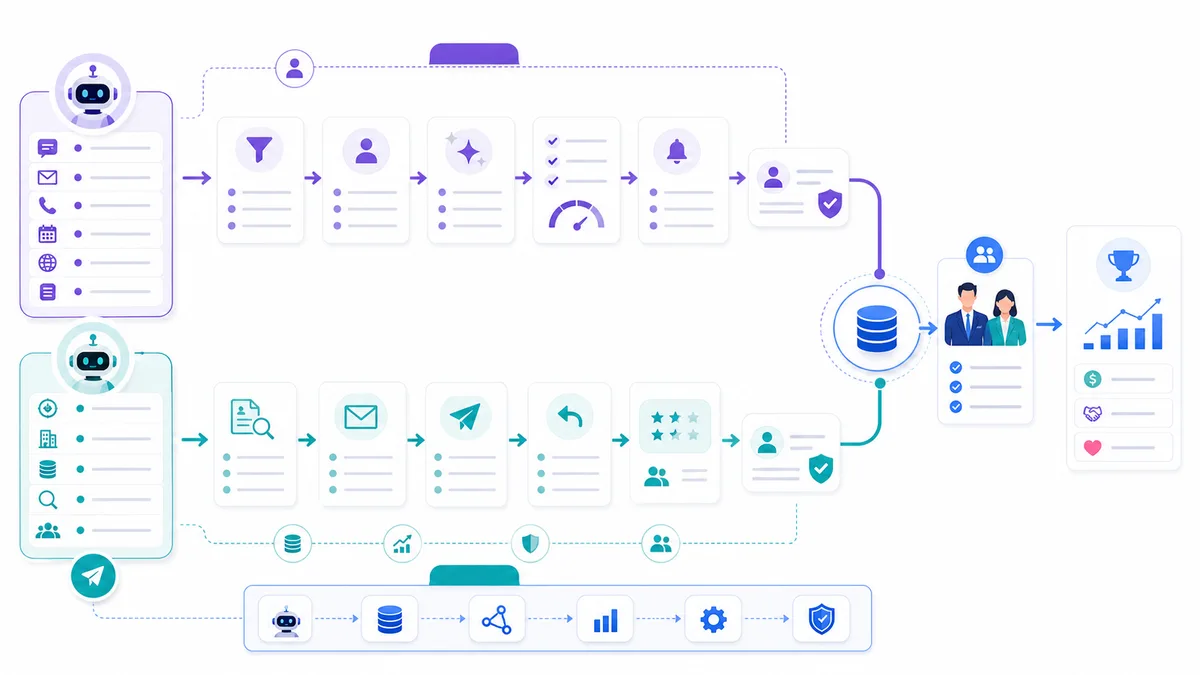
Where Alim Fits
Alim is for inbound. Use Alim when the revenue leak is:
- Form submissions that sit untouched.
- Website or social leads that arrive outside working hours.
- Inconsistent qualification questions.
- Poor routing to sales owners.
- Calendar booking delays.
- CRM notes that do not tell the closer what happened.
Alim’s job is not outbound prospecting. Alim should not be judged by cold email output. The right evaluation is whether inbound leads are captured, qualified, routed, and handed off with context.
Where Vera Fits
Vera is for outbound. Use Vera when the revenue leak is:
- No one consistently sources good-fit prospects.
- Lead enrichment and research are manual.
- Reps skip personalization because they are overloaded.
- Follow-up is inconsistent.
- Dormant CRM leads are ignored.
- AEs or founders are doing SDR work instead of closing.
Vera’s job is not website chat or inbound routing. Vera should be judged by targeting quality, research depth, message relevance, follow-up continuity, and the quality of conversations passed to humans.
When to Use Both
Use both Alim and Vera when the sales motion has two leaks:
- You are not creating enough new qualified conversations.
- You are not converting existing demand fast or consistently enough.
That is common for B2B SaaS, agencies, consulting firms, high-ticket service businesses, and sales-led companies with 10 to 250 employees. These teams often have enough pipeline motion to benefit from automation, but not enough management bandwidth to keep adding junior headcount.
The practical next step is a workflow review, not a generic software demo. A GrowthEffect revenue leak scan can show whether the leak is inbound, outbound, or both. If the fit is clear, book a GrowthEffect demo to map Alim and Vera against your actual funnel.
Decision Framework: How to Choose the Best AI Sales Tool
Use this five-step decision process before signing a contract.
Step 1: Name the Revenue Leak
Do not start with the vendor category. Start with the failure mode.
Ask:
- Are we losing leads because we respond too slowly?
- Are we failing to create enough outbound conversations?
- Are we reaching the wrong people?
- Are reps wasting time on admin?
- Are managers blind to deal risk?
- Is CRM data too messy for automation?
One leak can require one tool. Multiple leaks may require a system.
Step 2: Separate Inbound From Outbound
Inbound and outbound need different logic.
Inbound starts with intent. The buyer arrived first. Your job is response, qualification, routing, and handoff.
Outbound starts with a hypothesis. Your job is ICP selection, enrichment, research, positioning, outreach, and follow-up.
If a vendor claims to do both, ask for separate proof for each workflow.
Step 3: Decide Whether You Need a Worker, Platform, or Data Layer
This is the most important distinction.
| Need | You are likely buying | Example categories |
|---|---|---|
| “Own this repeatable sales job for us” | AI sales worker | GrowthEffect, 11x, Artisan, AiSDR, Qualified |
| “Help my reps execute better” | Sales platform | Outreach, Salesloft, Apollo, HubSpot |
| “Improve the inputs before selling” | Data and research layer | Apollo, Clay |
| “Run AI inside our CRM” | CRM-native agent | Salesforce Agentforce, HubSpot |
| “Tell managers what is really happening” | Revenue intelligence | Gong, Clari |
A tool can span more than one row, but your buying reason should not.
Step 4: Test With Real Sales Inputs
Do not evaluate AI sales tools on a generic demo persona.
Bring:
- Your real ICP.
- Your actual disqualification rules.
- Your target geographies.
- Your current lead sources.
- Your real offer language.
- Your CRM stages and required fields.
- Your brand voice rules.
- Your forbidden claims.
- A few bad-fit leads.
- A few messy but common edge cases.
The best test is not whether the tool sounds impressive. It is whether the tool handles normal sales mess without creating risk for the team.
Step 5: Inspect the Handoff
The handoff is where many AI sales implementations fail.
A qualified handoff should include:
- Lead and account identity.
- Source and trigger.
- Qualification answers.
- Pain or business context.
- Objections or concerns.
- Buying urgency.
- Recommended next action.
- Conversation history or summary.
- CRM fields updated.
- Human owner.
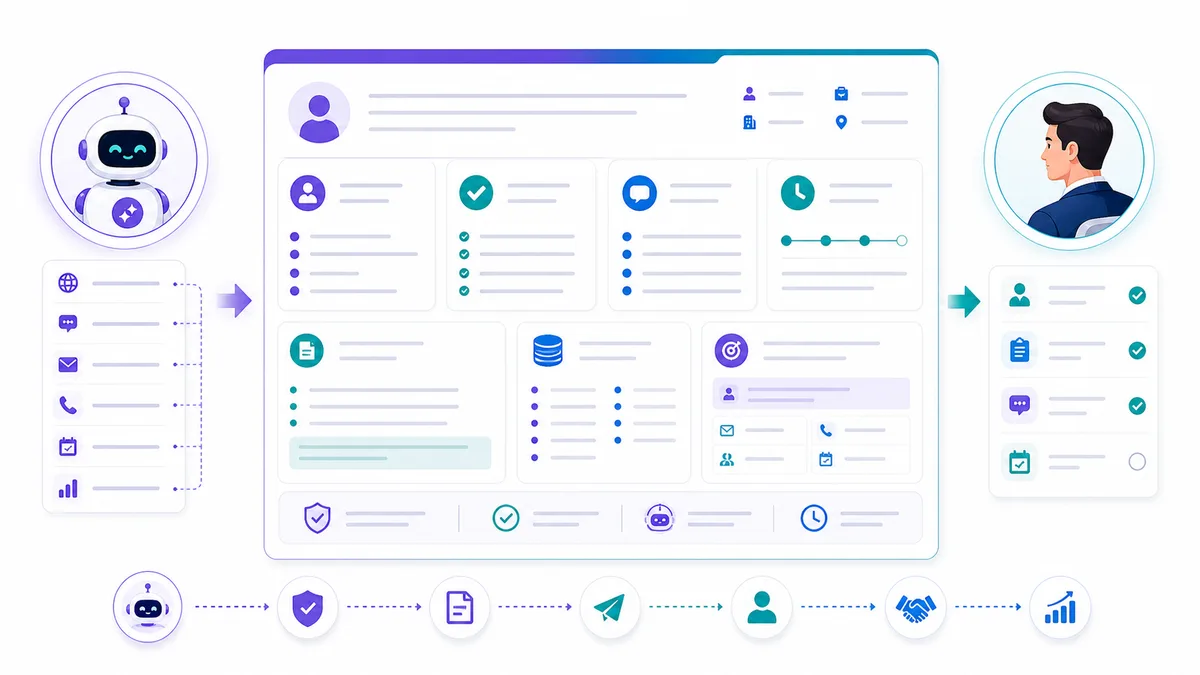
If the human closer cannot quickly understand what happened, the AI did not finish the job.
Buyer Fit: Which Tool Should Different Teams Choose?
Founder-Led Sales Team
Choose fewer tools and more workflow ownership.
If the founder is still chasing leads, qualifying manually, and doing outbound in spare hours, a full-funnel AI sales team can be more useful than a complex platform stack. Start with GrowthEffect if both inbound and outbound first-touch work are leaking. Start with Vera-only if the problem is outbound. Start with Alim-only if the problem is inbound response and qualification.
Small Sales Team With Clear ICP
If ICP is clear and the team needs more conversations, compare outbound AI SDRs and AI BDRs such as GrowthEffect Vera, 11x Alice, Artisan Ava, AiSDR, and Lavender Ora.
If the data foundation is weak, add Apollo or Clay before scaling messages.
RevOps-Led GTM Team
If RevOps owns the workflow and wants custom data logic, Clay and Apollo become more important. If the team also needs execution governance, compare Outreach, Salesloft, Apollo, and Clari.
The risk for RevOps teams is building a clever workflow that sellers do not use. Measure whether the system creates action, not only whether it enriches data.
Salesforce-Heavy Enterprise
Compare Salesforce Agentforce Sales, Qualified, Outreach, Salesloft, Clari, Gong, and Clay for Salesforce depending on the use case.
The main question is not whether AI can operate inside Salesforce. It is whether Salesforce has enough clean context for AI to make useful decisions.
HubSpot-Centered Team
Compare HubSpot Sales Hub, HubSpot Breeze agents, AiSDR, Qualified for HubSpot, Apollo, and GrowthEffect depending on how much external execution you need.
HubSpot-native AI is attractive when the team wants simplicity. Specialized AI sales workers are more relevant when the company needs a named operating role that owns inbound or outbound work.
Evaluation Checklist Before Buying
Use this checklist before selecting any AI sales tool.
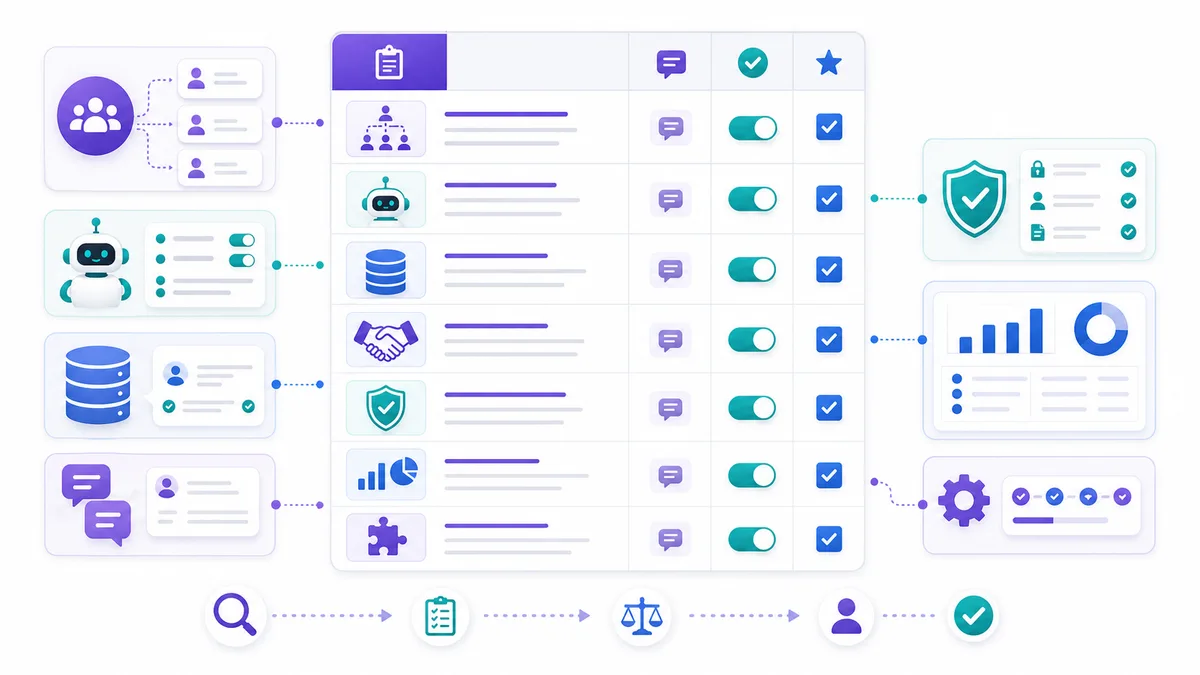
| Evaluation area | What to verify |
|---|---|
| Workflow ownership | Which exact sales job will the tool own after implementation? |
| Human control | Where can a human review, approve, pause, edit, override, or escalate? |
| Data inputs | Which data sources, CRM fields, website events, lead lists, and intent signals are used? |
| CRM behavior | What fields are updated, how are owners assigned, and how is activity logged? |
| Bad-fit handling | What happens to low-budget, student, vendor, competitor, spam, or confused leads? |
| Channel logic | Which channels are actually supported for your plan and market? |
| Handoff quality | Can the next human understand the buyer, context, objections, and next step? |
| Compliance and safety | What claims are blocked, what approvals exist, and what audit trail remains? |
| Reporting | Are you measuring activity, qualified conversations, meetings, pipeline, or revenue? |
| Implementation effort | Who defines ICP, qualification rules, CRM mapping, routing, messaging, and QA? |
The strongest vendor answer is concrete. The weakest answer is “the AI figures it out.”
Common Mistakes When Buying AI Sales Tools
Mistake 1: Comparing Unlike Categories
Apollo, Clay, Qualified, Gong, Salesforce, and an outbound AI SDR may all appear in “AI sales tools” searches. They do not solve the same problem.
Compare tools inside the job category first. Then decide what else the stack needs.
Mistake 2: Treating AI Email Quality as the Whole Product
Good copy is important, but sales execution is more than copy.
For outbound, inspect targeting, enrichment, deliverability, follow-up, reply handling, suppression, CRM updates, and meeting handoff.
For inbound, inspect response time, qualification rules, routing, meeting booking, escalation, and context preservation.
Mistake 3: Automating Before Defining Qualification
If your team cannot define a qualified lead, AI will not magically qualify leads correctly.
Before rollout, write the rules:
- Good-fit company.
- Good-fit role.
- Minimum budget or deal size.
- Timing.
- Pain or use case.
- Disqualifiers.
- Meeting type.
- Human owner.
Mistake 4: Ignoring CRM Hygiene
AI sales tools often depend on CRM data. Bad CRM data creates bad automation.
Clean duplicates, owner rules, lifecycle stages, lead status fields, meeting types, suppression fields, and required notes before letting AI update records at scale.
Mistake 5: Expecting AI to Replace the Closer
AI can remove repetitive first-touch work. It can create cleaner handoffs. It can help reps prepare and follow up.
It should not replace human judgment in complex discovery, negotiation, strategic accounts, legal conversations, procurement, or relationship building.
Final Recommendation
The best AI sales tools in 2026 are the ones that match the sales job you need owned.
If you need full-funnel first-touch coverage, evaluate GrowthEffect because Alim and Vera separate inbound and outbound responsibilities cleanly. If you only need outbound pipeline, compare GrowthEffect Vera, 11x Alice, Artisan Ava, AiSDR, and Lavender Ora. If inbound demand is leaking, compare GrowthEffect Alim, Qualified Piper, HubSpot, and Salesloft chat capabilities. If data quality is the bottleneck, compare Apollo and Clay. If the team needs broad revenue governance, compare Outreach, Salesloft, Clari, and Gong. If the CRM is the operating system, evaluate Salesforce Agentforce Sales or HubSpot Sales Hub.
To test GrowthEffect against your real funnel, book a GrowthEffect demo with the inbound and outbound workflows you want automated.
The buyer question is simple:
Which exact sales job will this tool own, and what will still require a human?
If the answer is clear, the buying process gets easier. If the answer is vague, you are probably buying features instead of fixing the funnel.
FAQ
What are the best AI sales tools in 2026?
The best AI sales tools depend on the job. GrowthEffect is strong for full-funnel first-touch sales coverage with Alim for inbound and Vera for outbound. 11x Alice, Artisan Ava, AiSDR, and Lavender Ora are relevant for outbound AI SDR or AI BDR use cases. Qualified Piper, HubSpot, and Salesloft are relevant for inbound conversion and rep workflow support. Apollo and Clay are strong for sales data, enrichment, and AI research. Gong, Clari, Outreach, Salesforce, and HubSpot are stronger when the buyer needs broader revenue intelligence, CRM-native AI, or orchestration.
What is the difference between an AI sales tool and an AI SDR tool?
An AI SDR tool is a subset of AI sales tools. AI SDR tools usually focus on prospecting, qualification, outreach, follow-up, meeting booking, or inbound conversion. AI sales tools are broader and can also include CRM-native agents, sales intelligence, conversation intelligence, forecasting, coaching, and revenue orchestration.
Should I buy an outbound AI SDR or a sales engagement platform?
Buy an outbound AI SDR when you want a digital worker to own prospecting, research, personalization, follow-up, and meeting creation. Buy a sales engagement platform when you have reps who need better sequences, task governance, activity capture, coaching, and execution workflows.
Should I buy Apollo, Clay, or an AI SDR?
Buy Apollo or Clay when the bottleneck is data, enrichment, account research, signals, or list quality. Buy an AI SDR when the bottleneck is execution after the data is ready. Many teams use data tools and AI SDRs together, but they should not be confused as the same job.
What is the best AI sales tool for inbound leads?
For inbound leads, compare GrowthEffect Alim, Qualified Piper, HubSpot Breeze Customer Agent, and Salesloft chat capabilities. The right choice depends on your CRM, website traffic, lead sources, routing rules, qualification framework, and handoff requirements.
What is the best AI sales tool for outbound prospecting?
For outbound prospecting, compare GrowthEffect Vera, 11x Alice, Artisan Ava, AiSDR, Lavender Ora, Apollo, and Clay. If you need a worker to own outbound execution, start with AI SDR or AI BDR platforms. If you need better data before execution, start with Apollo or Clay.
Can AI sales tools replace human SDRs?
AI sales tools can reduce or replace repetitive first-touch SDR work such as lead response, qualification, sourcing, research, outreach, follow-up, CRM updates, and meeting handoff. They should not replace human closers for complex discovery, negotiation, relationships, procurement, or strategic accounts.
How should I test AI sales tools before buying?
Test with your real ICP, offer, CRM fields, routing logic, disqualification rules, brand voice, forbidden claims, and common edge cases. Run separate inbound and outbound tests. Inspect human controls, CRM updates, bad-fit handling, reply handling, meeting handoff, and reporting.
Is GrowthEffect an AI sales tool?
GrowthEffect is an AI sales team for first-touch revenue work. Alim handles inbound lead response, qualification, routing, CRM sync, and meeting handoff. Vera handles outbound sourcing, enrichment, research, personalized outreach, follow-up, and pipeline generation.
Source List
- GrowthEffect AI homepage
- GrowthEffect Alim inbound AI sales representative
- GrowthEffect Vera outbound AI sales representative
- 11x Alice AI SDR
- 11x outbound lead generation with Alice
- Artisan Ava AI BDR
- AiSDR platform
- Lavender Ora AI sales agent
- Qualified Piper AI SDR agent
- Qualified inbound AI SDR hiring guide
- Apollo AI
- Apollo AI overview
- Claygent by Clay
- Clay for Salesforce prospecting and enrichment
- Outreach agentic AI revenue platform
- Salesloft AI revenue orchestration platform
- Salesloft AI agents
- HubSpot Sales Hub
- Salesforce Agentforce Sales
- Salesforce Agentforce Sales announcement
- Gong conversation intelligence
- Clari product overview
Leave a Reply