
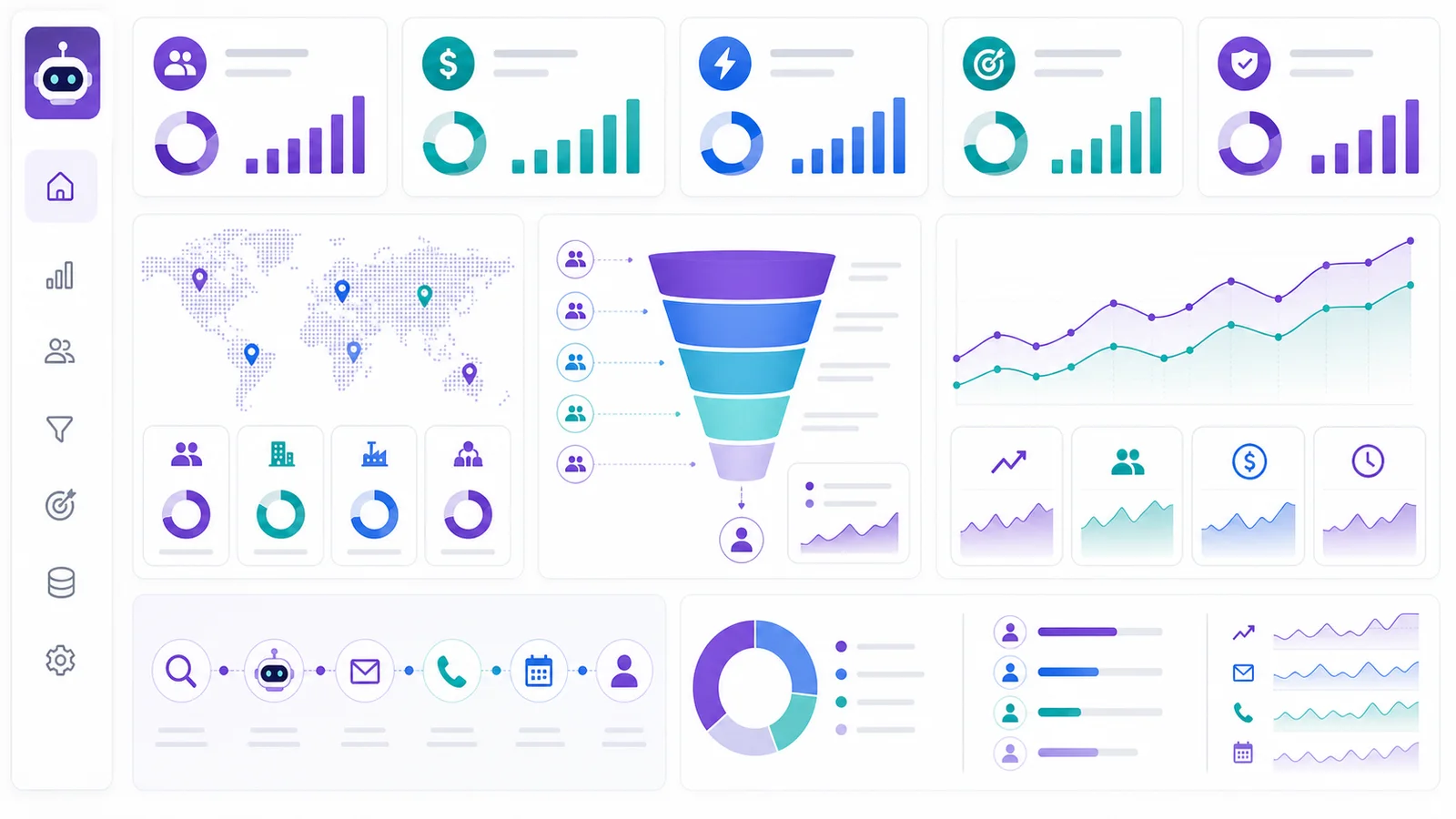
AI sales statistics in 2026 show a category that has moved past curiosity but has not fully matured. As of July 2, 2026, the clearest benchmark pattern is this: AI adoption is high, but revenue teams still struggle to separate workflow wins from generic tool usage. Salesforce reports that 87% of sales organizations use some form of AI, HubSpot reports that only 8% of surveyed sales reps are not using AI at all, and McKinsey reports that 88% of organizations use AI in at least one business function. The real question is no longer whether sales teams use AI. The question is which sales workflows create measurable pipeline, saved time, better data, and cleaner handoffs.
Key Takeaways
– Sales AI adoption is now mainstream, but agentic AI is still early. McKinsey’s November 2025 global survey found 23% of organizations scaling agentic AI somewhere in the enterprise and 39% experimenting with agents.
– Salesforce’s 2026 State of Sales research says 54% of sellers have used agents and nearly 9 in 10 plan to by 2027.
– LinkedIn and Ipsos found that 88% of sales professionals had integrated AI into weekly workflows in 2025, with 56% using it daily.
– Productivity gains are concentrated in specific work: research, outreach drafting, CRM work, sales cycle management, conversation analysis, and account prioritization.
– Pipeline impact depends on operating design. Teams need clean data, clear attribution, human review rules, and separate metrics for inbound AI and outbound AI.
What The Latest AI Sales Statistics Say In 2026
The useful interpretation is not “AI replaces sales.” The stronger reading is that AI is becoming the first-touch operating layer around sales.
Sales teams are using AI for prospecting, research, lead scoring, email drafting, forecasting, CRM work, conversation review, and buyer enablement. Buyers are also using AI to research vendors and challenge AI claims. That creates a two-sided change: sellers are becoming AI-assisted, and buyers are becoming more informed before the first conversation.
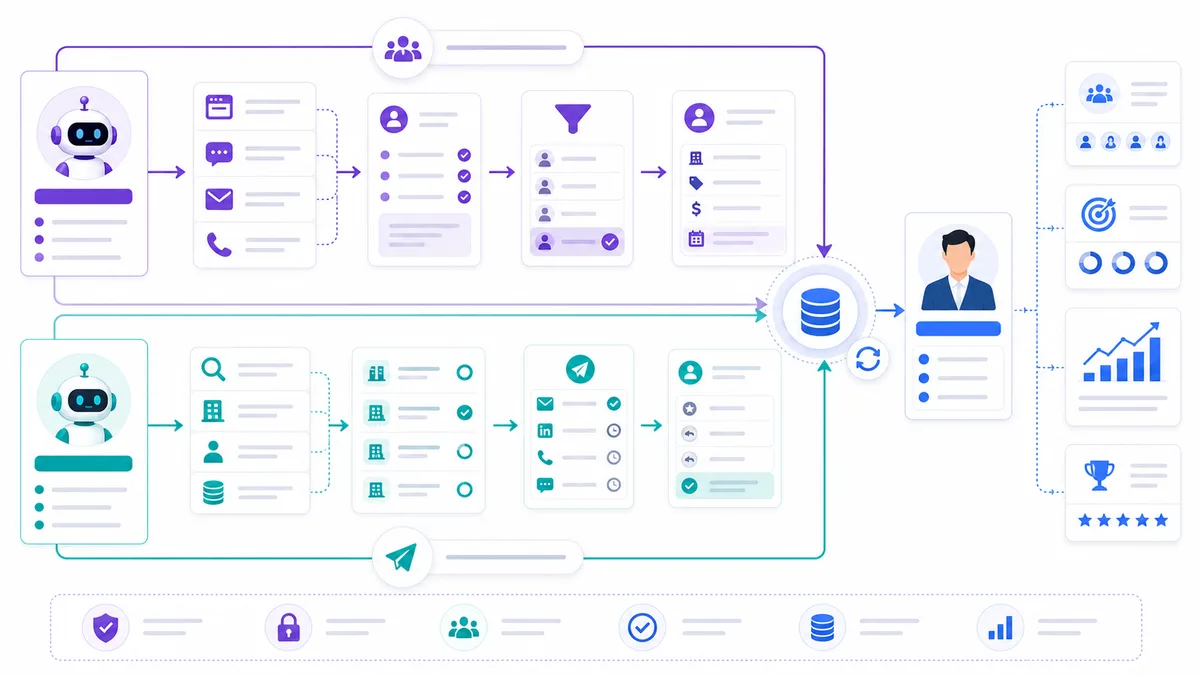
For GrowthEffect, this matters because AI sales operations should be measured by job, not by hype. Alim, the inbound AI sales representative, handles inbound response, qualification, routing, CRM sync, and meeting booking. Vera, the outbound AI sales representative, handles sourcing, enrichment, research, scoring, personalized outreach, follow-up, and pipeline generation.
Those two jobs should not be mixed in reporting. Inbound AI creates value by protecting demand that already exists. Outbound AI creates value by finding and engaging accounts that would not otherwise be worked consistently.
AI Sales Statistics: Adoption Benchmarks
AI adoption is now high across sales and business functions. The gap is no longer access. The gap is whether AI is embedded deeply enough into workflows to create durable revenue impact.
| Statistic | Date or report | What it means for sales leaders |
|---|---|---|
| 87% of sales organizations use some form of AI for work such as prospecting, forecasting, lead scoring, or drafting emails. | Salesforce State of Sales announcement, February 2026 | AI is no longer a fringe sales tool. The benchmark is moving from adoption to execution quality. |
| 54% of sellers say they have used AI agents, and nearly 9 in 10 plan to by 2027. | Salesforce State of Sales, 2026 | Agent adoption is entering the sales mainstream, but many teams are still early in deployment. |
| 88% of organizations report regular AI use in at least one business function, up from 78% the year before. | McKinsey State of AI, November 2025 | Sales teams should assume competitors are already using AI somewhere in the revenue engine. |
| 23% of organizations are scaling agentic AI somewhere in the enterprise; another 39% are experimenting. | McKinsey State of AI, November 2025 | Agentic AI is real, but broad scaling is still limited. This is a deployment discipline problem, not just a model problem. |
| Only 8% of HubSpot’s surveyed sales reps said they were not using AI at all. | HubSpot State of Sales, updated September 2025 | Individual rep usage has become common even when company-level process is inconsistent. |
| 99% of BDRs reported using AI tools in 2026, up from 62% in 2025 and 53% in 2024. | 6sense State of the BDR, 2026 | In outbound development, AI usage is close to universal, but high-value use cases are not always the most common ones. |
| 88% of sales professionals had integrated AI into weekly workflows, and 56% used it daily. | LinkedIn Sales Leader Compass, 2025, based on Ipsos research | Regular use matters because quota exceeders were 2.5x more likely to use AI daily in the same research. |
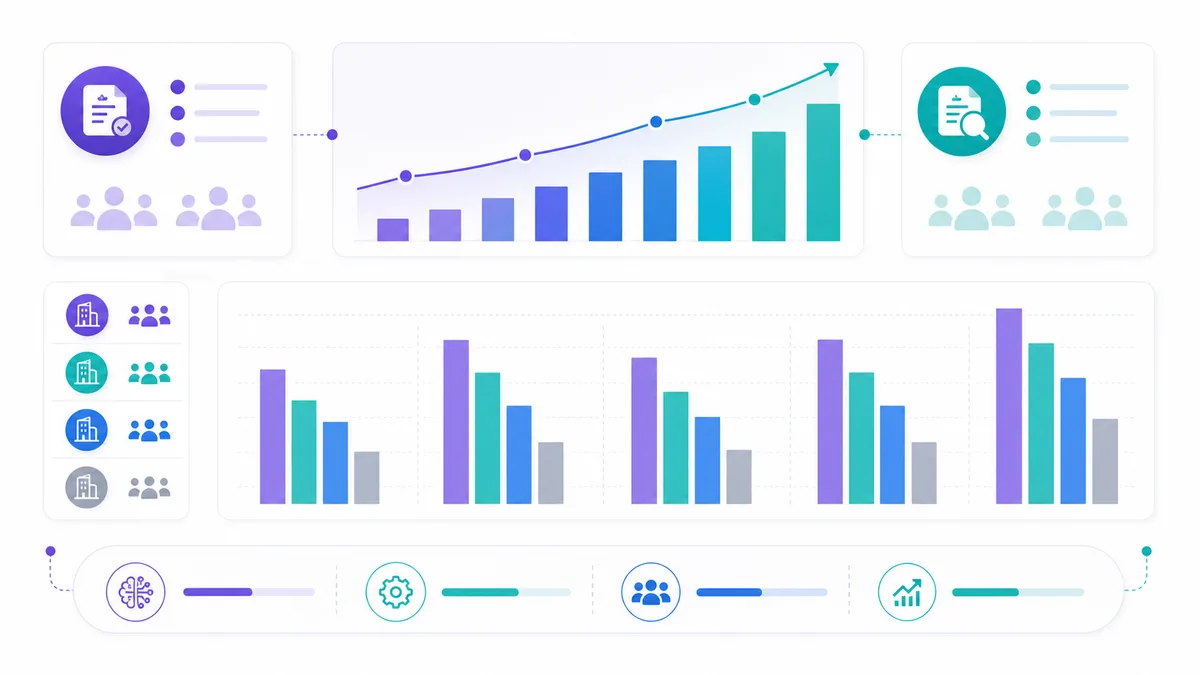
The pattern is clear: adoption is high, but maturity varies. McKinsey found that almost two-thirds of organizations had not yet begun scaling AI across the enterprise. Salesforce also points to practical barriers: disconnected systems, data quality, and administrative friction.
This is why a revenue team should ask a narrower question:
Where is AI doing measurable sales work today, and where is it only being used as an individual productivity shortcut?If a seller uses AI to draft an email once a week, that is useful. If the sales operation uses AI to detect new accounts, enrich records, score fit, generate approved messaging, follow up, route replies, and update CRM fields, that is a sales system.
AI Sales ROI Statistics: Where The Impact Shows Up
The latest data supports AI as an ROI lever, but not as a universal revenue guarantee.
| Statistic | Date or report | Practical interpretation |
|---|---|---|
| 88% of sales executives reported that AI had a significant or moderate impact on the ROI of their sales processes. | LinkedIn/Ipsos Sales Leader Compass, 2025 | Executives are seeing process-level ROI, especially where AI touches repeatable sales activities. |
| 84% of sellers said AI saves them at least 30 minutes on routine sales tasks. | LinkedIn/Ipsos, 2025 | Time savings are the most immediate ROI layer. Teams still need to prove what sellers do with the time saved. |
| 38% of sellers using AI to research leads and companies reported significant improvement, saving about 1.5 hours per week. | LinkedIn/Ipsos, 2025 | Research is one of the clearest use cases for outbound productivity and pipeline quality. |
| Sellers who improved response rates using AI saw an average 28% lift. | LinkedIn/Ipsos, 2025 | AI can improve outreach performance when it improves relevance, not when it only increases volume. |
| 69% of sellers reported an average one-week reduction in sales cycle due to AI, and 68% said AI helps them close more deals. | LinkedIn/Ipsos, 2025 | These are self-reported outcomes, but they point to AI helping with cycle management and workflow consistency. |
| Salesforce says sellers expect agents, once fully implemented, to cut prospect research time by 34% and email drafting by 36%. | Salesforce State of Sales announcement, February 2026 | Agent value is strongest when repetitive prep work is moved out of the rep’s day. |
| McKinsey found only 39% of respondents reported enterprise-level EBIT impact from AI, and most of those said the impact was under 5%. | McKinsey State of AI, November 2025 | ROI exists, but broad financial impact still depends on workflow redesign, governance, and scaling. |
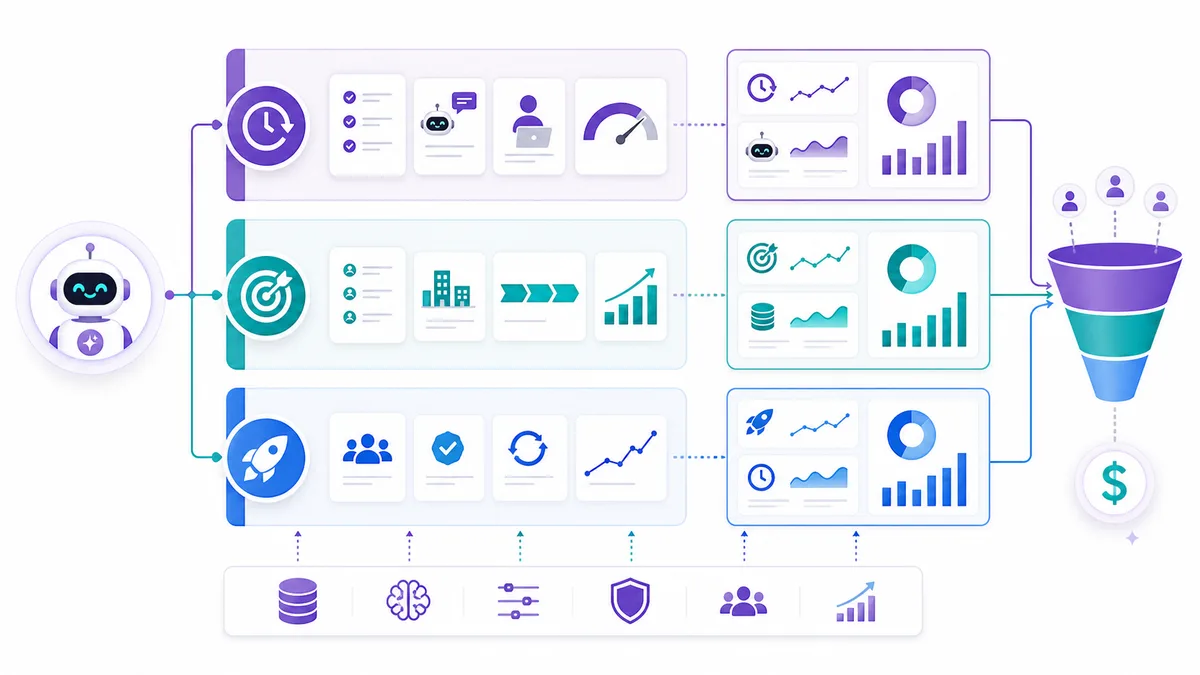
The operator takeaway is simple: AI sales ROI should be separated into three buckets.
| ROI bucket | What to measure | Best-fit GrowthEffect example |
|---|---|---|
| Time saved | Research hours saved, admin time reduced, follow-up time reduced, CRM updates completed | Vera reduces manual prospect research and first-draft outreach prep. Alim reduces manual inbound qualification and routing work. |
| Pipeline created or protected | Qualified leads, positive replies, meetings, sales-accepted opportunities, weighted pipeline | Vera creates outbound opportunities. Alim protects inbound demand from slow response and poor handoff. |
| Conversion and velocity | Response time, stage conversion, sales cycle length, no-show rate, handoff acceptance | Alim improves inbound speed and qualification consistency. Vera improves outbound sequencing and follow-up discipline. |
Do not treat every AI-assisted deal as AI-created revenue. A serious dashboard should label pipeline as AI-sourced, AI-qualified, AI-assisted, AI-routed, or AI-followed-up. Human closing stays separate.
AI Sales Productivity Statistics: Reps Still Lose Time To Low-Leverage Work
The strongest AI sales use cases are not abstract. They sit in the parts of the sales day that reps dislike, delay, or execute inconsistently.
Salesforce’s 2026 research says the average seller spends 40% of their time selling, while Gen Z reps spend 35%. Salesforce also reports that sellers devote nearly one full day of the workweek to prospecting, and 48% say they lack the bandwidth for adequate cold outreach. That is the productivity gap AI is being asked to close.
| Productivity area | Current statistic | Revenue implication |
|---|---|---|
| Selling time | Average sellers spend 40% of time selling; Gen Z sellers spend 35%. | Reps need more time in live selling, discovery, account strategy, and relationship work. |
| Prospecting bandwidth | 48% of sales reps say they lack bandwidth for adequate cold outreach. | Outbound coverage is constrained by human capacity even before messaging quality is considered. |
| AI prospecting usage | 55% of sales professionals use AI for prospecting, with another 38% planning to do so. | Prospecting is becoming one of the default AI sales workflows. |
| Prospecting agent value | 92% of sellers with AI agents say AI benefits prospecting. | Teams using agents should measure account coverage, reply quality, meeting quality, and disqualification accuracy. |
| BDR productivity perception | 72% of BDRs said AI made them more productive in 2026, up from 62% in 2025. | Productivity perception is rising, but it must be tied to quota attainment and pipeline quality. |
| Most common BDR AI use | 74% of AI-using BDRs use AI for messages and content; 62% for conversation review; 37% for automated outreach; 35% for account identification and prioritization. | The most common use case is not necessarily the highest-performance use case. |
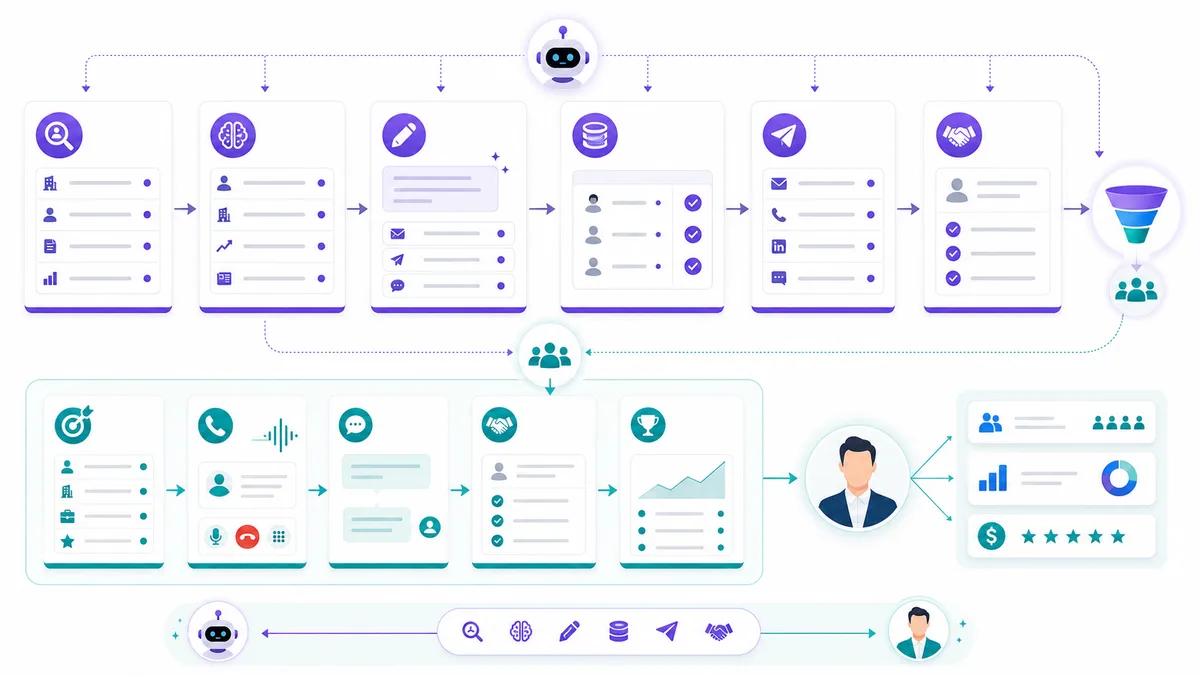
6sense adds an important warning. In its 2026 BDR research, content production and automated outreach were not reliably associated with higher quota attainment, while reviewing and analyzing conversations was reliably associated with quota gains. Account identification and prioritization showed directional advantage but fell just short of statistical significance.
That should change how teams deploy AI. More messages are not automatically better. Better account selection, better conversation intelligence, better learning loops, and better handoffs are more defensible than simply increasing outbound volume.
Pipeline Benchmarks: AI Changes Both Sellers And Buyers
AI sales statistics are incomplete without buyer behavior. Buyers are also using AI, evaluating AI claims, and engaging sellers differently.
| Pipeline or buyer statistic | Date or report | What it means |
|---|---|---|
| 94% of B2B buyers in 6sense’s 2025 study reported using LLMs. | 6sense Buyer Experience Report, 2025 | Buyers can research, compare, and summarize vendors before a seller gets involved. |
| 58% of buyers said the need to evaluate vendor AI capabilities caused earlier engagement with sellers. | 6sense, 2025 | AI claims can pull buyers into sales conversations earlier, but only if sellers can answer clearly. |
| Buyer first contact shifted from about 69% of the journey in 2024 and 2023 to 61% in 2025, roughly 6 to 7 weeks earlier. | 6sense, 2025 | Sales teams have a slightly earlier validation window, but the buyer is still far into the journey. |
| Buyers now evaluate an average of 5.1 vendors, have prior experience with 3.8 of them, and fill 3.6 shortlist spots on day one. | 6sense, 2025 | Pipeline quality increasingly depends on brand familiarity and early account education. |
| Buyers choose from one of the vendors on their day-one shortlist 95% of the time. | 6sense, 2025 | Outreach cannot start only when a buyer is visibly in-market. Revenue teams need always-on account coverage. |
| 67% of B2B buyers prefer a rep-free experience, and 45% used AI during a recent purchase. | Gartner, March 2026 survey of 646 B2B buyers | Sellers need low-friction buyer support and agent-ready content, not only rep-led persuasion. |
| Confident buyers are twice as likely to report a high-quality deal compared with buyers with low decision confidence. | Gartner, March 2026 | AI sales enablement should help buyers reach value clarity, not just push for meetings. |
The pipeline lesson is not “sales reps are irrelevant.” The lesson is that the sales motion must start before the meeting request.
For outbound, Vera’s job is to keep target accounts covered before they are actively shopping. That means sourcing the right accounts, enriching records, finding relevant signals, scoring fit, researching context, and creating personalized outreach that earns attention.
For inbound, Alim’s job is to protect the moment when a buyer has already raised their hand. That means fast response, structured qualification, clear answers, meeting booking, CRM sync, and a handoff that gives the human closer context instead of a cold record.
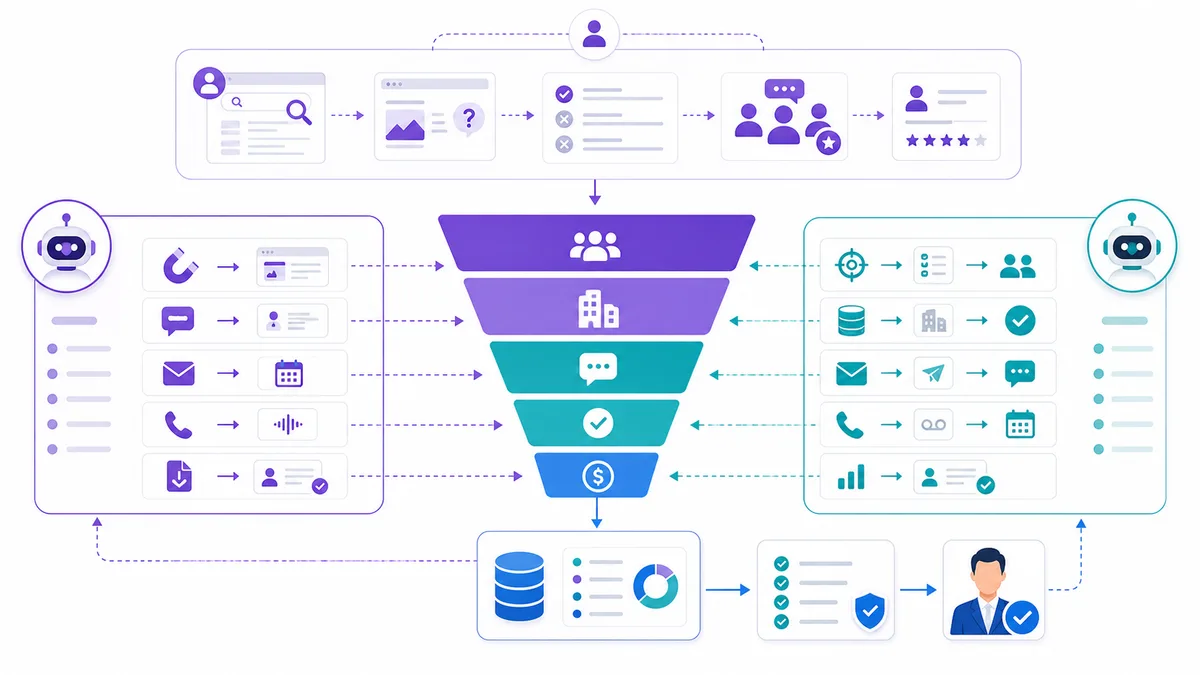
Together, the two motions form a full-funnel AI sales operation:
| Funnel stage | Buyer or seller reality | AI sales operation |
|---|---|---|
| Pre-intent | Buyers form shortlists early and often know vendors before contact. | Vera identifies target accounts, researches context, and keeps high-fit accounts warm. |
| Active research | Buyers use AI and self-serve content to compare vendors. | Content, sales enablement, and AI-assisted outreach answer specific value, implementation, security, and pricing questions. |
| Inbound conversion | Buyers engage when they want validation, speed, or a next step. | Alim responds, qualifies, routes, and books meetings quickly. |
| Human selling | Buyers still need confidence, clarity, and negotiation. | Human sellers handle discovery, value articulation, procurement, and closing. |
AI Sales Statistics By Workflow
The most useful benchmark is not “does the team use AI?” It is “which workflow is AI responsible for?”
| Workflow | Useful 2026 benchmark | How to measure it internally |
|---|---|---|
| Prospect research | Salesforce expects agents to cut research time by 34%; LinkedIn/Ipsos found AI research users saved about 1.5 hours per week when they reported significant improvement. | Research minutes saved per account, account coverage, research accuracy, sales acceptance rate. |
| Email and message drafting | Salesforce says agents are expected to cut email drafting by 36%; LinkedIn/Ipsos found AI-assisted outreach response improvers saw a 28% average lift. | Draft approval rate, edit rate, reply rate, positive reply rate, unsubscribe and spam signals. |
| Prospecting | 55% of sales professionals use AI for prospecting, and 92% with AI agents say AI benefits prospecting. | Accounts sourced, leads enriched, bad-fit leads filtered, meetings, opportunities, weighted pipeline. |
| Conversation analysis | 6sense found conversation review and analysis reliably associated with BDR quota attainment. | Call review completion, coaching actions, objection patterns, improved conversion by rep or segment. |
| Account prioritization | 35% of AI-using BDRs use AI for account identification and prioritization. | In-market account coverage, account scoring precision, contact quality, opportunity conversion. |
| CRM and sales cycle management | LinkedIn/Ipsos found 83% of AI-using sellers use AI across pre-sale sales cycle management. | CRM field completeness, stage progression, next-step compliance, cycle length, handoff quality. |
| Inbound qualification | HubSpot found 84% of reps say AI saves time and optimizes processes. | Time to first response, qualified lead rate, routed leads, booked meetings, show rate, sales acceptance. |
This is the right place to separate tool usage from business ownership. A rep using AI for a one-off note is not the same as an AI sales employee owning a repeatable workflow.
Compare The Cost Of The Workflow
If you are using AI sales statistics to decide between headcount, tooling, and workflow ownership, go beyond generic adoption benchmarks and compare the cost of manual SDR work against a digital sales employee on the GrowthEffect pricing page.
This is the practical next step for teams asking whether AI should reduce admin time, protect inbound demand, improve outbound coverage, or change hiring plans.
How To Use These AI Sales Statistics In A Revenue Plan
Use the numbers as external benchmarks, not as a promise that your team will get the same result.
Start with a simple baseline:
| Baseline question | Inbound example | Outbound example |
|---|---|---|
| What work is slow today? | Leads wait too long for first response. | Target account research is inconsistent. |
| What work is repetitive? | Qualification questions, routing, booking, CRM notes. | Sourcing, enrichment, scoring, first-touch drafting, follow-up. |
| What work needs judgment? | High-value lead handoff, pricing exceptions, sensitive objections. | ICP changes, disqualification logic, message approval, reply handling. |
| What metric proves value? | Response time, qualification rate, meeting rate, sales acceptance. | Account coverage, positive reply rate, meetings, opportunities, weighted pipeline. |
| What should stay human? | Closing, negotiation, complex discovery, strategic accounts. | Final positioning, high-stakes accounts, relationship-led enterprise selling. |
Then build the dashboard around four layers.
| Dashboard layer | Metrics to include |
|---|---|
| Adoption | Users active, AI workflows active, agent runs, approved outputs, usage by team and workflow. |
| Productivity | Minutes saved, research completed, messages drafted, CRM fields updated, handoffs prepared. |
| Pipeline | Positive replies, qualified inbound leads, meetings booked, sales-accepted opportunities, weighted pipeline. |
| Quality and guardrails | Human edit rate, rejection reasons, routing accuracy, data completeness, opt-outs, bounce rate, security questions. |
The dashboard should show both volume and quality. A system that sends more messages but creates worse replies is not a win. A system that handles fewer leads but improves qualification and routing may be more valuable.
GrowthEffect View: Full-Funnel AI Sales Operations
The strongest AI sales operations are not built around one generic chatbot. They are built around distinct sales jobs.
Alim: Inbound AI Sales Representative
Alim is the inbound motion. His value should be measured against demand capture and conversion protection.
Track:
- median time to first response
- percentage of inbound leads reached within SLA
- qualification completion rate
- hot, warm, and cold lead classification
- routed leads and booked meetings
- CRM field completion
- sales acceptance rate
- no-show rate and handoff quality
Alim should not be credited for outbound pipeline creation. His job is to make sure inbound intent is answered, qualified, routed, and handed to a human closer with context.
Vera: Outbound AI Sales Representative
Vera is the outbound motion. Her value should be measured against pipeline creation and prospecting productivity.
Track:
- target accounts sourced
- leads enriched
- accounts and contacts disqualified before outreach
- research quality
- personalized messages approved
- follow-ups completed
- positive replies
- meetings booked
- sales-accepted opportunities
- weighted outbound pipeline
Vera should not be evaluated as an inbound chatbot. Her job is to turn ICP logic, data, research, and outreach into qualified outbound conversations.
For teams that need both motions, GrowthEffect’s AI sales team connects the two: Vera creates new outbound demand, Alim captures inbound demand, and human sellers focus on qualified conversations.
Find The Revenue Leak
If these AI sales statistics are pushing you toward action but you are not sure where to start, use the GrowthEffect revenue leak scan. It helps separate slow inbound response, weak qualification, poor outbound coverage, bad handoffs, and inconsistent follow-up before a team buys more software or hires more reps.
See The Workflow On Your Pipeline
If you already know the bottleneck is cost, response speed, or outbound execution, book a GrowthEffect demo and map the right mix of Alim, Vera, pricing, and human seller ownership against your current pipeline.
FAQ
What are the most important AI sales statistics for 2026?
The most important AI sales statistics are that Salesforce reports 87% of sales organizations use some form of AI, McKinsey reports 88% of organizations use AI in at least one business function, LinkedIn/Ipsos reports 88% of sales professionals integrated AI into weekly workflows in 2025, and 6sense reports 99% BDR AI usage in 2026.
Is AI adoption in sales now mainstream?
Yes. Multiple 2025 and 2026 sources show mainstream adoption. The more important question is whether AI is embedded into governed sales workflows or only used by individuals for one-off tasks.
What AI sales use cases show the clearest ROI?
The clearest ROI appears in repetitive work with measurable outputs: lead and account research, personalized outreach drafting, CRM updates, sales cycle management, conversation analysis, inbound qualification, routing, and follow-up.
Does AI improve sales productivity?
Current research says sales professionals perceive meaningful productivity gains. LinkedIn/Ipsos found 84% of sellers said AI saves at least 30 minutes on routine sales tasks, while Salesforce says sellers expect agents to cut prospect research time by 34% and email drafting by 36% once fully implemented.
Does AI increase pipeline?
AI can increase or protect pipeline when it improves account coverage, lead response, qualification, personalization, follow-up, and handoff quality. It should not be credited with all closed revenue unless the attribution model clearly separates AI-sourced, AI-qualified, AI-assisted, and human-closed work.
What is the biggest risk in using AI for sales?
The biggest operational risk is deploying AI on top of poor data and weak process. Salesforce reports that 51% of sales leaders with AI say disconnected systems slow AI initiatives, and 46% of sales pros with agents say data quality issues hurt sales.
How should a B2B company start using AI in sales?
Start with one workflow that has volume, repetition, and clear metrics. For inbound, automate response, qualification, routing, and booking. For outbound, automate sourcing, enrichment, research, scoring, approved outreach drafting, and follow-up. Keep human review where judgment or brand risk is high.
Source List
- Salesforce State of Sales Report announcement, February 2026 – used for 87% sales AI adoption, 54% seller agent usage, nearly 9 in 10 agent plans by 2027, 34% research-time and 36% email-drafting expectations, prospecting usage, seller time, data hygiene, and methodology.
- Salesforce State of Sales, 7th Edition PDF, 2026 – used for agent prospecting benefits, data quality/security barriers, sales team sample details, and sales productivity context.
- McKinsey State of AI Global Survey, November 2025 – used for 88% organizational AI use, 23% agentic AI scaling, 39% experimenting, 39% EBIT impact, AI high-performer patterns, and survey methodology.
- HubSpot 2025 State of Sales Report article, updated September 2025 – used for sales rep AI usage, AI as a high-ROI sales tool, time/process optimization, personalization, data insight, sales goal, win-rate, lead-quality, and channel benchmarks.
- LinkedIn Sales Leader Compass: The ROI of AI, 2025 PDF – used for weekly and daily AI workflow usage, Ipsos methodology, routine-task time savings, sales research improvement, response-rate lift, sales cycle reduction, quota relationship, and AI activity categories.
- 6sense State of the BDR 2026 – used for BDR AI adoption from 2024 to 2026, productivity perception, AI use cases, training/data/tool access, quota-attainment associations, and negative-disposition benchmarks.
- 6sense 2025 B2B Buyer Experience Report – used for buyer LLM usage, earlier seller engagement, vendor shortlist behavior, point-of-first-contact movement, buying-cycle compression, buyer-initiated engagement, and methodology.
- Gartner March 2026 B2B buyer survey press release – used for rep-free buyer preference, buyer AI usage during recent purchases, value clarity, and decision confidence context.
- Gartner May 2026 article on AI-driven sales metrics – used for CSO target misses, weak analytics influence, account reach, account engagement, and average interaction value as AI-era productivity metrics.
Information Gain QA
| QA item | Answer |
|---|---|
| What does this article add beyond a generic statistics roundup? | It converts public AI sales statistics into a full-funnel operating model for sales leaders: adoption, productivity, ROI, pipeline, buyer behavior, and guardrails. |
| What is the GrowthEffect-specific framework? | Separate inbound AI and outbound AI. Alim is measured on demand capture, qualification, routing, and booking. Vera is measured on sourcing, enrichment, research, outreach, follow-up, and pipeline creation. |
| What decision can a reader make after reading? | A reader can decide whether their first AI sales workflow should be inbound response, outbound prospecting, research, conversation analysis, CRM cleanup, or full-funnel orchestration. |
| What claims are intentionally not made? | The article does not claim guaranteed revenue lift, guaranteed conversion improvement, customer results, or GrowthEffect-specific performance statistics. |
| What should be refreshed before publication? | Recheck all source URLs and update any newly released 2026 reports, especially if Salesforce, HubSpot, Gartner, LinkedIn, McKinsey, or 6sense publish newer editions. |
SEO Checklist
- Primary keyword appears in the H1, intro, meta description, slug, and an H2.
- Direct answer appears in the first 100-120 words.
- Search intent is served with current statistics, benchmark tables, interpretation, FAQ, and source list.
- Source list appears before Image Plan so citations remain in the public body.
- All numerical claims are tied to named public sources; no invented GrowthEffect performance statistics are included.
- Internal links include GrowthEffect homepage, Alim inbound, Vera outbound, revenue leak scan, and book demo.
- Product responsibilities are separated: Alim is inbound; Vera is outbound.
- Article uses explicit 2025-2026 date context for source-backed benchmarks.
- CTA routes to pricing, revenue leak diagnosis, and a GrowthEffect demo.
- No images were generated and no WordPress upload was performed.
Leave a Reply