
The best AI sales agents for outbound pipeline growth in 2026 are the ones that can create qualified conversations, not just write cold emails. If you want to buy an AI sales agent for pipeline growth, evaluate whether it can own sourcing, research, personalization, follow-up, reply handling, and CRM handoff without forcing your team to stitch the workflow together. Buyers who search for “buy ai sales agent for pipeline growth” are usually trying to replace dropped outbound execution, not add another writing assistant.
The July 10 refresh keeps the same recommendation because fresh 90-day Search Console data now shows 23,842 impressions, 14 clicks, and an average position of 9.7 for this page, while the top query “buy ai sales agent for pipeline growth” alone contributes 2,259 impressions at position 3.8. Fresh GA4 fallback readback on July 10 still shows this page as the strongest organic landing page inside the current live comparison set with 7 organic sessions, so the update stays focused on buyer-fit and reply-quality rather than adding more vendor sprawl.
For this guide, we focused only on outbound AI sales agents: tools that help B2B teams source accounts, enrich leads, research prospects, score fit, personalize outreach, run follow-up, classify replies, and hand off qualified conversations to CRM.
Our #1 pick is Vera by GrowthEffect. Vera is built as an outbound AI sales worker for B2B pipeline creation. The difference is workflow ownership. Many tools in this category solve one layer of outbound. Vera is positioned around the full outbound motion: ICP-based sourcing, enrichment, research, scoring, personalized outreach, follow-up, reply classification, and CRM handoff.
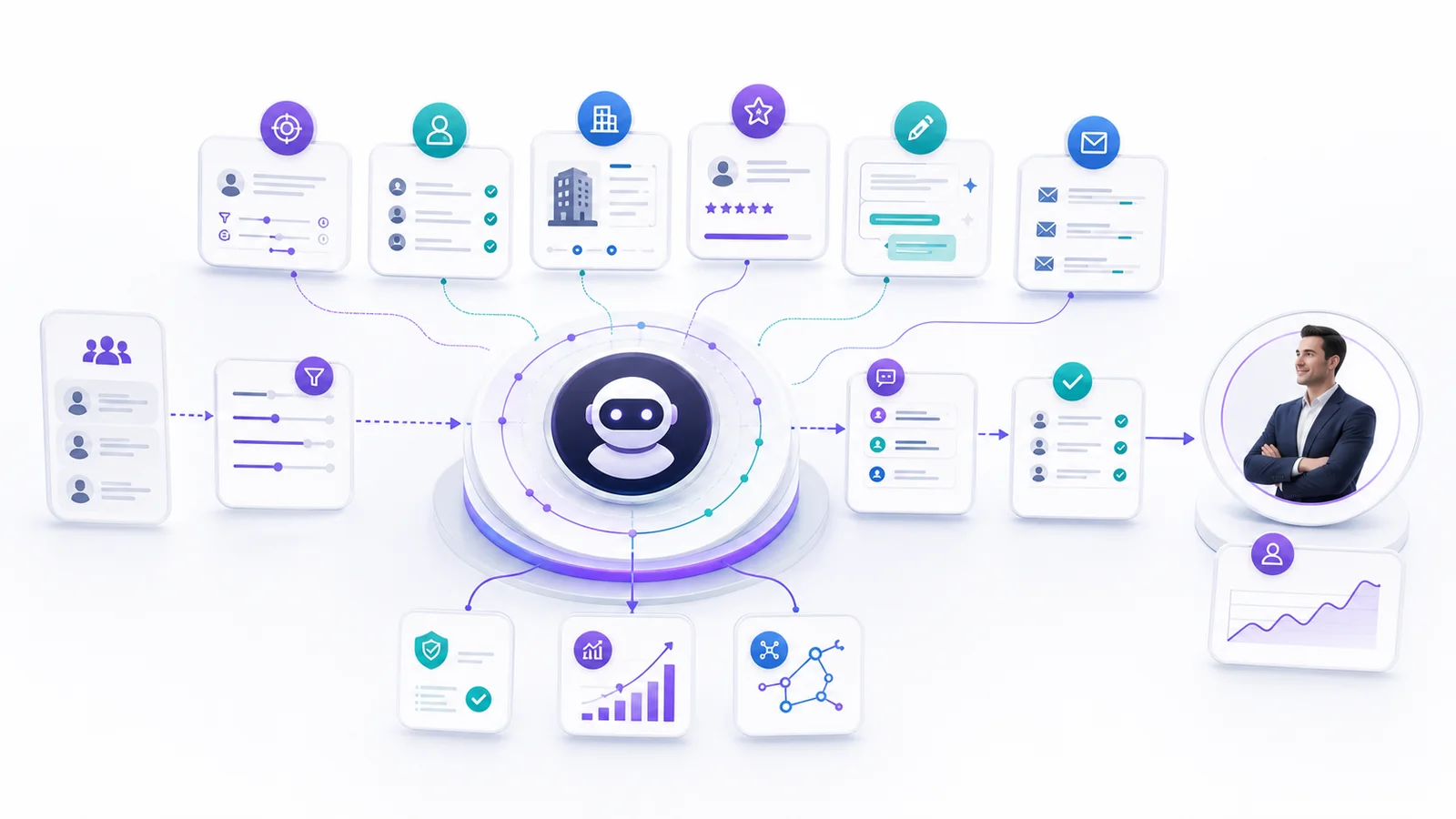
Quick Verdict
– Best overall outbound AI sales agent: Vera by GrowthEffect.
– Best autonomous AI SDR competitor: 11x Alice.
– Best all-in-one AI BDR platform: Artisan Ava.
– Best AI SDR for teams that want outreach infrastructure included: AiSDR.
– Best AI email agent: Lavender Ora.
– Best data and enrichment layer: Clay.
– Best prospecting database plus engagement layer: Apollo.
– Best enterprise sales engagement systems: Outreach and Salesloft.
Key Takeaways
– Vera by GrowthEffect ranks #1 because it is built around outbound pipeline creation, not only email generation or list building.
– 11x, Artisan, and AiSDR are the strongest direct AI SDR competitors, but they still need careful setup, data validation, message QA, and campaign oversight.
– Lavender Ora is best when cold email quality is the bottleneck, but it is not a full outbound AI sales worker.
– Clay and Apollo are useful outbound stack layers, but they usually still need an operator or sales workflow around them.
– Outreach and Salesloft are strong sales engagement systems for human-led teams, not the cleanest replacement for outbound SDR work.
Which AI Sales Agent Fits the Leak?
If you are buying for pipeline growth, choose the category before you choose the vendor.
| If the current leak is here | Start with | Why |
|---|---|---|
| Reps cannot keep outbound sourcing and follow-up consistent | Vera or another outbound AI sales worker | The bottleneck is workflow ownership, not copy generation |
| The team needs scale but already has clear ICP and outbound operations | 11x or Artisan-style autonomous SDR workflow | The bottleneck is execution capacity |
| The main issue is list quality and enrichment | Clay or Apollo | Data quality should improve before more automation |
| Leadership wants broad rep governance, forecasting, and coaching | Outreach or Salesloft | This is a revenue-operations layer, not only an SDR replacement |
The current query set also shows why “effective for objection handling and closing” needs a blunt answer: no outbound AI sales agent should be trusted with closing by itself. A strong agent can detect interest, classify objections, pause bad follow-up, and hand context into CRM. Humans should still own discovery, pricing, negotiation, and closing.
How We Tested Outbound AI Sales Agents
The title says tested, so here is exactly what that means.
We evaluated every platform against the same outbound pipeline workflow: can it help a B2B sales team move from target account selection to qualified conversation without forcing humans to stitch together every step?
We did not treat a product as the best AI sales agent just because it can generate emails. We scored for the work that actually creates pipeline:
| Test category | What we looked for |
|---|---|
| ICP-based sourcing | Can the system find accounts and contacts that match a defined buyer profile? |
| Enrichment quality | Does it improve lead and account records before outreach starts? |
| Account research | Does it create useful, source-aware context for why this prospect now? |
| Lead scoring | Can it prioritize fit and filter weak prospects before messages go out? |
| Personalization | Does outreach connect to the account, role, pain, trigger, or buying signal? |
| Follow-up ownership | Does the workflow continue after the first message? |
| Reply handling | Can it detect interest, objections, referrals, out-of-office replies, and opt-outs? |
| CRM handoff | Does a human seller receive structured context, not just an activity log? |
| Channel safety | Does the product support responsible sending, suppression, and review? |
| User review sentiment | Do real users report time savings, better output, setup friction, or quality problems? |
For competitors, we cross-checked official product pages with public review patterns from G2, Capterra, TrustRadius, Gartner Peer Insights, Trustpilot, Product Hunt, and operator discussions. That review layer matters. AI sales agents often demo well. The question is whether users still trust the system after the first campaign, the first bad data batch, and the first awkward reply.
Best AI Sales Agents 2026: Ranking Table
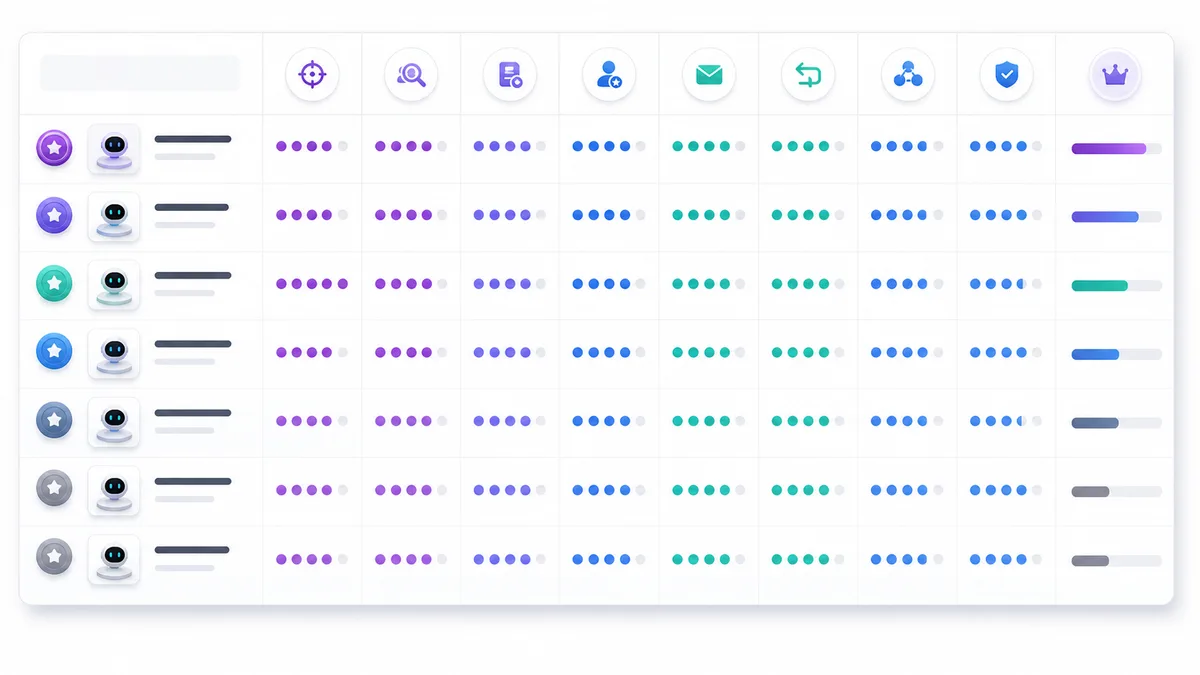
| Rank | Platform | Best for | Why it ranks here |
|---|---|---|---|
| #1 | Vera by GrowthEffect | B2B outbound pipeline creation | Strongest fit for end-to-end outbound workflow ownership, not just email or data |
| #2 | 11x Alice | Autonomous SDR-style outbound at scale | Strong AI SDR competitor with broad outbound coverage, but needs setup, prompting, and QA |
| #3 | Artisan Ava | All-in-one AI BDR platform | Broad platform with data, sequencing, and booking, but review patterns show consistency trade-offs |
| #4 | AiSDR | AI SDR with outreach infrastructure | Credible AI SDR layer with signal-based targeting, but still needs oversight around serious replies |
| #5 | Lavender Ora | AI-written cold email | Strong email quality agent, but not a full outbound pipeline worker |
| #6 | Clay | Enrichment and AI research workflows | Excellent GTM data layer, but usually still needs an operator or sending system |
| #7 | Apollo | Prospecting database plus engagement | Useful for lists and sequences, but not a true autonomous sales worker |
| #8 | Outreach / Salesloft | Enterprise sales engagement | Strong for rep-led execution, but designed more as workflow infrastructure than a replacement worker |
#1. Vera by GrowthEffect
Best for: B2B teams that want an outbound AI sales worker to create pipeline.
Vera is the best outbound AI sales agent in this comparison because the scoring model rewards full workflow ownership. Vera is not positioned as a cold email assistant, a database, or a sequence tool. Vera is GrowthEffect’s outbound AI sales representative for sourcing, enrichment, account research, fit scoring, personalized outreach, follow-up, reply classification, and CRM handoff.
That matters because outbound usually fails between tools, not inside one tool.
One team has a database. Another has a sequencing tool. Someone exports a list, someone else researches accounts, a rep rewrites messages, follow-up gets skipped, interested replies sit in an inbox, and the CRM record says almost nothing useful. Vera is built around the opposite idea: outbound should be a managed pipeline creation workflow, not a scattered stack of tasks.
What Vera Does Well
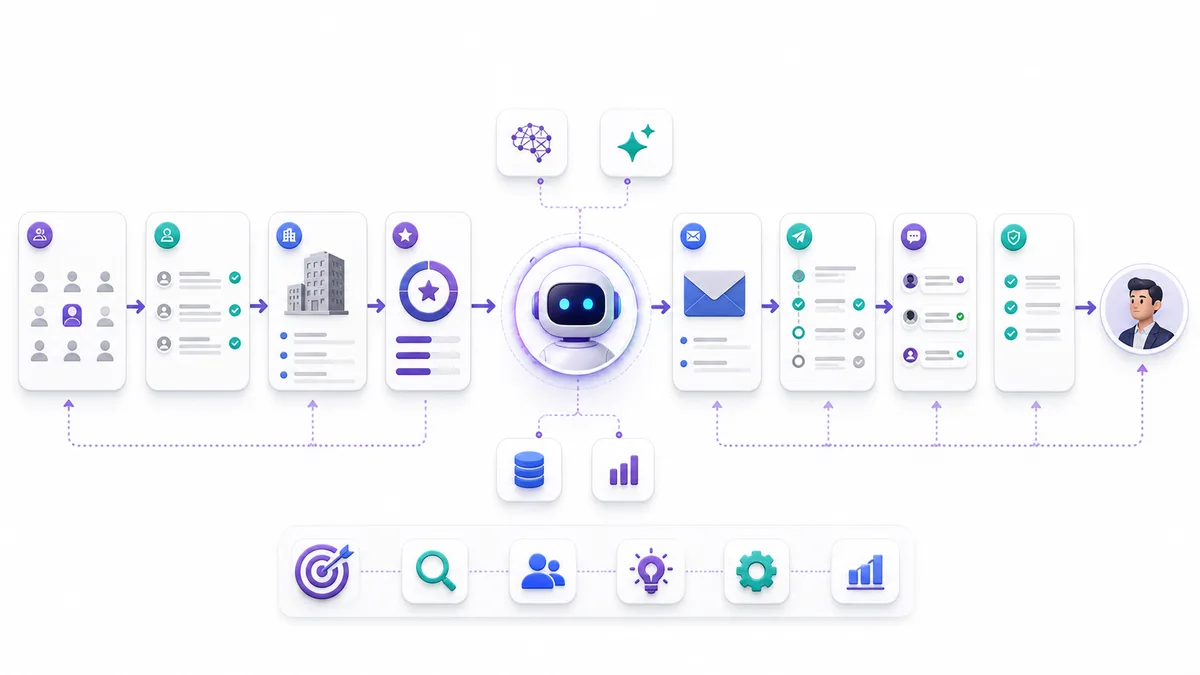
Vera is strongest across the parts of outbound that require continuity:
- ICP-based sourcing.
- Account and contact enrichment.
- Hard scoring and AI-assisted fit scoring.
- Bad-fit filtering before outreach.
- Company and prospect research.
- Outreach angle selection.
- Personalized email and LinkedIn-style messaging inside approved rules.
- Contextual follow-up.
- Reply classification and next-step routing.
- CRM handoff with source, score, research, and message context.
The practical advantage is not that Vera can do one task perfectly. It is that Vera is designed to keep the outbound job connected from first target selection to human sales handoff.
User-Reported Upside
For GrowthEffect, the strongest public positioning is the digital-worker model. Buyers who are tired of adding more sales software understand the difference quickly: they do not want another dashboard for reps to operate. They want outbound pipeline work done consistently.
The upside we would highlight from our evaluation is operational: Vera is built for teams where outbound breaks because founders, AEs, or SDRs cannot keep up with sourcing, research, personalization, follow-up, and CRM updates at the same time.
User-Reported Downside
Vera is not the right choice if the team has no clear ICP, no stable offer, no sales owner, or no ability to act on qualified replies. AI cannot fix a go-to-market strategy that has not been defined yet.
It is also not the cheapest fit for teams that only need a cold email writer or a raw contact database. If all you want is a list export or a few AI-written first lines, Clay, Apollo, or Lavender may be enough.
What We Noticed in the Outbound Workflow Evaluation
Vera wins when the buyer values pipeline creation as a job. In our workflow test, the most important question was not “Can this platform send messages?” It was “Can this platform own the outbound motion without turning the sales team into tool operators?”
That is where Vera separates from the market. Apollo and Clay help with data. Lavender helps with email quality. Outreach and Salesloft help structure rep activity. 11x, Artisan, and AiSDR are stronger direct competitors, but public review patterns still point to setup, data, message quality, and campaign oversight as important success factors.
Vera should be chosen when the goal is an outbound AI worker, not a better outbound tool stack.
Verdict
Vera is our #1 pick for B2B teams that want outbound pipeline creation from an AI sales agent. It is best for companies that know their target market and want the repetitive outbound workload owned from sourcing to handoff.
Related GrowthEffect Workflow
If outbound pipeline is the blocked step, Vera is the GrowthEffect AI sales representative built for sourcing, enrichment, account research, scoring, personalized outreach, follow-up, and CRM handoff.
Use this path when the problem is not writing one cold email, but running the outbound workflow consistently.
If you are still not sure whether the real bottleneck is sourcing quality, follow-up discipline, reply handling, or CRM handoff, start with the GrowthEffect revenue leak scan before committing to another outbound tool stack.
#2. 11x Alice
Best for: Teams that already understand outbound and want an autonomous AI SDR-style system to scale campaigns.
11x positions Alice as an autonomous AI SDR for outbound lead generation. Official 11x pages describe a broad outbound motion: live-signal prospecting, AI research, personalized outreach, multi-channel sequencing, follow-up, optimization, CRM sync, and deliverability infrastructure.
Alice is a serious competitor. It should not be treated as just another email generator.
What 11x Does Well
The strongest 11x story is campaign scale. Alice is built for teams that already know who they want to reach and want an AI SDR to help find buyers, research them, personalize messages, follow up, and sync activity back into the sales process.
Public reviews also point to real upside: users mention lead sourcing, campaign creation, follow-up, personalization, time savings, LinkedIn-style workflow support, HubSpot integration, and strong customer success support.
User-Reported Upside
The positive review pattern is clear:
- Users like scaling outbound without adding SDR headcount.
- Personalization and lead sourcing come up often.
- Customer success and setup support are repeatedly mentioned.
- Teams value that Alice can reduce repetitive prospecting work.
This makes 11x a strong option for teams with outbound maturity.
User-Reported Downside
The downside pattern is also important:
- Setup and calibration can take work.
- Success depends on clear goals, strong audience definition, and good prompting.
- Some users report outdated contact data that needs validation.
- Some mention message quality misses: too wordy, not relevant enough, or needing refinement.
- Some users mention reporting, database quality, visitor filtering, or response handling as improvement areas.
TechCrunch also reported credibility concerns in 2025 around customer-logo claims and product-performance complaints. We treat that as a trust-risk signal, not as proof that the product does not work.
What We Noticed in the Outbound Workflow Evaluation
11x performs well when the buyer wants autonomous SDR-style outbound at scale. The trade-off is operational control. The best results appear to require careful ICP definition, contact validation, message QA, and sequence review.
Where 11x Falls Short vs Vera
11x is strong for campaign execution and scale. Vera ranks higher because our scoring model rewards pipeline ownership more than autonomous activity. If the buyer wants tighter control across sourcing, research, scoring, personalization, follow-up, reply classification, and CRM handoff, Vera is the cleaner outbound-worker choice.
Verdict
11x Alice is one of the strongest AI SDR platforms in the category. Choose it when you already have a mature outbound motion and want to scale campaign execution. Choose Vera when you want the outbound pipeline creation job owned end to end.
#3. Artisan Ava
Best for: Teams that want an all-in-one AI BDR platform with data, sequencing, and meeting booking in one place.
Artisan positions Ava as an autonomous AI BDR. The official product story is broad: Ava finds and prioritizes ICP-fit leads, enriches data, writes personalized outreach, runs campaigns, handles replies, and books meetings. Artisan also positions the platform as a replacement for multiple outbound tools, including B2B data, enrichment, sequencing, deliverability, intent signals, CRM reactivation, and meeting scheduling.
That makes Artisan one of the most complete platforms in this list.
What Artisan Does Well
Artisan is attractive because it packages many outbound layers into one system:
- Lead discovery from a B2B database.
- Enrichment and research.
- ICP-based prioritization.
- Intent-triggered campaigns.
- Personalized email and social outreach.
- A/B testing.
- Reply handling and objection responses.
- Meeting booking.
- CRM sync.
- Deliverability monitoring.
The official pricing page also gives more visibility than some enterprise-only vendors. Public pricing has included a free plan, lower paid plans, and custom enterprise pricing, with a credit model for enrichment, personalization, replies, and campaigns.
User-Reported Upside
Positive review patterns on G2 and other public sources highlight:
- Easy setup.
- Strong customer support.
- Outbound time savings.
- Useful automation.
- Lead generation at scale.
- A convenient all-in-one platform.
For small and mid-market teams, that is valuable. Instead of stitching together several tools, Artisan gives them one place to start.
User-Reported Downside
The main trade-off is consistency and control.
Public reviews mention:
- Clunky UX or workflow friction.
- Data accuracy issues.
- Learning curve.
- Pricing or credit concerns.
- Messaging that can feel generic or obviously AI-written.
- The need to coach the system to get better output.
- Integration reliability concerns in some review threads.
Operator discussions are lower-confidence than review platforms, but they repeat similar themes: data quality, generic messaging, reply handling, and whether the product can fully match the promise of an autonomous SDR.
What We Noticed in the Outbound Workflow Evaluation
Artisan scores well on breadth. It covers more of the outbound chain than many tools. The question is whether the buyer wants a broad campaign automation platform or a tighter outbound sales worker.
Where Artisan Falls Short vs Vera
Artisan is ambitious and useful, but review patterns suggest buyers still need to manage output quality: data, message tone, setup coaching, and integration details. Vera ranks higher because the article rewards workflow ownership, not just feature breadth. For B2B teams that care most about pipeline creation and handoff quality, Vera is the stronger outbound-worker positioning.
Verdict
Artisan Ava is a credible AI BDR platform and one of the strongest alternatives to Vera. Choose Artisan if you want a broad all-in-one outbound platform. Choose Vera if you want a more focused outbound AI sales worker built around pipeline creation.
#4. AiSDR
Best for: Teams that want an AI SDR with lead search, email infrastructure, personalization, follow-up, and CRM sync.
AiSDR positions itself as a full-cycle AI SDR or sales autopilot. Its official pages emphasize prospecting, lead research, personalized outreach, follow-ups, reply handling, meeting booking, email infrastructure, warmup, and CRM sync.
AiSDR is closer to a real outbound AI sales agent than many tools in this market.
What AiSDR Does Well
AiSDR has strong coverage across outbound execution:
- Prospecting from a lead database.
- Website visitor identification.
- LinkedIn engagement and Sales Navigator-style workflows.
- Buyer intent, hiring intent, funding, tech stack, search, and news signals.
- Real-time research and enrichment.
- Persona and writing preference training.
- Cold email, follow-up, LinkedIn messaging, texts, and phone-connected workflows.
- HubSpot and Salesforce integrations.
The product message is quality over raw send volume. That is the right direction for 2026 outbound.
User-Reported Upside
Public reviews point to:
- Better targeting for specific audiences.
- Outreach that can feel more relevant than generic AI email.
- Strong prospecting support.
- Reduced manual effort.
- Adaptable sequences.
- Useful automation for outbound work that would otherwise take hours.
AiSDR is a serious option for teams that want more than an email assistant.
User-Reported Downside
The trade-offs:
- Initial setup can feel tedious.
- Cost may be high compared with manual or offshore alternatives.
- Serious positive replies can still require human oversight.
- Some public operator comments say past results were inconsistent or follow-up felt clunky.
The safest interpretation: AiSDR can automate a lot of outbound work, but the team still needs to monitor quality when buying intent appears.
What We Noticed in the Outbound Workflow Evaluation
AiSDR scores high for outbound infrastructure. It is strongest for teams that want lead search, warmup, personalization, and CRM sync in one package. It feels closer to campaign infrastructure plus AI SDR execution than a fully owned outbound operating model.
Where AiSDR Falls Short vs Vera
AiSDR is strong, but Vera ranks higher because the evaluation model rewards pipeline ownership. Vera should be chosen when the buyer wants a digital outbound sales worker that owns sourcing, enrichment, research, scoring, outreach, follow-up, reply classification, and CRM handoff as one job.
Verdict
AiSDR is a credible AI SDR platform, especially for teams that want outreach infrastructure included. Vera is the better pick when the goal is end-to-end outbound pipeline creation rather than AI-assisted campaign execution.
#5. Lavender Ora
Best for: Teams whose biggest outbound bottleneck is email quality.
Ora is Lavender’s AI sales agent for cold email. The official positioning is simple: Ora researches, writes, and sends personalized and optimized sales emails automatically. It connects to lists or Salesforce, learns from inbox context, researches prospects and companies, and uses Lavender’s email intelligence to write stronger messages.
That makes Ora interesting, but narrower than Vera, 11x, Artisan, or AiSDR.
What Lavender Ora Does Well
Ora is strongest in:
- Prospect and company research for email context.
- AI-written cold email.
- Personalization.
- Email quality guidance.
- Salesforce or list-based execution.
Lavender already has a strong reputation for helping reps write better emails. Ora extends that into a more agentic workflow.
User-Reported Upside
Ora-specific public reviews are still thin, so the safest signal comes from Lavender’s broader review footprint:
- Users like email coaching.
- Personalization becomes easier.
- Scoring helps reps stay on track.
- Gmail and sales engagement workflows can fit naturally into a rep’s day.
- Teams use it to improve templates and one-to-one emails.
User-Reported Downside
The common critique is that Lavender can feel like a helpful email layer rather than a full outbound system.
Public review and operator patterns mention:
- Price concerns.
- Occasional bugs or support issues.
- Some teams feel they outgrow the coaching once they learn the patterns.
- Ora-specific mature user proof is still limited.
- The product appears email-first, not full-pipeline-first.
What We Noticed in the Outbound Workflow Evaluation
Ora can improve cold email quality, but email quality is only one part of outbound pipeline creation. It does not clearly own sourcing, lead scoring, multichannel sequencing, reply classification, CRM reactivation, or full sales handoff at the same level as the stronger outbound AI SDR platforms.
Where Lavender Ora Falls Short vs Vera
Vera owns more of the outbound job. Ora helps with researched email creation. That is valuable, but it is not the same as an outbound AI sales worker.
Verdict
Lavender Ora is a good choice when the problem is cold email quality. Vera is the better choice when the problem is outbound pipeline creation.
#6. Clay
Best for: GTM teams that need a flexible enrichment and AI research layer.
Clay is one of the strongest tools in the market for GTM data workflows. It combines enrichment, AI research, signals, waterfall data, CRM/audience workflows, and custom outbound data operations. Clay can power highly personalized outbound when the team knows how to build the workflow.
But Clay is usually not the sales worker. It is the data brain.
What Clay Does Well
Clay is excellent for:
- Building target lists.
- Combining enrichment sources.
- Researching companies and people.
- Creating custom lead signals.
- Running account qualification workflows.
- Feeding better data into CRM or sales engagement systems.
- Supporting advanced RevOps and growth teams.
For teams with GTM engineering skill, Clay can be extremely powerful.
User-Reported Upside
Public review patterns praise:
- Flexibility.
- Integrations.
- Automation.
- Lead research quality.
- Personalization workflows.
- Ability to build custom outbound motions that generic tools cannot support.
User-Reported Downside
The downside is complexity:
- Steep learning curve.
- Setup effort.
- Credit or usage-cost concerns.
- Complexity around token or enrichment spend.
- Need for RevOps or growth ownership.
Clay can make outbound much better, but it still needs someone to design and manage the workflow.
What We Noticed in the Outbound Workflow Evaluation
Clay is not a direct replacement for an outbound AI sales agent. It helps decide who to contact and why. It can enrich and research better than most platforms. But the sales motion still needs messaging, follow-up, reply handling, CRM handoff, and human ownership.
Where Clay Falls Short vs Vera
Vera ranks higher because Vera is the worker. Clay is a layer. A company can use Clay-style enrichment and still need Vera-style outbound execution.
Verdict
Choose Clay if your outbound problem is data and research. Choose Vera if your outbound problem is pipeline creation.
#7. Apollo
Best for: Teams that need a prospecting database, enrichment, and basic engagement in one platform.
Apollo is a strong sales intelligence and engagement platform. It helps teams find contacts and accounts, enrich records, run sequences, use a dialer, manage LinkedIn-style tasks, and sync activity with CRM.
It is one of the most useful outbound stack tools for startups and SMBs. But it is not the same thing as an AI sales agent that owns the outbound job.
What Apollo Does Well
Apollo is useful for:
- Contact and account search.
- List building.
- Basic sequencing.
- Enrichment.
- Workflow automation.
- CRM sync.
- Sales team productivity.
For many companies, Apollo is the first serious outbound platform they buy.
User-Reported Upside
Public review patterns consistently mention:
- Ease of use.
- Strong filtering.
- Lead generation.
- Time savings.
- Useful database plus outreach workflow in one place.
User-Reported Downside
Common complaints include:
- Inaccurate or stale contact data.
- Credit or pricing limitations.
- Missing or limited features for some workflows.
- Learning curve.
- Data quality variance by market or segment.
That is normal for database-driven outbound. No contact database is perfect.
What We Noticed in the Outbound Workflow Evaluation
Apollo is a strong layer, especially for list building and engagement. But a human still usually decides the ICP, reviews the list, builds messaging, manages replies, and decides what goes into CRM.
Where Apollo Falls Short vs Vera
Vera is the better fit when the buyer wants an outbound worker. Apollo gives the team more data and tools. Vera is positioned to own the pipeline creation workflow.
Verdict
Choose Apollo if you need a practical prospecting database and engagement layer. Choose Vera if you want an AI sales agent to own the outbound job.
#8. Outreach and Salesloft
Best for: Larger sales teams that need rep-led sequencing, governance, and sales engagement infrastructure.
Outreach and Salesloft are not weak tools. They are powerful revenue platforms. They help teams standardize sales execution, manage cadences, capture activity, prioritize tasks, sync CRM, report on performance, and support rep-led outbound.
But they are not the same category as Vera.
What Outreach and Salesloft Do Well
Outreach is strong for sales engagement, agentic revenue workflows, sequences, task governance, testing, CRM sync, and pipeline workflows.
Salesloft is strong for cadence management, rep task organization, buyer prioritization, call and email workflows, CRM sync, analytics, and broader revenue orchestration.
For sales organizations with RevOps support, both can be excellent.
User-Reported Upside
Public reviews commonly mention:
- Better organization.
- Structured cadences.
- Rep productivity.
- CRM integration.
- Sequence governance.
- Stronger team execution.
User-Reported Downside
The trade-off is enterprise complexity:
- Admin effort.
- Rigid workflows.
- Reporting limitations in some use cases.
- Dialer or integration complaints.
- Need for a separate data provider.
- Support or billing friction in some reviews.
These are platforms for sales teams to operate, not autonomous outbound workers that replace the operating burden.
What We Noticed in the Outbound Workflow Evaluation
Outreach and Salesloft organize human-led selling. Vera is designed to perform more of the outbound work itself. That difference matters for lean teams that do not want to add another system for reps to manage.
Where Outreach and Salesloft Fall Short vs Vera
They are excellent execution layers. They are not the best answer when the buyer wants a digital outbound sales worker to source, research, personalize, follow up, classify replies, and hand off qualified conversations.
Verdict
Choose Outreach or Salesloft when you already have a sales team that needs structure and governance. Choose Vera when you need outbound pipeline creation performed by an AI sales agent.
Why Vera Ranks #1
Most “best AI sales agents” lists make a category mistake. They compare tools that do very different jobs:
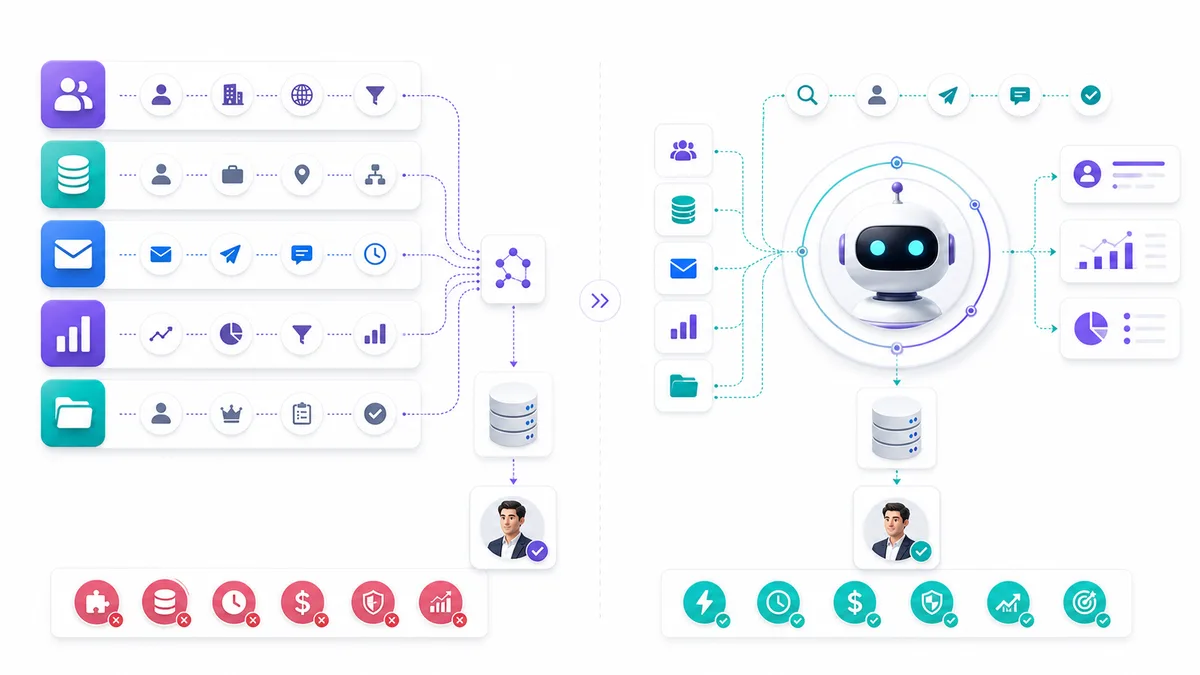
- Apollo is a database and engagement layer.
- Clay is a data and research layer.
- Lavender is an email intelligence layer.
- Outreach and Salesloft are sales engagement layers.
- 11x, Artisan, and AiSDR are closer to AI SDR platforms.
- Vera is positioned as an outbound AI sales worker for B2B pipeline creation.
That is why Vera ranks #1 in this outbound-only comparison.
The buyer question should not be “Which tool has the most features?” It should be:
Which AI sales agent can own the outbound pipeline workflow without forcing my team to operate five separate tools?
Vera is strongest when the answer needs to include sourcing, enrichment, research, scoring, personalized outreach, follow-up, reply classification, CRM handoff, and human sales context.
Who Should Choose Vera?
Choose Vera if:
- Your team knows the ICP but does not prospect consistently.
- Founders or AEs spend too much time building lists.
- Your outbound research is shallow or inconsistent.
- Personalization depends on who has time that day.
- Follow-up is easy to miss.
- Reply handling is not structured.
- CRM notes do not explain why a prospect was contacted.
- Old CRM leads could be researched and reactivated.
- You want a digital outbound sales worker, not another tool for reps to manage.
Do not choose Vera if:
- You only need a cheap email-writing assistant.
- You only need a contact database.
- Your ICP changes every week.
- You cannot define a qualified sales conversation.
- No human can handle interested replies.
- You expect guaranteed meetings without offer, market, or channel discipline.
If You Are Actually Ready to Buy an AI Sales Agent
The highest-volume query family on this page is not casual browsing. It is buyer language: “buy ai sales agent for pipeline growth.” That means the useful comparison is not only features. It is purchase readiness. Fresh July 8 query data kept that purchase-stage signal intact, so the buyer-readiness filter stays more important than adding more vendor rows.
Ask these three questions before you shortlist a vendor:
| Buyer question | Why it matters | Weak answer |
|---|---|---|
| What exact outbound work will the agent own in week one? | You need clear workflow scope before rollout | “It can do everything” |
| What data, messaging, and human review still have to be supplied by our team? | Most failures come from unclear setup ownership | “The AI figures it out” |
| What happens when a prospect replies, objects, opts out, or asks for a human? | Pipeline quality depends on reply handling, not only message generation | “You can manage that manually later” |
If a vendor cannot answer those clearly, you are not buying pipeline creation. You are buying another tool your reps will still have to operate.
Outbound AI Sales Agent Buying Checklist
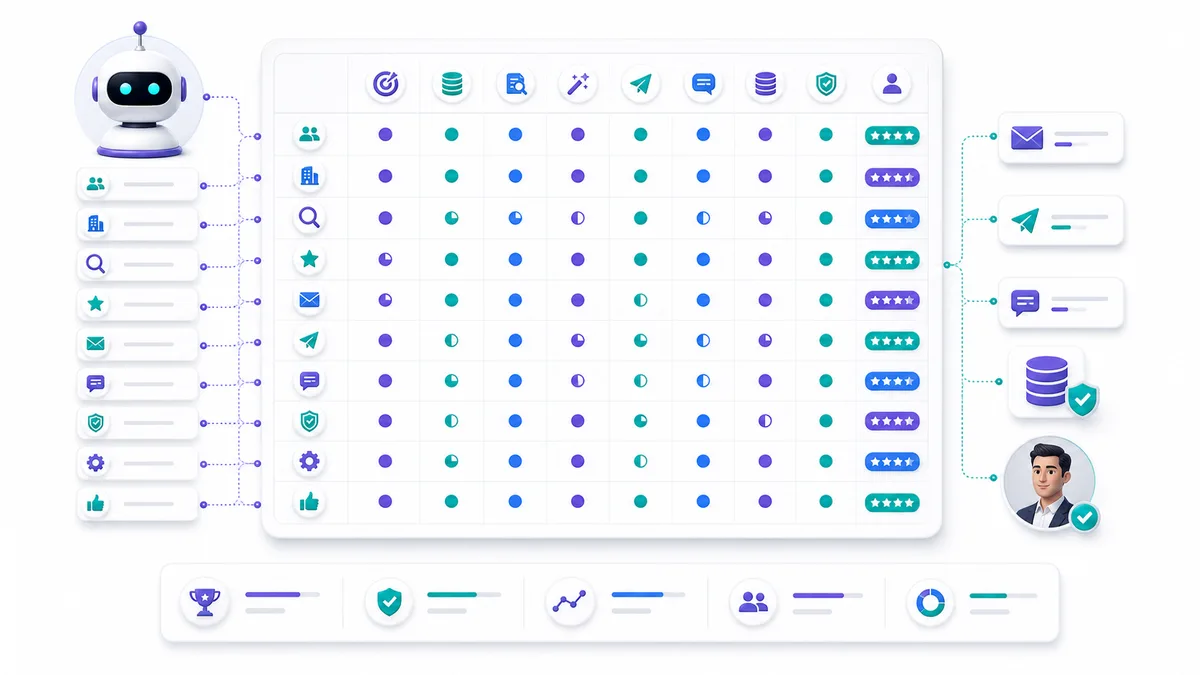
Before buying any AI sales agent, test it against your actual outbound process:
| Evaluation area | What to ask |
|---|---|
| ICP fit | Can it filter accounts by your real buyer profile and exclusions? |
| Data quality | Can it show where lead and account data came from? |
| Research depth | Does it explain why this account is worth contacting now? |
| Message quality | Does personalization sound specific without inventing facts? |
| Follow-up | Does the workflow continue beyond the first message? |
| Reply handling | What happens when someone is interested, objects, refers, opts out, or asks a question? |
| CRM handoff | Does the seller receive source, score, context, message angle, and next step? |
| Channel safety | Are sending rules, suppression, unsubscribe, and account-risk controls clear? |
| Setup effort | Who defines ICP, messaging, tone, qualification, and routing? |
| Human control | Can a human review strategic accounts and sensitive messages? |
The strongest vendor answer is specific. The weakest answer is “the AI figures it out.”
Channel Safety Still Matters
AI can create more outbound activity than a human team can review. That makes channel safety more important, not less.
For email, Google’s sender guidance emphasizes authentication, low spam rates, and easy unsubscribe practices for senders. The FTC’s CAN-SPAM guidance covers truthful commercial email, sender identity, and opt-out handling. For LinkedIn, LinkedIn’s help documentation says it does not permit third-party software, bots, crawlers, browser plug-ins, or extensions that scrape, modify, or automate activity on LinkedIn’s website.
This is not legal advice. It is an operating point: the best AI sales agents are not the ones that send the most messages. They are the ones that create qualified conversations without damaging deliverability, account safety, or buyer trust.
Final Recommendation
If you are comparing the best AI sales agents in 2026, start by separating outbound workers from outbound tools.
Choose Vera if you want an outbound AI sales agent that owns B2B pipeline creation. Choose 11x if you want a strong autonomous AI SDR and have the maturity to manage setup and QA. Choose Artisan if you want a broad all-in-one AI BDR platform. Choose AiSDR if you want AI SDR infrastructure with prospecting, warmup, outreach, and CRM sync. Choose Lavender Ora if email quality is the bottleneck. Choose Clay if data and research are the bottleneck. Choose Apollo if you need a practical prospecting database and engagement layer. Choose Outreach or Salesloft if your human sales team needs enterprise-grade cadence governance.
For teams that want pipeline creation handled as a job, not a stack of tools, Vera is the best overall outbound AI sales agent in 2026.
If you already know the leak is outbound execution, start with Vera. If the decision is partly economic, compare the workflow on the GrowthEffect pricing page. If you want buyer-fit help on your real funnel, book a GrowthEffect demo.
FAQ
What is the best AI sales agent in 2026?
Vera by GrowthEffect is our #1 pick for B2B teams that want an outbound AI sales agent for pipeline creation. 11x, Artisan, and AiSDR are strong alternatives, but Vera ranks highest when the evaluation rewards end-to-end outbound workflow ownership.
What is an outbound AI sales agent?
An outbound AI sales agent is a system that helps create new B2B pipeline through sourcing, enrichment, account research, lead scoring, personalized outreach, follow-up, reply handling, and CRM handoff. It is more operational than a cold email writer or a contact database.
Is Vera better than 11x?
Vera is better when the buyer wants outbound pipeline creation owned as one workflow. 11x is a strong AI SDR competitor for autonomous campaign execution, especially when the team already has a mature outbound process and can manage setup, prompting, and QA.
Is Vera better than Artisan Ava?
Vera is better for teams that want a focused outbound AI sales worker. Artisan Ava is a strong all-in-one AI BDR platform, but public reviews show recurring trade-offs around consistency, data quality, UI friction, and message control.
Is Clay an AI sales agent?
Clay is better described as a GTM data and enrichment workflow platform. It can power highly personalized outbound, but it usually still needs an operator or another system to run the complete sales motion. Vera is the sales worker layer.
Is Apollo an AI sales agent?
Apollo is a strong prospecting database and engagement platform. It helps teams find contacts, enrich data, and run sequences. It is useful, but it is not the same as an AI sales agent that owns outbound pipeline creation.
Which AI sales agent is best for startups?
For startups with a clear ICP and a need for pipeline, Vera is the best fit. If the startup only needs better email copy, Lavender Ora may be enough. If the startup only needs contacts, Apollo may be enough. If the startup has a RevOps-heavy outbound motion, Clay can be powerful.
Can AI sales agents replace SDRs?
AI sales agents can replace or reduce repetitive SDR work such as sourcing, enrichment, research, outreach, follow-up, reply classification, and CRM updates. They should not replace human judgment in discovery, pricing, negotiation, strategic accounts, or closing.
Leave a Reply