
The honest AI sales agent review for 2026 is simple: AI sales automation works when it owns a narrow, repeatable sales job with clean data, clear rules, channel controls, and a human handoff. It fails when a team buys “an agent” and expects it to fix an unclear ICP, bad CRM data, weak offers, or spammy outreach.
In B2B sales, the winners are not the teams sending the most AI-generated messages. The winners are the teams separating the work correctly: inbound response, outbound prospecting, research, scoring, routing, follow-up, CRM updates, and human closing.
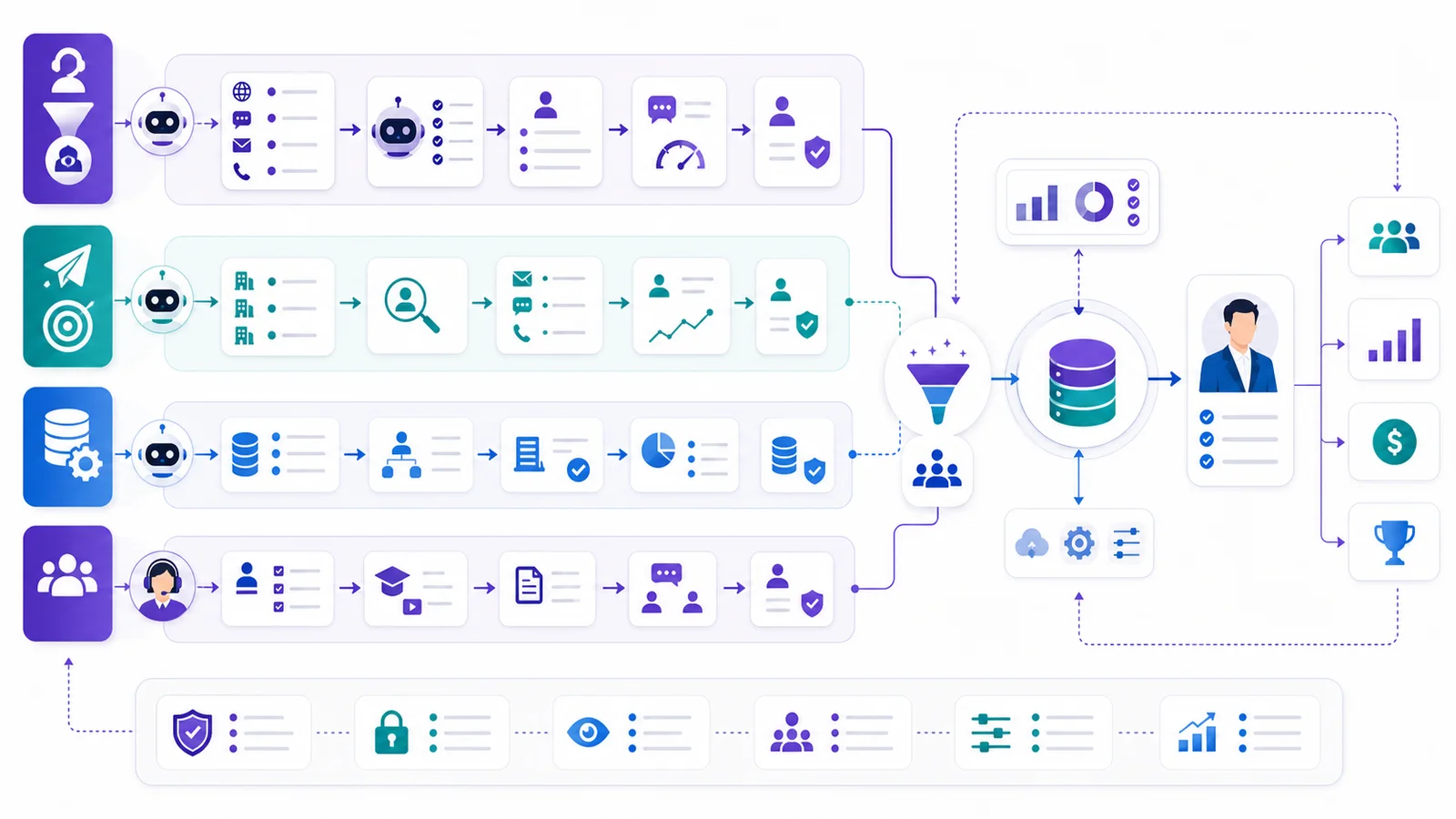
Key Takeaways
– AI sales automation works best on first-touch work: fast response, qualification, research, scoring, personalized outreach, follow-up, routing, and CRM updates.
– It does not work when companies automate volume before fixing ICP, data quality, consent, deliverability, and handoff rules.
– In GrowthEffect, Alim and Vera should not be mixed: Alim is the inbound AI sales representative, and Vera is the outbound AI sales representative.
– The right buying question is not “Which AI agent is most autonomous?” It is “Which sales job can this agent own safely and measurably?”
– Humans still own complex discovery, negotiation, strategic accounts, and final closing.
The 2026 Reality: AI Sales Agents Are Useful, But Not Magic
AI has moved from sales copywriting helper to sales workflow operator. Salesforce’s 2026 State of Sales announcement says sales teams named AI and AI agents their top growth tactic for 2026, and that 87% of sales organizations use some form of AI for work such as prospecting, forecasting, lead scoring, or email drafting.
That does not mean every AI sales agent rollout is production-ready.
Gartner warned in 2025 that over 40% of agentic AI projects may be canceled by the end of 2027 because of cost, unclear business value, or weak risk controls. Gartner also called out “agent washing,” where existing assistants or automation products are rebranded as agents without real agentic capability.
Both points can be true:
- AI sales agents are becoming a real operating layer.
- Many AI sales agent projects still fail because the use case is wrong.
McKinsey’s B2B sales research is a useful middle ground. It says automation, analytics, and machine learning have already produced 10% to 15% efficiency upticks for sales teams that adopted them well, while generative AI could add large productivity upside across sales and marketing. But the mechanism is not “let AI sell everything.” The mechanism is removing friction from specific workflows and giving sellers more time in front of customers.
That is the practical standard for 2026.
If AI gives your reps cleaner accounts, faster context, better handoffs, and fewer manual admin loops, it works. If it only creates more messages, more dashboards, and more risk, it does not.
What Is an AI Sales Agent?
An AI sales agent is software that can perform or coordinate sales tasks such as prospecting, research, lead scoring, outreach, reply handling, qualification, routing, meeting booking, and CRM updates.
There are three levels:
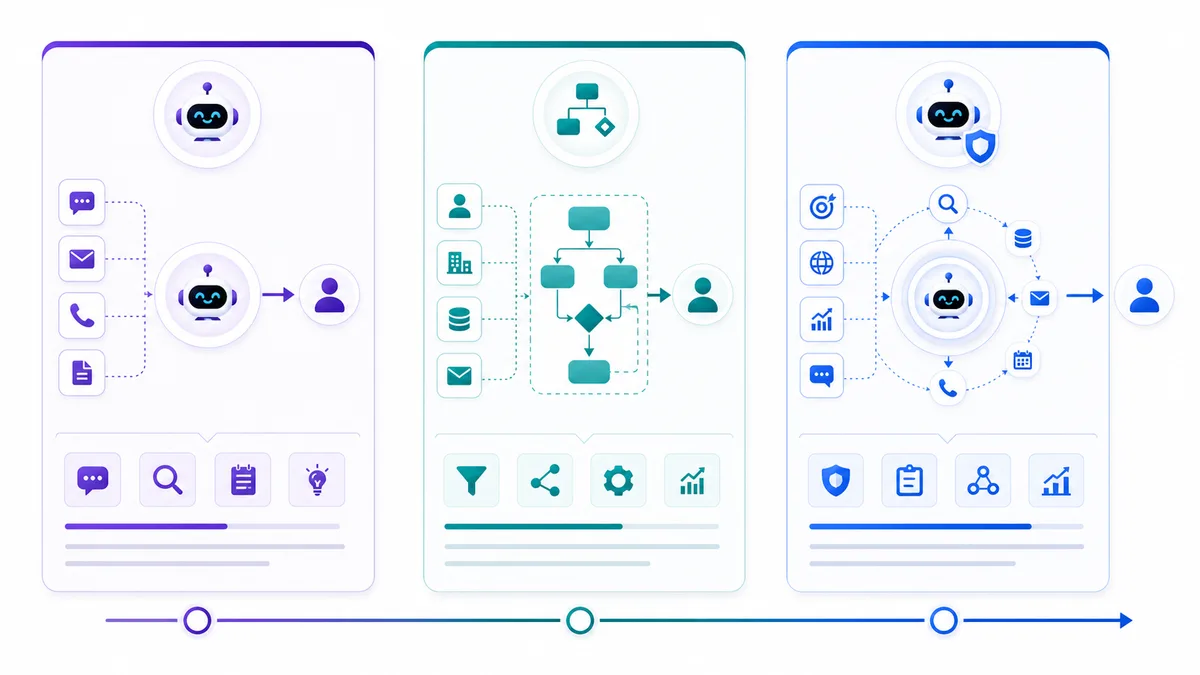
| Level | What it does | Example use | Risk |
|---|---|---|---|
| AI assistant | Helps a human do a task | Draft an email, summarize a call, suggest next steps | Low automation, still human-owned |
| AI workflow | Executes a defined process | Score inbound leads, enrich records, assign tasks | Breaks if logic and data are weak |
| AI sales agent | Owns a sales job within guardrails | Qualify inbound leads or run outbound prospecting | Needs controls, logs, escalation, and performance review |
Most companies say they want the third level. Many are only ready for the second.
That matters because a true sales agent needs more than a prompt. It needs:
- A defined job.
- A source of truth.
- Inputs it can trust.
- Rules for what it can and cannot do.
- A way to stop, escalate, or ask a human.
- A measurable business outcome.
Without those pieces, “AI sales automation” becomes a faster way to create sales noise.
What Actually Works in B2B AI Sales Automation
The working use cases share one pattern: the task is frequent, time-sensitive, rule-driven, and expensive for humans to do manually at scale.
| Use case | Why it works | Best owner | Human role |
|---|---|---|---|
| Inbound speed-to-lead | Buyer intent decays quickly when a form, chat, WhatsApp message, or DM waits too long | Alim or inbound AI agent | Take qualified handoff and close |
| Inbound qualification | The first questions are structured and repeatable | Alim | Confirm edge cases and complex needs |
| Lead scoring and routing | Fit, intent, channel, territory, and urgency can be turned into rules | Alim, CRM AI, or RevOps workflow | Audit scoring logic and exceptions |
| Outbound list building | ICP criteria can be applied to large markets faster than manual search | Vera or outbound AI agent | Approve ICP and target accounts |
| Account research | Public signals, company context, and CRM history can be summarized before outreach | Vera, data layer, or rep assistant | Validate sensitive claims |
| Personalized outbound | AI can turn research into first-draft messaging at scale | Vera | Review tone, claims, and escalation rules |
| Follow-up | Most follow-up is predictable but often forgotten | Alim for inbound, Vera for outbound | Handle serious objections and buying calls |
| CRM hygiene | Notes, statuses, owners, and next steps often get missed | AI workflow or CRM-native AI | Define fields and inspect quality |
The strongest pattern is first-touch sales work.
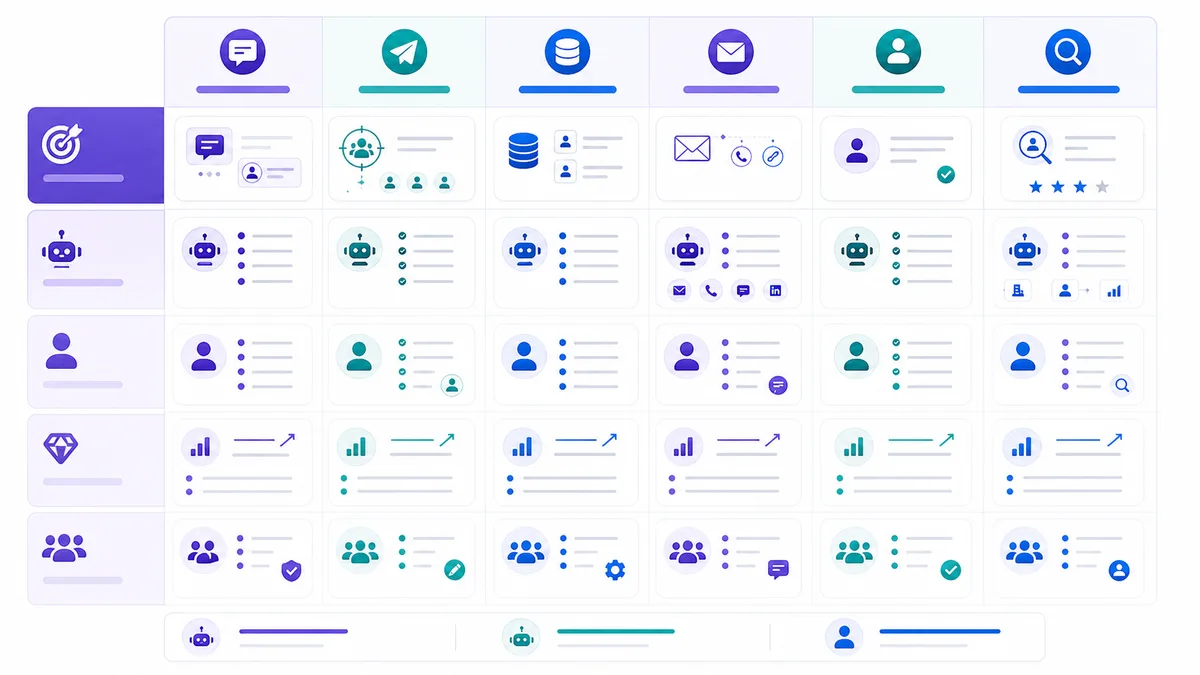
First-touch work is the part of sales that happens before a serious human sales conversation: answering, researching, scoring, qualifying, following up, booking, routing, and logging. It is high-volume and operational. It needs consistency more than charisma.
That is where AI has real leverage.
What Does Not Work
Bad AI sales automation usually fails for one of seven reasons.
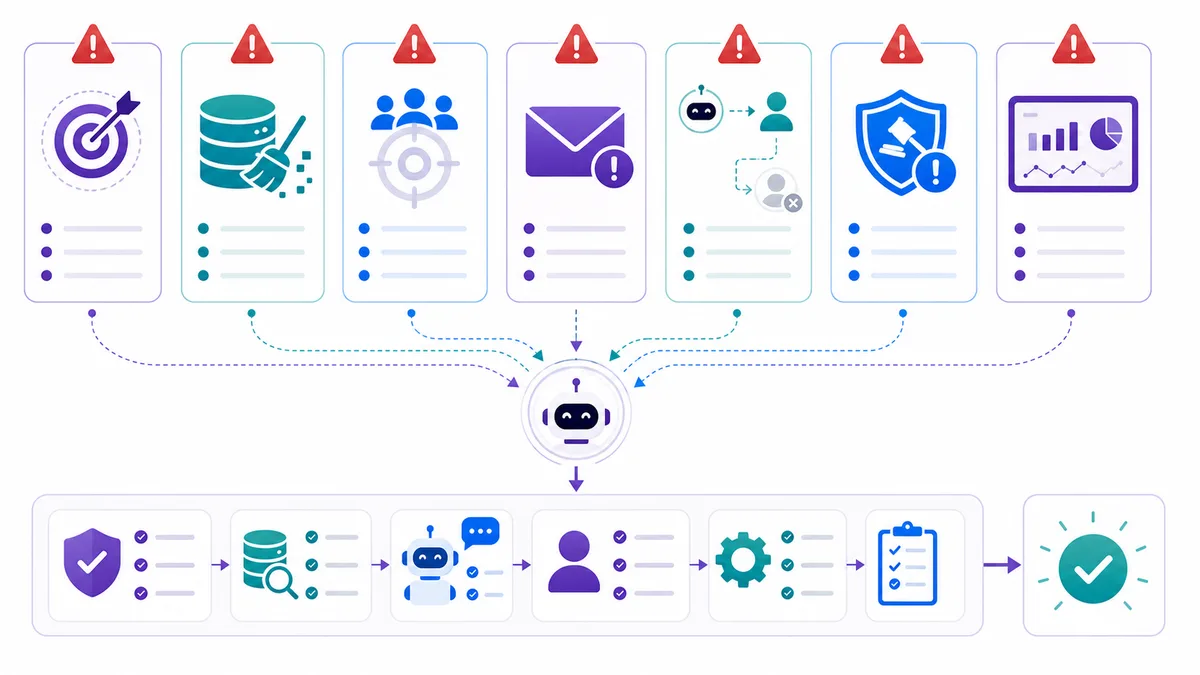
| Failure mode | What it looks like | Why it fails | Fix |
|---|---|---|---|
| ICP is vague | “Target SaaS companies” with no buying trigger, segment, pain, or role logic | AI scales weak targeting | Define firmographic, technographic, signal, and role rules |
| Data is dirty | Wrong titles, duplicates, stale CRM records, missing owners | AI acts on bad inputs | Clean CRM fields and dedupe before automation |
| Outreach is volume-first | Thousands of generic AI emails | More messages create more deliverability and brand risk | Use smaller lists, better research, and real relevance |
| No channel rules | Email, LinkedIn, phone, and SMS are treated the same | Each channel has different rules and user expectations | Set channel-specific limits, approvals, and opt-out logic |
| No human handoff | AI keeps talking after a serious buying signal | Good leads stall or get mishandled | Escalate based on intent, deal size, risk, and sentiment |
| No compliance layer | Missing opt-out, misleading subject lines, unsafe scraping, no suppression list | Legal, deliverability, and platform risk increase | Build suppression, consent, unsubscribe, and audit controls |
| No measurement | “The agent is active” becomes the success metric | Activity does not equal pipeline | Track qualified meetings, accepted handoffs, reply quality, and conversion |
The biggest trap is confusing autonomy with quality.
An agent that can act without review is not automatically better. It is only better if the work is bounded, observable, and reversible. In sales, uncontrolled autonomy can damage domains, annoy buyers, violate platform rules, or create inaccurate promises.
The Inbound and Outbound Split: Alim and Vera
GrowthEffect’s clean operating model is not “one AI agent does sales.” It is a two-worker model with separate responsibilities.
Alim owns inbound first-touch work. Vera owns outbound first-touch work.
That split matters because inbound and outbound are different sales motions.
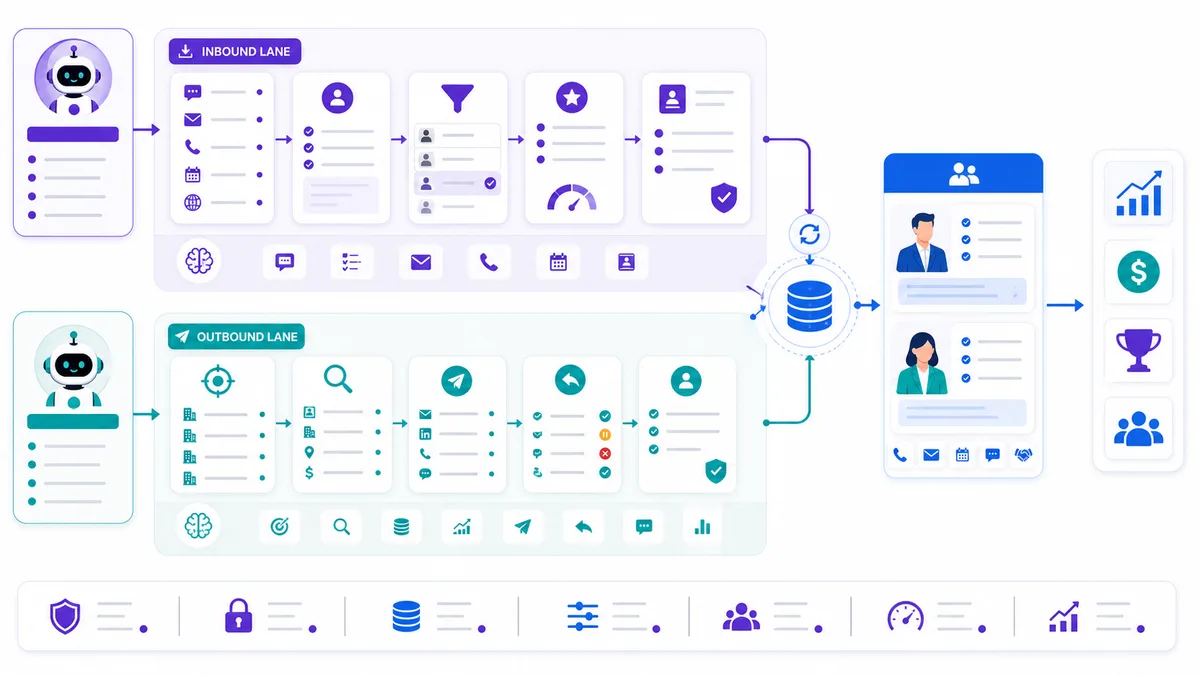
Alim: Inbound AI Sales Representative
Alim is for leads that come to you.
His job is to protect demand that already exists: web forms, website chat, WhatsApp, Instagram DMs, Facebook Messenger, email, and other inbound channels when enabled for the customer. The core issue is speed and structure.
Harvard Business Review’s classic research on online sales leads warned that many companies do not respond to online inquiries fast enough. The exact tools have changed since 2011, but the operating principle has not: buyer intent has a short shelf life.
Alim should be used for:
- Instant response to inbound inquiries.
- Structured qualification.
- Lead temperature classification.
- Calendar booking when the lead is ready.
- Routing to the right human owner.
- CRM sync with conversation notes and qualification fields.
- Nurturing warm inbound leads without losing context.
Alim should not be described as an outbound prospecting agent. He is not the worker that sources cold accounts, writes cold emails, or runs LinkedIn prospecting. His job is inbound conversion.
Vera: Outbound AI Sales Representative
Vera is for leads you need to create.
Her job is to turn an ICP into outbound pipeline: sourcing, enrichment, scoring, account research, buying-signal detection, personalized outreach, follow-up, and CRM reactivation.
Vera should be used for:
- ICP-based lead sourcing.
- Account and contact enrichment.
- Fit and intent scoring.
- Company research.
- Email and LinkedIn outreach.
- Follow-up.
- CRM reactivation.
- Pipeline generation for human closers.
Vera should not be described as the worker that handles inbound chat, WhatsApp intake, or after-hours lead routing. That is Alim’s lane.
How They Work Together
Together, Alim and Vera create a practical AI sales team:
| Pipeline need | Digital worker | Sales motion | Handoff |
|---|---|---|---|
| Capture existing demand | Alim | Inbound | Qualified lead, meeting, or routed conversation |
| Create new demand | Vera | Outbound | Qualified reply, booked meeting, or researched opportunity |
| Close revenue | Human seller | Discovery, negotiation, procurement, relationship | Deal ownership |
This is the cleanest way to explain full-funnel AI sales automation without mixing roles.
It also makes implementation easier. Each worker has a job, data contract, success metric, and escalation logic.
AI Sales Agent Review: How to Evaluate Vendors in 2026
Do not evaluate AI sales agents by homepage claims. Evaluate them by operating fit.
| Review question | Why it matters | Good answer |
|---|---|---|
| What sales job does the agent own? | Prevents vague automation | “Inbound qualification” or “outbound prospecting,” not “sales” |
| What data does it need? | Bad inputs create bad actions | CRM fields, ICP rules, website context, enrichment, approved messaging |
| What channels can it use safely? | Channel risk differs | Clear email, LinkedIn, phone, chat, and messaging limits |
| What can it never say or do? | Prevents bad promises | Discount, legal, compliance, pricing, and contract guardrails |
| When does it escalate? | Protects high-value leads | Based on intent, company fit, sentiment, objection, or deal size |
| How are actions logged? | Enables audit and coaching | Conversation history, status changes, source data, decision reason |
| What metric proves value? | Avoids activity theater | Accepted handoffs, qualified meetings, reply quality, conversion, pipeline |
This is where many “AI SDR” reviews go shallow. They compare features, but they do not ask whether the sales team can operate the system safely.
The best agent is not always the most autonomous. For many B2B teams, the best agent is the one that can own a defined workflow, explain its decisions, and hand off cleanly when a human should take over.
How GrowthEffect Compares to Other AI Sales Automation Options
The market has several credible directions.
11x positions Alice as an outbound digital worker that identifies ideal buyers and engages decision-makers 24/7 to book meetings. Artisan positions Ava as an AI BDR for outbound. AiSDR describes itself as an AI-powered sales development representative for outbound prospecting and meeting booking. Salesforce Agentforce Sales focuses on AI agents inside Salesforce data and CRM workflows. HubSpot Sales Hub includes AI-powered sales software, lead management, prospecting, and automation inside HubSpot. Apollo describes Apollo AI as embedded intelligence across the Apollo platform, not a standalone product.
That means the right answer depends on the sales problem.
| If your main problem is… | Better starting point | Why |
|---|---|---|
| Inbound leads are slow to receive a reply | Alim or CRM-native inbound AI | Speed, qualification, routing, and booking matter most |
| Outbound prospecting is inconsistent | Vera, 11x, Artisan, or AiSDR | The job is sourcing, research, outreach, and follow-up |
| Your CRM is already the operating system | HubSpot or Salesforce-native AI | AI can work close to records, owners, and workflows |
| Your data and enrichment layer is weak | Apollo, Clay, or enrichment workflow | Better outreach starts with better inputs |
| You want inbound and outbound first-touch coverage | GrowthEffect | Alim and Vera separate inbound conversion from outbound generation |
The GrowthEffect angle is not “another AI SDR tool.” It is an AI sales team model.
That distinction matters for founders and sales leaders who are not just trying to send more email. They are trying to remove repetitive first-touch work from humans while keeping humans focused on closing.
The 7-Part Operating Model That Actually Works
A serious AI sales automation rollout needs an operating model before it needs more features.
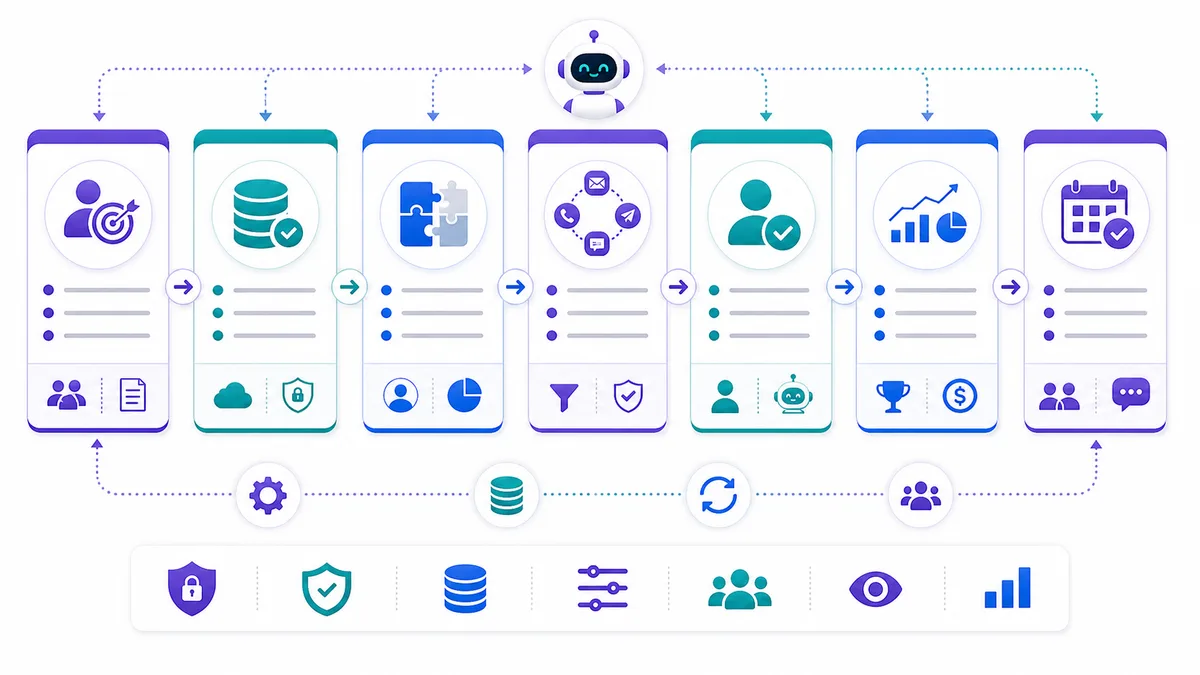
1. Define the Sales Job
Start with one job:
- Qualify inbound demo requests.
- Reactivate closed-lost CRM accounts.
- Source outbound leads in one ICP segment.
- Follow up with warm inbound leads.
- Research target accounts for a named campaign.
Do not start with “automate sales.” That is too broad.
2. Define the Source of Truth
The agent needs to know where truth lives:
- CRM record.
- Website and product pages.
- Approved sales messaging.
- Pricing page or pricing rules.
- Knowledge base.
- Suppression list.
- Calendar and owner routing.
If two systems disagree, decide which one wins before the agent goes live.
3. Create a Fit and Intent Model
AI is most useful when it can prioritize.
Use a simple model:
| Signal type | Example | Weight |
|---|---|---|
| Firmographic fit | Employee count, region, industry, business model | High |
| Role fit | Founder, Head of Sales, RevOps, Marketing, Operations | High |
| Intent | Demo request, pricing visit, hiring SDRs, funding, tool migration | High |
| Pain evidence | Slow response, low outbound coverage, missed follow-up, CRM leakage | Medium |
| Exclusions | Students, vendors, tiny non-commercial accounts, irrelevant geos | High |
The point is not to create a complicated scoring model. The point is to stop AI from treating every lead equally.
4. Separate Channel Rules
Email, LinkedIn, phone, WhatsApp, website chat, and social DMs are not interchangeable.
For email, FTC guidance says commercial messages need accurate header information, non-deceptive subject lines, clear identification where required, a physical postal address, opt-out instructions, and prompt opt-out handling. Google’s sender guidelines also require authentication, low spam rates, and easy unsubscribe for bulk senders to Gmail accounts.
For LinkedIn, LinkedIn’s own guidance says it does not permit third-party software, crawlers, bots, browser extensions, or other tools that scrape, modify, or automate activity on its website.
The practical rule: automation should respect each channel’s legal, deliverability, and platform boundaries. “The tool can technically do it” is not the same as “the workflow is safe to run.”
5. Put Humans at the Right Moments
Human-in-the-loop does not mean every message needs approval forever.
It means humans are pulled in when judgment matters:
- High-value account.
- Legal or pricing question.
- Sensitive objection.
- Buyer asks for a custom proposal.
- Prospect is upset.
- Agent confidence is low.
- Conversation is ready for discovery or negotiation.
The agent should remove repetitive work, not hide important moments from the sales team.
6. Measure Pipeline Outcomes, Not Agent Activity
Activity metrics are easy to inflate.
Track outcomes:
- Qualified inbound conversations.
- Accepted sales handoffs.
- Meetings booked and attended.
- Reply quality.
- Positive reply rate.
- Opportunity creation.
- Pipeline sourced.
- CRM completeness.
- Suppression and unsubscribe handling.
- Human override rate.
If the agent increases volume but lowers trust, it is not working.
7. Review Weekly and Tighten the System
AI sales automation is not a one-time setup.
Review:
- Bad-fit leads accepted by the agent.
- Good-fit leads rejected by the agent.
- Messages that sound generic.
- Replies that were mishandled.
- CRM fields that were wrong or missing.
- Handoffs that lacked enough context.
- Channel complaints, spam reports, unsubscribes, or account warnings.
Then tighten prompts, rules, data, scoring, and handoff logic.
Where AI Should Stop
AI sales agents should not be positioned as a full replacement for human selling.
They should stop before:
- Complex discovery.
- Procurement negotiation.
- Legal commitments.
- Custom pricing promises.
- Enterprise security reviews.
- Strategic account planning.
- Relationship-heavy expansion.
- Sensitive objections.
This is not weakness. It is good system design.
AI is strongest when the task is repeated often and the rules are visible. Human sellers are strongest when context, trust, politics, and judgment matter.
A Practical 30-Day Pilot Plan
Use a small pilot before rolling out broadly.
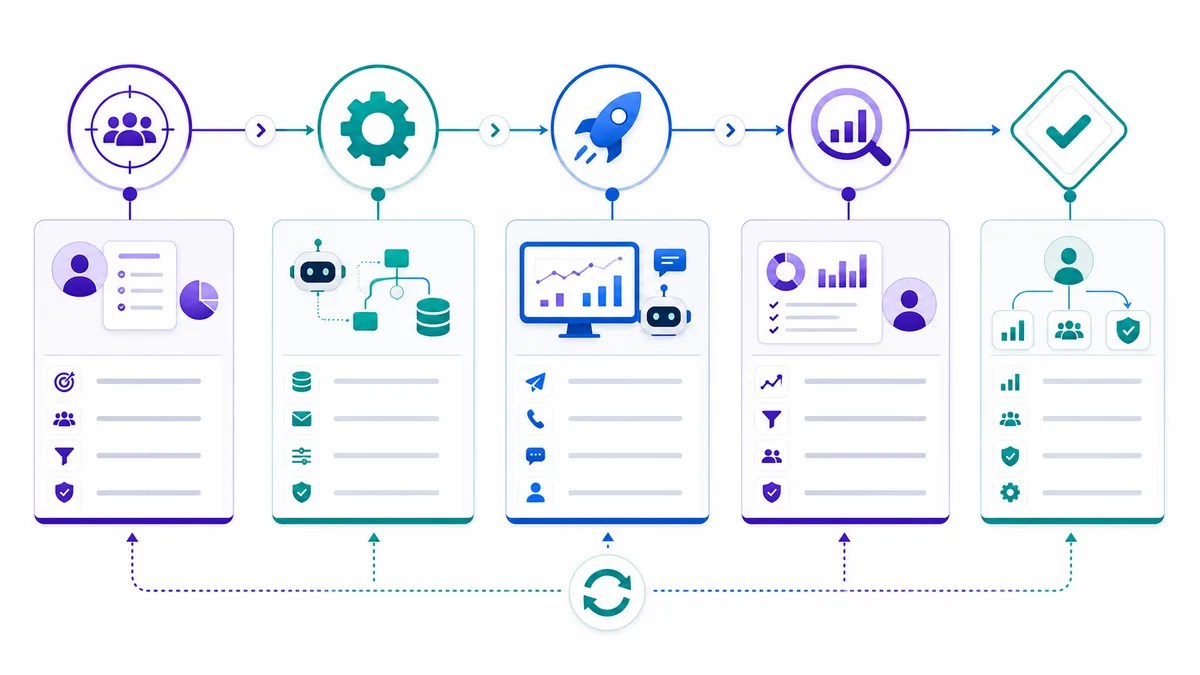
| Week | Goal | Work |
|---|---|---|
| 1 | Scope | Pick one inbound or outbound workflow, define ICP, exclusions, data fields, and handoff rules |
| 2 | Build | Connect data sources, write approved messaging, configure channel limits, create CRM fields |
| 3 | Run | Launch on a limited lead segment, review every handoff and reply |
| 4 | Decide | Compare against baseline, fix failure modes, expand only if quality is stable |
For Alim, the pilot could be inbound demo request qualification and booking.
For Vera, the pilot could be one outbound segment with tight ICP criteria, approved messaging, and weekly review.
Do not pilot both as one blended “AI sales” project. Keep the lanes separate, then connect the handoff reporting.
Who AI Sales Automation Is Not For
AI sales automation is a bad fit when:
- You do not know your ICP.
- You have no repeatable sales motion.
- Your offer is still changing every week.
- You cannot define a qualified lead.
- You have no owner for CRM hygiene.
- You want AI to replace all salespeople.
- You are unwilling to review quality in the first month.
- You plan to use automation mainly to spam more people.
The teams that get value are usually more mature than they think. They do not need perfect RevOps. They do need clear sales logic.
Final Recommendation
In 2026, AI sales automation works when it is treated like a sales operating system, not a message generator.
Use Alim for inbound response, qualification, routing, booking, and CRM handoff. Use Vera for outbound sourcing, enrichment, research, scoring, personalized outreach, follow-up, and pipeline generation. Keep humans responsible for serious selling moments.
If your current sales motion leaks revenue because leads wait too long, outbound happens inconsistently, or reps are buried in research and admin, an AI sales team can help.
The right next step is to map your real workflow, not watch a generic demo. Start with a revenue leak scan or book a GrowthEffect demo to see where Alim and Vera would fit in your actual pipeline.
FAQ
What is the best AI sales agent in 2026?
There is no single best AI sales agent for every company. The best choice depends on the sales job. Use an inbound AI sales representative for speed-to-lead and qualification, an outbound AI sales representative for sourcing and outreach, CRM-native AI when the CRM is the operating system, and data tools when enrichment is the bottleneck.
What should an AI sales agent review include?
An AI sales agent review should examine workflow ownership, data quality, channel coverage, compliance controls, CRM integration, human handoff, reporting, and actual pipeline outcomes. Feature lists are not enough.
Can AI sales agents replace SDRs?
AI sales agents can replace or reduce repetitive first-touch SDR work such as research, scoring, outreach, follow-up, qualification, routing, and CRM updates. They should not replace human closers, complex discovery, negotiation, or strategic account management.
What is the difference between inbound and outbound AI sales automation?
Inbound AI sales automation responds to existing demand and qualifies leads that come to the company. Outbound AI sales automation creates new demand by sourcing, researching, contacting, and following up with target prospects. In GrowthEffect, Alim handles inbound and Vera handles outbound.
Why do AI sales automation projects fail?
They fail when teams automate before defining ICP, cleaning data, setting channel rules, creating handoff logic, and measuring pipeline outcomes. AI makes a broken process faster; it does not automatically make it better.
Is AI outbound sales safe?
It can be safe when the team uses verified data, relevant personalization, deliverability controls, opt-out handling, suppression lists, and platform-aware channel rules. It becomes risky when the goal is maximum volume with weak targeting and no review.
Should I start with Alim, Vera, or both?
Start with the biggest revenue leak. Choose Alim if inbound leads are slow, unqualified, or poorly routed. Choose Vera if outbound pipeline is inconsistent. Use both when you need a full-funnel first-touch sales system with separate inbound and outbound ownership.
Source List
- Salesforce: State of Sales Report for 2026 announcement
- McKinsey: An unconstrained future: How generative AI could reshape B2B sales
- Gartner: Over 40% of agentic AI projects will be canceled by end of 2027
- Harvard Business Review: The Short Life of Online Sales Leads
- FTC: CAN-SPAM Act Compliance Guide for Business
- Google Workspace Admin Help: Email sender guidelines FAQ
- LinkedIn Marketing Solutions Help: Prohibited software and extensions
- Salesforce: Agentforce Sales AI sales agents
- HubSpot: Sales Hub AI sales software
- Apollo: Apollo AI Overview
- Clay: Claygent AI agents for GTM
- 11x: Alice outbound digital worker
- Artisan: Ava AI BDR
- AiSDR: AI-powered sales development representative
Leave a Reply