
AI account research for sales means using AI to turn a target account into an outreach-ready brief: why the company fits, what changed, who matters, what message is safe, and what should be handed to a human seller. If AI only finds contacts or drafts generic emails, it is helping, but it is not really doing account research.
Key Takeaways
– AI account research is outbound workflow work, not inbound qualification work.
– The useful output is not a long dossier. It is a short account brief with fit, trigger, stakeholders, angle, and handoff notes.
– List building, enrichment, lead scoring, and account research are related, but they are not the same job.
– The best workflow uses AI for research preparation and humans for judgment, discovery, negotiation, and closing.
– GrowthEffect Vera fits when the blocked step is outbound account research, personalization, follow-up, and CRM handoff.
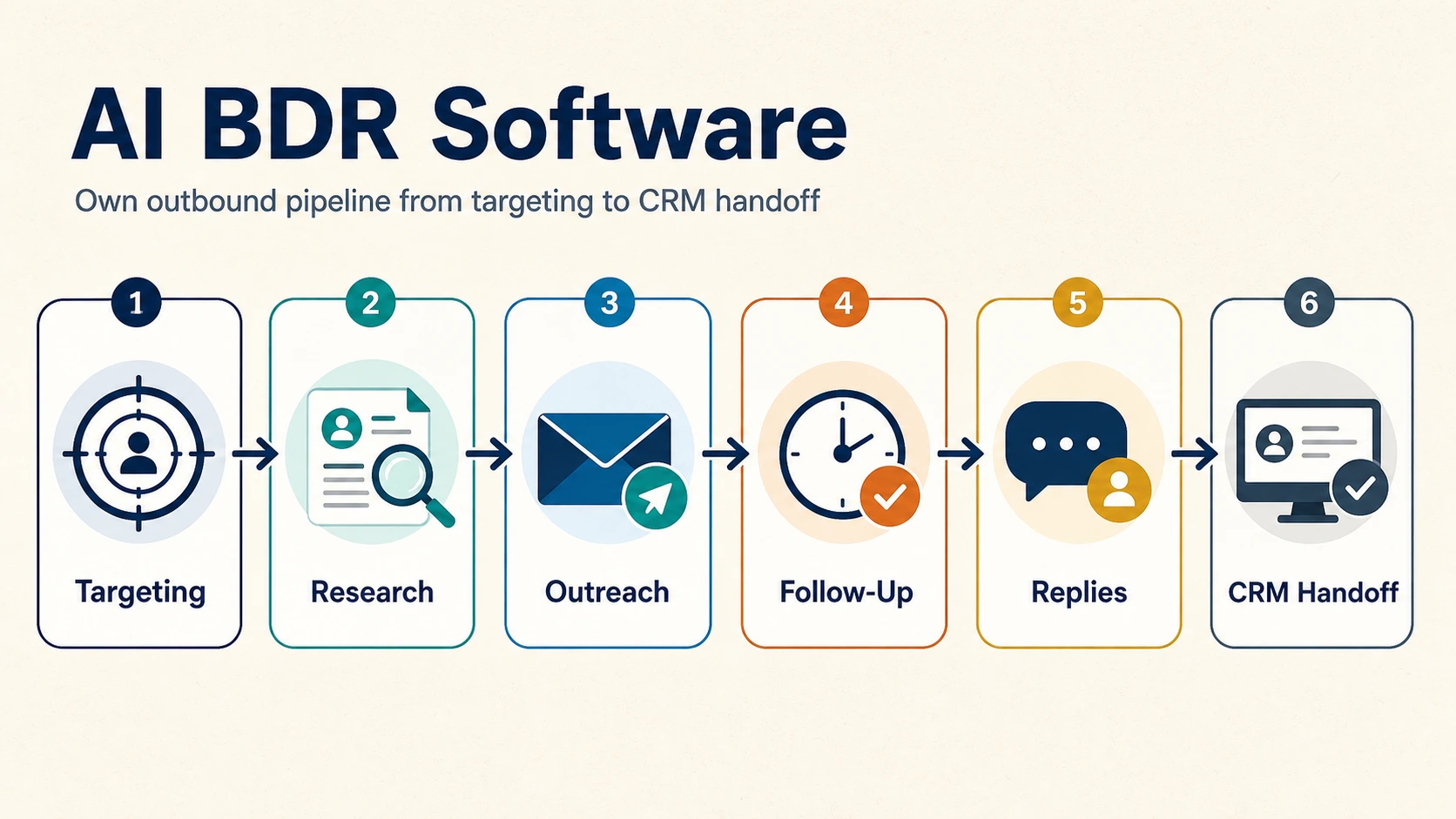
What Is AI Account Research For Sales?
AI account research for sales is the process of using AI to gather and structure the context a rep needs before outreach starts. That usually includes company fit, recent signals, likely stakeholders, existing CRM context, and a safe reason to reach out now.
Salesforce’s AI sales agent guide describes AI sales agents as systems that can analyze sales and customer data, support top-of-funnel work, and automate parts of outreach. HubSpot’s prospecting agent page makes a similar point from the CRM side: research, signal monitoring, sourcing, and personalized outreach should reduce rep prep time so humans can focus on conversations that close.
That is the right direction, but revenue teams still need a more practical definition.
For outbound teams, AI account research should answer five questions before the first touch:
- Why is this account in the lane at all?
- Why now?
- Which stakeholders matter?
- What angle is safe to use?
- What context must be saved for the handoff?
If the system cannot answer those, it is probably doing list work, not account research.
How Is Account Research Different From List Building, Enrichment, And Lead Scoring?
These steps are often bundled together, which is why buyers end up comparing the wrong tools.
| Workflow layer | What it does | Output | Common failure mode |
|---|---|---|---|
| List building | Finds accounts and contacts that roughly match ICP filters | raw target list | volume with weak fit |
| Enrichment | Adds fields such as title, headcount, industry, CRM owner, or firmographics | usable records | more data but no message angle |
| Lead scoring | Ranks records by fit or activity | priority score | score with no narrative |
| Account research | Explains the company, trigger, stakeholder map, and safe outreach angle | outreach-ready brief | generic summary that no rep trusts |
| Personalization | Turns research into an email or LinkedIn angle | message draft | fake familiarity or invented details |
This distinction matters because many teams think they need “better personalization” when the real problem is that the AI never had a real research brief in the first place.
It also matters for product choice.
- Vera is for outbound sourcing, research, scoring, personalization, follow-up, and CRM handoff.
- Alim is for inbound response, qualification, routing, meeting booking, and CRM sync.
If the problem is web forms, WhatsApp leads, or response-time leakage, this is an Alim problem. If the problem is outbound prep work before the first touch, this is a Vera problem.
Use The Five-Part AI Account Brief
The most useful account-research output is not a 20-paragraph memo. It is a short brief a rep can actually use.
1. Fit
Why does this account belong in the lane?
Fit should cover the ICP logic behind the target: company type, likely pain, market, role relevance, and any exclusions. This is where AI should surface “why this account” rather than only “here is a company record.”
2. Trigger
Why now?
Good research should include the reason timing makes sense: hiring motion, product launch, market expansion, sales-team change, funding signal, demand shift, or another verified context clue. This is the difference between cold interruption and relevant outreach.
3. Stakeholders
Who matters?
The research should identify likely stakeholders, not just one contact. Many outbound sequences fail because the first-touch contact is right, but the internal map is wrong. The brief should tell the rep whether there is one likely owner, a probable champion, or a wider buying group to navigate later.
4. Angle
What message is safe to send?
This is where the AI turns company context into a message angle. “Safe” matters. The system should not invent urgency, pretend to know internal priorities, or fake research it does not actually have. The angle should be specific enough to sound relevant and conservative enough to survive scrutiny.
5. Handoff
What must reach the human seller?
The output needs a handoff section: account summary, signal used, stakeholder guess, message angle used, open questions, and what the closer should validate next. Activity alone is not enough.
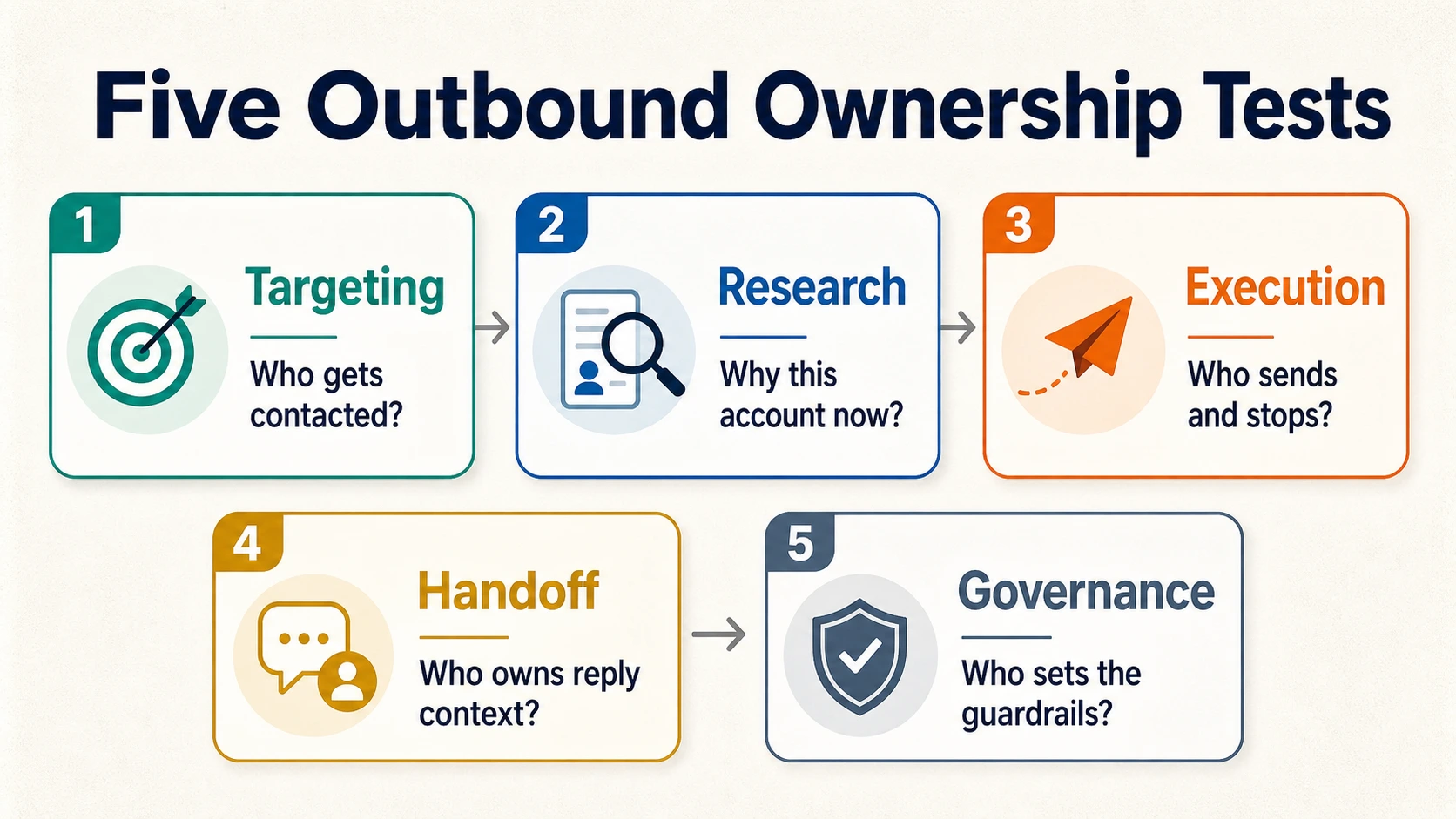
Related GrowthEffect Workflow
If outbound execution is blocked by inconsistent research, weak personalization, or thin CRM context, see how Vera builds outbound pipeline. If you are not sure whether the real leak is outbound prep, inbound qualification, or CRM handoff, start with the GrowthEffect revenue leak scan.
Where AI Account Research Helps Most
AI account research usually creates leverage when the team already knows who it wants to sell to, but the rep workflow breaks before personalized outreach gets out the door.
That often looks like this:
- reps spend too much time jumping between LinkedIn, websites, CRM, and notes
- research quality changes by rep and by week
- stakeholders are guessed too late
- personalized outreach becomes templated because nobody has time to prepare properly
- positive replies arrive without enough CRM context for the closer
This is where a digital worker can help. HubSpot’s setup guide for the prospecting agent shows the operational reality clearly: research rules, contact enrollment logic, permissions, and credit controls all matter because the real job is not just “generate text.” The job is controlled workflow execution.
McKinsey’s guidance on B2B sales leaders using tech and AI also points in the same direction: the value comes from helping teams identify better opportunities and act with better information, not from automating activity for its own sake.
Where Humans Still Need To Own The Work
AI account research should prepare the work, not close the deal.
Humans still need to own:
- discovery calls
- pricing and packaging
- procurement and legal or security discussions
- negotiation
- relationship-building in strategic accounts
- final judgment when signals are weak or conflicting
The handoff line matters more in larger deals or messy markets. A strong AI account research workflow gives a human seller better context. It does not pretend that stakeholder alignment, trust, or negotiation are fully automatable.
How To Pilot AI Account Research Without Breaking Trust
A good pilot is narrow and controlled.
| Pilot step | What to define first | Why it matters |
|---|---|---|
| ICP lane | one segment, one offer, one owner | weak targeting poisons the research |
| Signal rules | what counts as a real trigger | vague timing creates fake urgency |
| Stakeholder logic | role assumptions and escalation rules | wrong stakeholder mapping wastes touches |
| Message guardrails | what claims, proof, and tone are allowed | outreach quality depends on control |
| Handoff schema | fields, summary rules, and next-step notes | closers need usable context, not logs |
This is also where compliance and deliverability become workflow requirements.
Google’s Gmail sender guidelines require authentication and healthy sending behavior. The FTC’s CAN-SPAM compliance guide covers truthful headers, non-deceptive subject lines, and unsubscribe expectations. Even if your AI is doing better research, the outbound system still fails if the sending layer is sloppy.
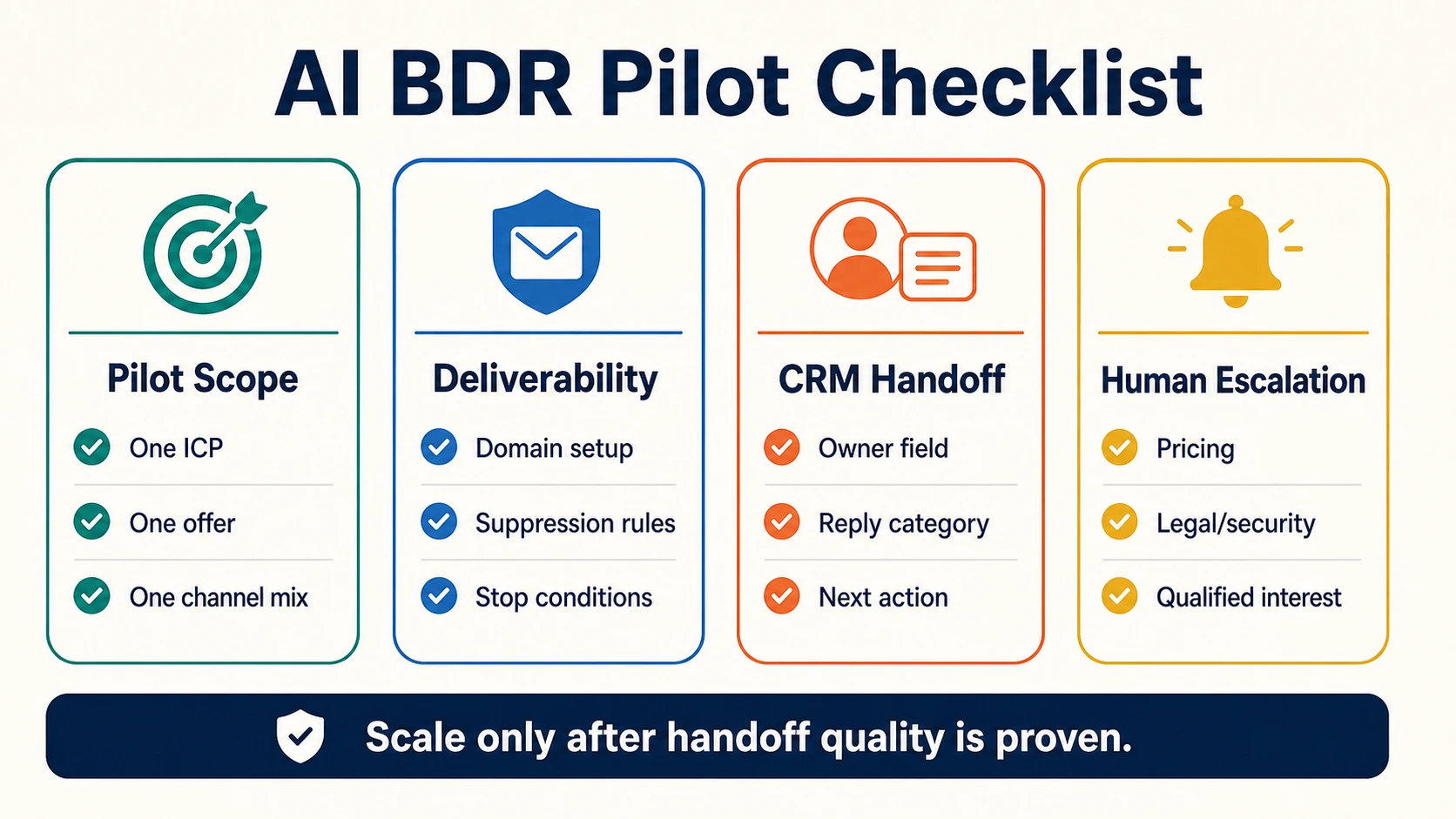
That is why a safe pilot should start with:
- one ICP lane
- one approved signal set
- one research-to-message workflow
- one CRM handoff format
- one human escalation owner
If the output is good, expand carefully. If the output is still generic, the problem is usually upstream context, not the prompt at the end.
See The Workflow On Your Pipeline
If your team is still losing time between list building and first-touch outreach, book a GrowthEffect demo and map the research workflow against your current ICP rules, stakeholder mapping, and CRM handoff.
If the buying question is really about whether it is cheaper to automate outbound prep than hire more junior SDR time, use the GrowthEffect pricing page to compare the workflow economics. If the issue turns out to be broader outbound execution, not just research, route the conversation into Vera.
Lead magnet recommendation: Outbound Pipeline Audit
Follow-up path:
- Define the exact outbound lane where research is slowing the team down.
- Decide what must be true before AI is allowed to create a message angle.
- Define the minimum CRM handoff a closer must receive.
FAQ
Is AI account research the same as lead enrichment?
No. Enrichment adds fields. Account research turns those fields into a usable story about fit, timing, stakeholders, and message angle.
Can AI account research replace human sellers?
No. It can reduce the repetitive prep work before outreach and handoff. Humans still need to own discovery, negotiation, procurement, and closing.
Should inbound qualification use the same workflow?
Not by default. Inbound qualification belongs to an inbound workflow such as Alim, while outbound account research belongs to an outbound workflow such as Vera.
What makes AI account research fail?
The common failure modes are vague ICP rules, weak triggers, fake personalization, no stakeholder logic, and poor CRM handoff structure.
What is the safest way to start?
Start with one ICP, one approved signal set, one human escalation owner, and one narrow handoff schema. Expand only after the team trusts the output.
Leave a Reply