
The best AI sales agent for startups is usually not the most autonomous tool. It is the tool that can safely own the next sales workflow your team is ready to systemize. If you are really asking which agentic sales tools are available for early-stage companies, or which startup-fit option is worth paying for first, the short answer is this: use data and research agents when targeting is still messy, use an outbound AI sales agent when the ICP is clear but execution is inconsistent, use an inbound AI sales agent when warm leads wait too long, and use CRM-native agents only after handoff rules are stable.
Startups do not need more AI surface area. They need cleaner first-touch sales work: sourcing, enrichment, research, scoring, outreach, follow-up, reply handling, qualification, routing, and CRM handoff. The right AI sales agent should reduce operator load without making your bad-fit volume louder. If affordability is part of the buying question, judge the tool by workflow cost and control, not by whether it promises the most autonomy in a demo.
If you need the broader category map first, read Which Agentic Sales Tools Fit Early Stage Startups?.
Key Takeaways
– Startups should buy AI sales agents by workflow ownership, not by how impressive the demo feels.
– The first decision is whether the bottleneck is outbound execution, inbound qualification, data quality, or CRM handoff.
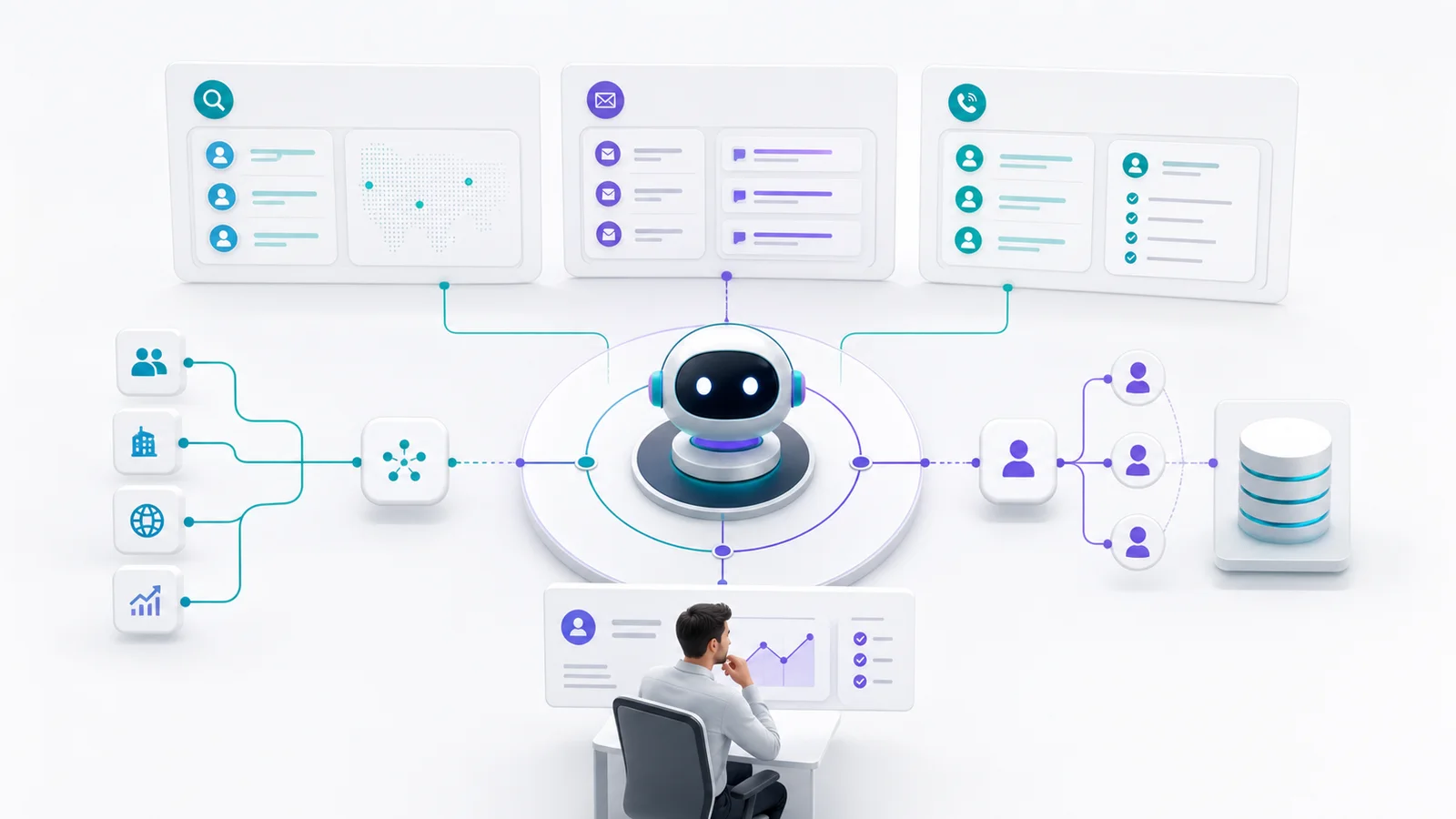
– Vera is the GrowthEffect outbound AI sales representative for sourcing, enrichment, research, scoring, outreach, follow-up, reply handling, and pipeline generation.
– Alim is the GrowthEffect inbound AI sales representative for instant response, qualification, routing, booking, and CRM sync.
– Humans still own discovery, pricing, procurement, legal and security, negotiation, and closing.
Which AI Sales Agent Should a Startup Compare First?
The right starting point depends on where your current sales system breaks.
| If this is the leak | Compare this first | Why |
|---|---|---|
| You know the ICP but outbound goes quiet every week | Outbound AI sales agent | The problem is repeatable execution |
| Warm demo requests or contact leads wait too long | Inbound AI sales agent | The problem is speed to lead and qualification |
| Reps do too much list cleaning and account research | Data and enrichment workflow | The problem is data preparation, not messaging |
| CRM ownership, fields, and next steps are messy | CRM-native AI plus handoff rules | The problem is operational discipline |
The wrong buying pattern is comparing everything under the label “AI sales agent” as if the products do the same job.
What Is an AI Sales Agent for Startups?
An AI sales agent for startups is an AI system that takes action across a defined sales workflow instead of only helping a person write a message. The workflow might be outbound prospecting, inbound lead qualification, account research, follow-up, reply classification, or CRM updates.
That distinction matters more at startup stage than it does at enterprise stage.
If your sales motion is still founder-led, a writing assistant may be enough. If you already know the ICP and your biggest problem is doing the first-touch work every week, you need a digital worker that can own more of the motion. If inbound leads sit overnight or on weekends, you need an inbound AI sales representative, not another outbound tool.
The Startup Rule: Delegate Repeatable Work, Not Sales Strategy
Most early-stage teams should not jump straight from manual sales to maximum autonomy.
Use this three-level rule instead.
| Level | Use when | What the AI should do | What humans still own |
|---|---|---|---|
| Assist | The ICP and message are still changing weekly | Research, summarize, draft options | Founder judgment and sending |
| Automate | The workflow is repeatable but still needs controls | Enrich, score, route, follow up, update CRM | Review edge cases and strategic accounts |
| Digital worker | The workflow is stable enough to delegate | Own first-touch inbound or outbound execution | Strategy, exceptions, and closing |
Startups usually fail when they delegate a sales strategy problem to an automation product.
The 5 Startup AI Sales Agent Categories
The cleaner way to compare “best AI sales agent for startups” is by category.
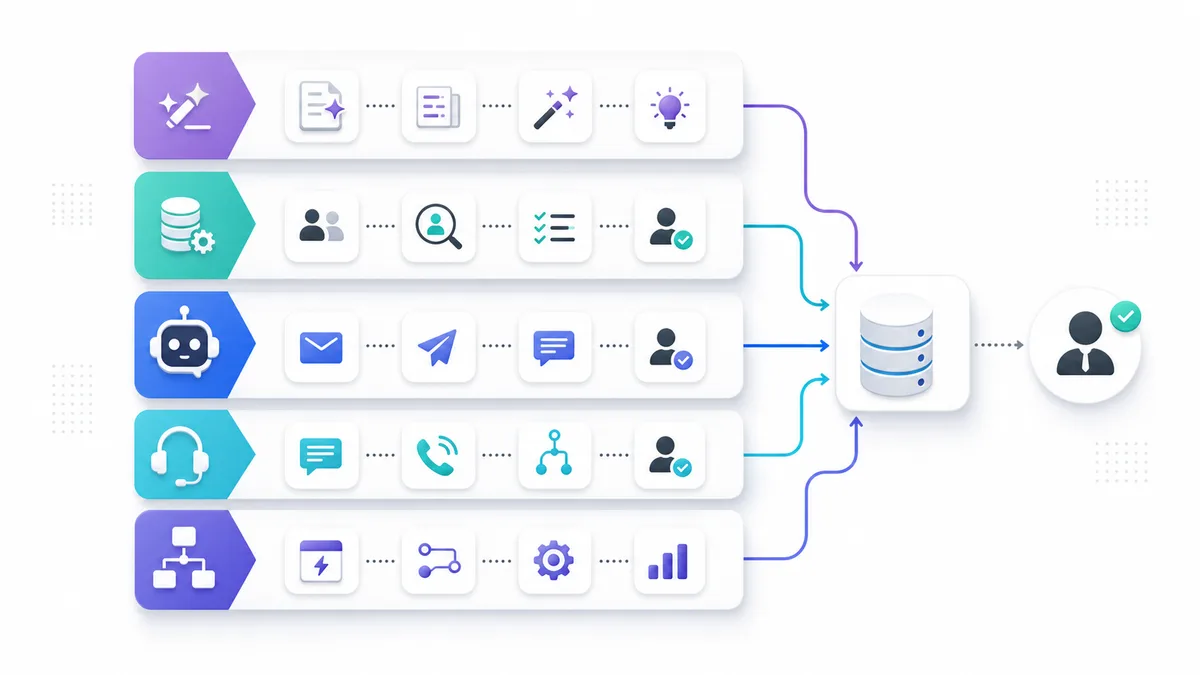
| Category | What it owns | Best startup fit | Watch-out |
|---|---|---|---|
| Writing assistant | Drafts messages, notes, and variants | Founder-led learning and message iteration | Still manual execution |
| Data and research agent | Finds accounts, enriches leads, builds context | Teams cleaning target lists and ICP edges | Tool sprawl without pipeline ownership |
| Outbound AI sales agent | Sources, researches, scores, writes, follows up, classifies replies | Teams building repeatable outbound pipeline | Can scale weak ICP if guardrails are poor |
| Inbound AI sales agent | Responds, qualifies, routes, books, updates CRM | Teams losing warm demand to slow response | Not the right tool for cold prospecting |
| CRM-native agent | Updates records, suggests next actions, summarizes context | Teams already operating through CRM workflows | Needs clean field ownership first |
Best AI Sales Agent for Startups: Tool Fit by Workflow
Public vendor positioning changes often, but the buyer-fit frame is stable.
| Tool type | Public positioning | Best startup fit | GrowthEffect reading |
|---|---|---|---|
| 11x digital workers | AI SDR / digital worker model for outbound pipeline creation | Startups that want aggressive outbound ownership | Strong outbound comparison for Vera |
| Artisan Ava 2.0 | Autonomous AI BDR for lead discovery, outreach, replies, and meetings | Teams wanting an all-in-one outbound BDR motion | Good outbound comparison, but still needs guardrails |
| AiSDR | AI SDR with published pricing and signal-based outreach positioning | Startups wanting faster rollout with transparent packaging | Useful when the stack is already HubSpot-heavy |
| HubSpot Breeze Prospecting Agent | CRM-connected AI prospecting and agent workflows across customer-facing work | Teams already treating HubSpot as system of record | Better fit for CRM-centric ops than pure outbound |
| Salesforce Agentforce Sales | CRM-native AI sales agent model | Teams with strong Salesforce discipline | Better fit when data, fields, and governance already exist |
| GrowthEffect Vera | Outbound AI sales representative for sourcing, enrichment, research, scoring, outreach, follow-up, reply handling, and CRM handoff | Teams needing an outbound digital worker, not another tool stack | Best when the ICP is clear but execution is inconsistent |
| GrowthEffect Alim | Inbound AI sales representative for instant response, qualification, routing, booking, and CRM sync | Teams leaking warm demand to delay and poor qualification | Best when speed to lead and handoff are the problem |
The practical difference is ownership.
Vera is outbound. Alim is inbound. That separation matters because the way you judge them is different. Outbound AI should be measured on fit, personalization discipline, follow-up quality, and qualified conversations. Inbound AI should be measured on response time, qualification quality, routing quality, and booked meetings.
How to Evaluate an AI Sales Agent Before a Startup Buys
Startups do not need the longest feature list. They need the safest next workflow.
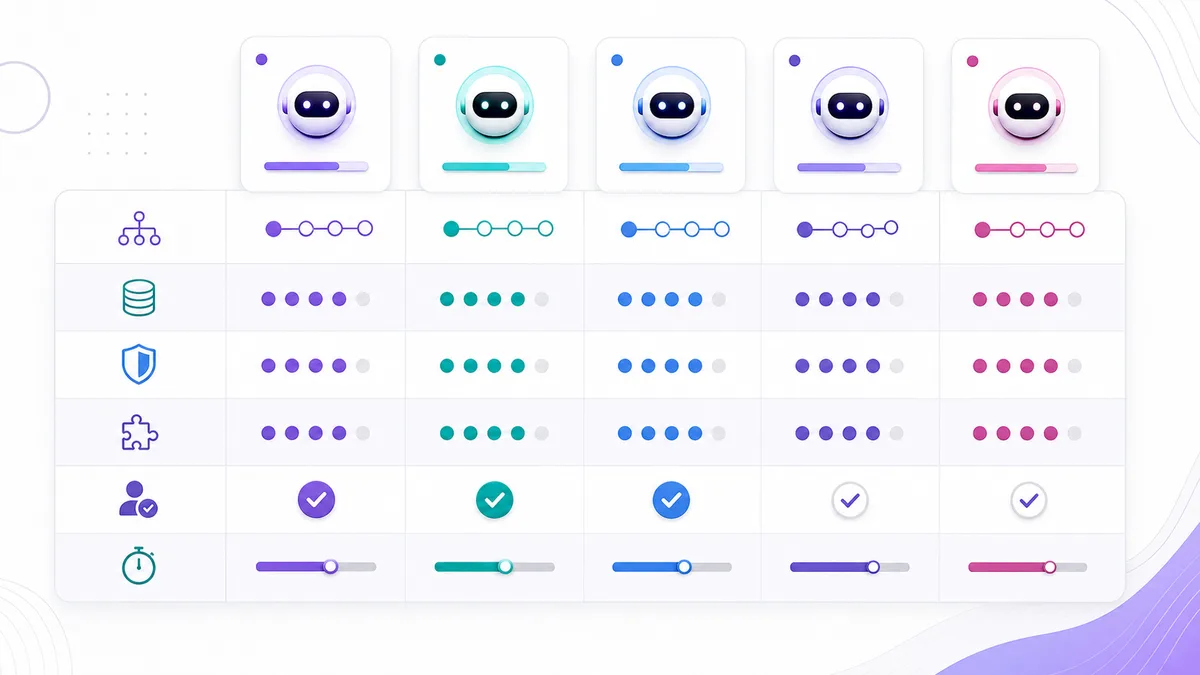
| Evaluation area | What to check | Why it matters |
|---|---|---|
| Workflow ownership | Does the agent own one clear job? | Startups need focus before scale |
| ICP and exclusions | Can you define who not to target? | Prevents bad-fit volume |
| Data confidence | Can you inspect low-confidence records? | Protects personalization quality |
| Message controls | Can you block unsupported claims and risky offers? | Protects trust and brand safety |
| Reply handling | Can the system stop, classify, and escalate correctly? | Pipeline is won in replies, not sends |
| CRM handoff | Does it write source, score reason, context, next step, and owner? | Makes learning compound |
| Human review | Can strategic accounts and risky messages be approved? | Keeps judgment where it belongs |
| Time to value | Can the first workflow launch quickly? | Startups cannot wait months for proof |
Related GrowthEffect workflow
If your startup already knows the ICP but outbound execution is still inconsistent, Vera is the GrowthEffect AI sales representative built for sourcing, enrichment, research, scoring, personalized outreach, follow-up, and CRM handoff.
If the actual leak is warm demand sitting too long before qualification, Alim is the GrowthEffect AI sales representative for instant response, qualification, routing, booking, and CRM sync.
If the shortlist is already turning into a headcount-versus-software decision, use the GrowthEffect pricing page to compare workflow cost before you add another rep or another tool stack.
Startup Guardrails Matter More Than the Demo
The demo may look polished. The real question is whether the workflow stays safe with your messy data, your narrow market, and your actual channel constraints.
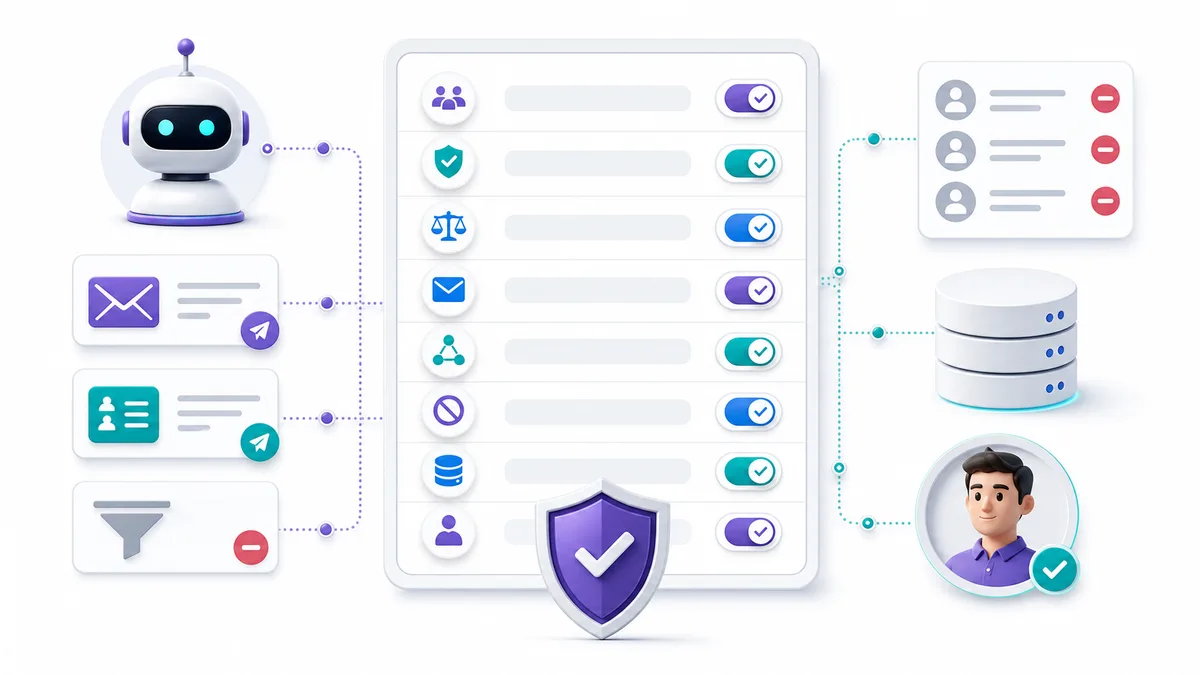
Use these controls before rolling out any AI sales agent:
- define ICP exclusions and suppression rules
- review low-confidence contact or company data
- block unsupported pricing, logo, ROI, and compliance claims
- stop automation on positive, objection, referral, opt-out, and unclear replies
- keep source, reason, next step, and owner in CRM
- require human review for strategic or high-risk accounts
Google’s current Gmail sender guidance makes authentication, spam-rate control, and unsubscribe handling operational requirements for bulk senders. LinkedIn’s help documentation says automated activity using third-party software, bots, browser extensions, or scraping tools is not allowed on LinkedIn’s website. The FTC’s CAN-SPAM guide still matters for truthful headers, subject lines, address disclosure, and honoring opt-outs.
This is not legal advice. It is a startup operating rule: small-volume, high-fit, well-governed outbound beats uncontrolled automation.
When GrowthEffect Is the Better Startup Fit
GrowthEffect fits when a startup wants digital sales workers, not more disconnected tools.
Use GrowthEffect when:
- the ICP is clear enough to delegate first-touch work
- outbound prospecting is inconsistent week to week
- inbound leads wait too long for qualification and routing
- the team wants separate inbound and outbound ownership
- humans still want to control discovery, negotiation, and closing
Use another tool first when:
- you still do not trust the target list
- the real problem is only enrichment or CRM cleanup
- the message and offer are still changing daily
- you are looking for a generic chatbot instead of a sales workflow owner
Final Recommendation
The best AI sales agent for startups is the one that owns the next workflow your team is ready to standardize.
If you need outbound pipeline creation, compare Vera, 11x, Artisan, and AiSDR. If you need inbound qualification and routing, compare Alim with CRM-native or inbound AI options. If the data is not ready yet, fix the research and enrichment layer before buying more autonomy.
The safest buying order for most startups is: define the leak, choose the workflow, add guardrails, then delegate the work.
If outbound execution is the leak, see how Vera builds startup pipeline. If inbound qualification is the leak, see how Alim handles warm demand. If you are still not sure where the funnel is breaking, start with the GrowthEffect revenue leak scan. If the buying question is mainly affordability, compare the workflow against the GrowthEffect pricing page before you choose a headcount-heavy path. For a live buyer-fit conversation, book a GrowthEffect demo.
FAQ
What is the best AI sales agent for startups?
The best AI sales agent for startups depends on the workflow that needs ownership. Outbound teams should compare outbound AI workers such as Vera, 11x, Artisan, and AiSDR. Teams losing warm demand should compare inbound AI qualification workflows such as Alim and CRM-native agents.
Are AI sales agents and agentic sales tools the same thing?
Often yes in buyer language, but the products are not always identical. “Agentic sales tools” may include data, research, CRM, or workflow agents. “AI sales agent” usually implies a more active workflow owner.
Should a startup buy an outbound AI agent or an inbound AI agent first?
Buy the agent that matches the leak. If you already have demand but respond too slowly, fix inbound first. If you know the ICP but outbound is inconsistent, fix outbound first.
Can an AI sales agent replace a startup sales team?
No. AI sales agents can take over repetitive first-touch work, but founders and closers should still own strategy, discovery, pricing, negotiation, and closing.
What should a startup test before buying an AI sales agent?
Test the product with your real ICP, exclusions, CRM fields, handoff rules, and human review needs. The right question is not “does the demo look smart?” but “does the workflow stay safe and useful in our motion?”
Leave a Reply