
If you are asking which agentic sales tools are available for early stage companies, the shortest answer is this: use research and enrichment tools when targeting is still messy, use an outbound AI sales rep when the ICP is clear but execution is inconsistent, use an inbound AI rep when warm leads wait too long, and use CRM-native agents only after field ownership and handoff rules are stable. Agentic sales tools for early stage startups are AI systems that can execute bounded sales workflows, not just write email copy. The right tool can help a small team source accounts, enrich leads, research prospects, draft personalized outreach, follow up, classify replies, and update the CRM.
The wrong tool simply sends more low-quality outbound faster. For early-stage companies, the best AI sales agent platform is usually the one that matches your current GTM maturity: clear ICP, clean enough data, safe channel rules, human handoff, and a measurable pipeline goal.
The July 10 refresh keeps that answer because fresh 90-day Search Console data now shows 9,989 impressions, 3 clicks, and an average position of 3.0 for this page, with 8,913 impressions still concentrated on one exact question: which agentic sales tools are available for early stage companies. That is a category-selection query, not a request for the longest vendor list, so the page stays workflow-first.
If you need a broader category comparison after the startup-stage filter, see the full AI sales tools comparison.
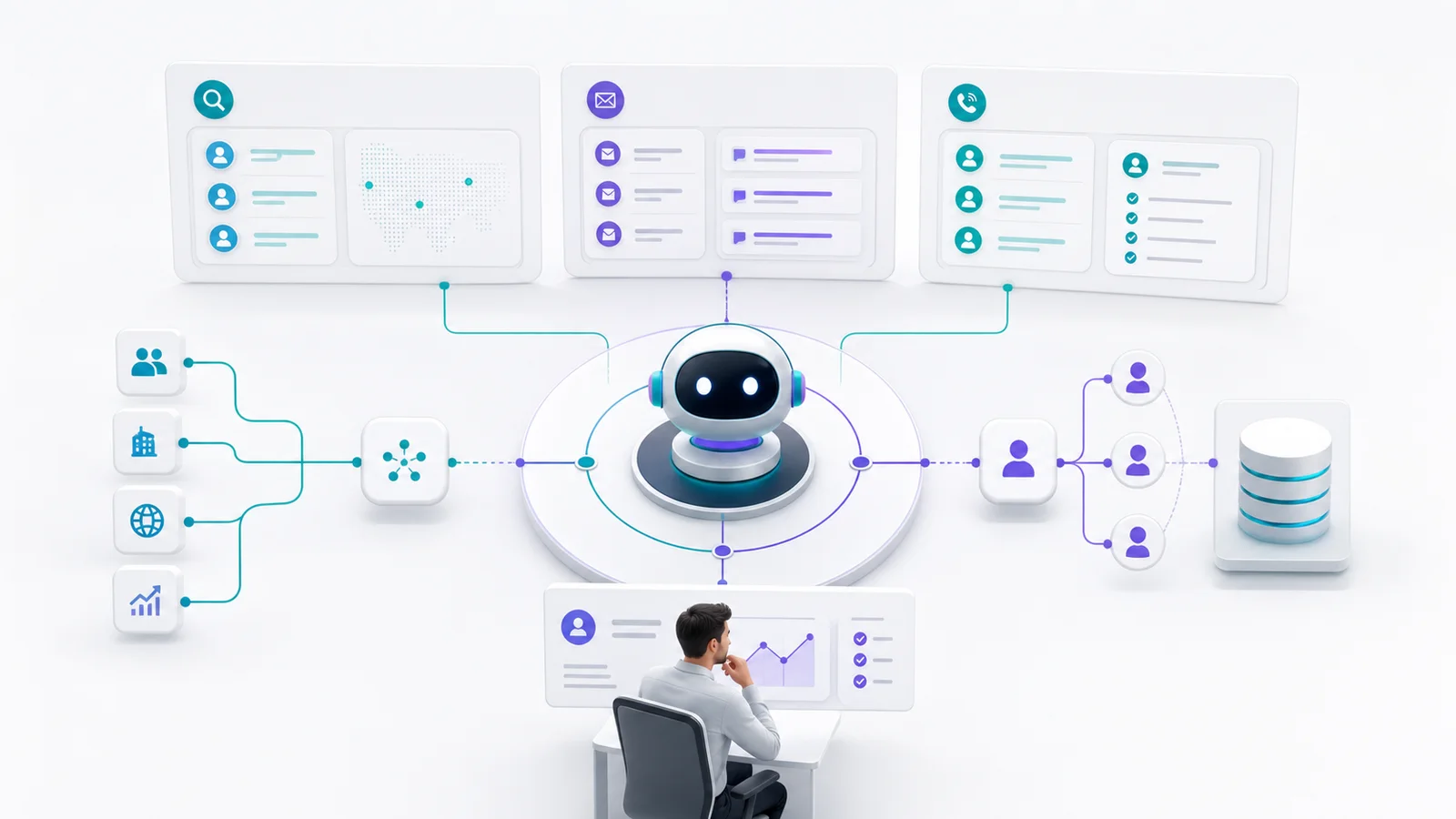
Key Takeaways
– Early-stage startups should not buy an AI sales agent before they can describe their ICP, exclusions, offer, channels, and handoff rules.
– The best AI sales agents in 2026 are useful when they own a bounded workflow: sourcing, enrichment, research, scoring, outreach, follow-up, reply classification, or inbound qualification.
– AI SDR tools for startups should be judged by data quality, control, CRM visibility, channel safety, and human handoff, not by how many messages they can send.
– For GrowthEffect, Vera is the outbound AI sales representative for pipeline creation. Alim is the inbound AI sales representative for lead response and qualification. Do not mix the two jobs.
– The practical buyer question is not “Which platform is most autonomous?” It is “Which sales workflow can we safely delegate this month?”
Which Agentic Sales Tools Are Available for Early Stage Companies?
The main agentic sales tool categories for early-stage companies are AI writing assistants, data and enrichment agents, outbound AI SDRs, inbound AI sales reps, and CRM-native workflow agents. The right starting point depends on which first-touch sales job is currently blocking growth.
| If this is your current bottleneck | Start here | Why |
|---|---|---|
| You still do not trust the target list | Data and enrichment workflows | Fix ICP, records, and research before adding autonomy |
| You know the ICP but outbound stalls every week | Outbound AI SDR workflow | Delegate sourcing, research, outreach, and follow-up |
| Warm leads wait too long for qualification | Inbound AI rep workflow | Protect speed-to-lead and routing quality |
| CRM fields and ownership are messy | CRM-native agent plus rules | Clean handoff before adding more activity |
If you want the shortest shortlist, use this:
| Startup reality | Best first tool category | Why |
|---|---|---|
| Founder still tests positioning weekly | AI research and writing assistant | You need learning speed more than autonomy |
| ICP is clear but outbound discipline is weak | Outbound AI sales worker | This is where agentic workflow ownership helps most |
| Inbound demos and forms wait too long | Inbound AI rep | Speed-to-lead is the leak, not prospecting volume |
What Are Agentic Sales Tools?
Agentic sales tools are software systems that use AI agents to take action across a sales workflow. A simple AI writing assistant helps a rep write a message. An agentic sales tool can take a larger job, such as researching accounts, scoring leads, drafting outreach, triggering follow-up, classifying replies, and pushing context into the CRM.
That distinction matters for early-stage startups.
If you have two founders and one sales hire, another writing assistant may not solve the real problem. The bottleneck is usually not a blank email. It is the entire first-touch sales operation:
- Which accounts should we target?
- Which contacts are actually relevant?
- What data can we trust?
- What reason do we have to reach out now?
- Which message is safe to send?
- Which replies should stop automation?
- Which opportunities should move to a human?
- What should the CRM remember for the next campaign?
This is why the category has moved from “AI copywriting” to “AI sales agents” and “digital sales workers.” 11x describes itself as building autonomous digital workers, while Artisan positions Ava as an autonomous AI BDR that finds leads, runs outreach, handles replies, and books meetings. AiSDR publishes an AI SDR offer with HubSpot integration and a startup-friendly launch process. Clay and Apollo sit closer to the data, enrichment, and research layer. Salesforce and HubSpot are moving agent capabilities closer to CRM-native workflows.
The market is crowded because “AI sales agent” now covers several different products. Early-stage startups should avoid evaluating them as one category.
The Startup Problem: You Need Pipeline Before You Have a Sales Machine
Early-stage companies usually do not have a mature GTM system. They have some combination of founder-led sales, a half-defined ICP, a small CRM, inconsistent outbound, a few inbound leads, and a lot of urgency.
That makes agentic sales tools attractive. They promise coverage without hiring a full SDR team.
But the same stage also makes them risky. If the startup has weak targeting, vague messaging, dirty CRM records, no suppression list, and no reply-handling process, an autonomous agent will not fix the GTM system. It will expose the missing pieces.
Use this startup-fit table before buying.
| Startup stage | What you likely need | Agentic tool fit | What to avoid |
|---|---|---|---|
| Founder-led discovery | Learn who buys and why | AI research assistant, light enrichment | Fully autonomous outbound before message-market fit |
| Early repeatable ICP | Build weekly outbound motion | Vera-style outbound AI worker, enrichment, scoring, controlled follow-up | High-volume sequences with weak data |
| First sales hire | Reduce manual prospecting load | AI SDR workflow with human approval | Replacing all judgment with automation |
| Inbound starts arriving | Respond and qualify fast | Alim-style inbound AI representative | Treating inbound and outbound as one generic bot |
| CRM has old leads | Reactivate and prioritize | AI scoring, research, reactivation workflow | Sending generic “checking in” campaigns |
The operating rule is simple: delegate repeatable first-touch work, not the sales strategy.
The 5 Types of AI Sales Agents for Startups
Most “best AI sales agents 2026” lists mix very different tools. For an early-stage company, the cleaner way is to group platforms by the sales job they actually own.
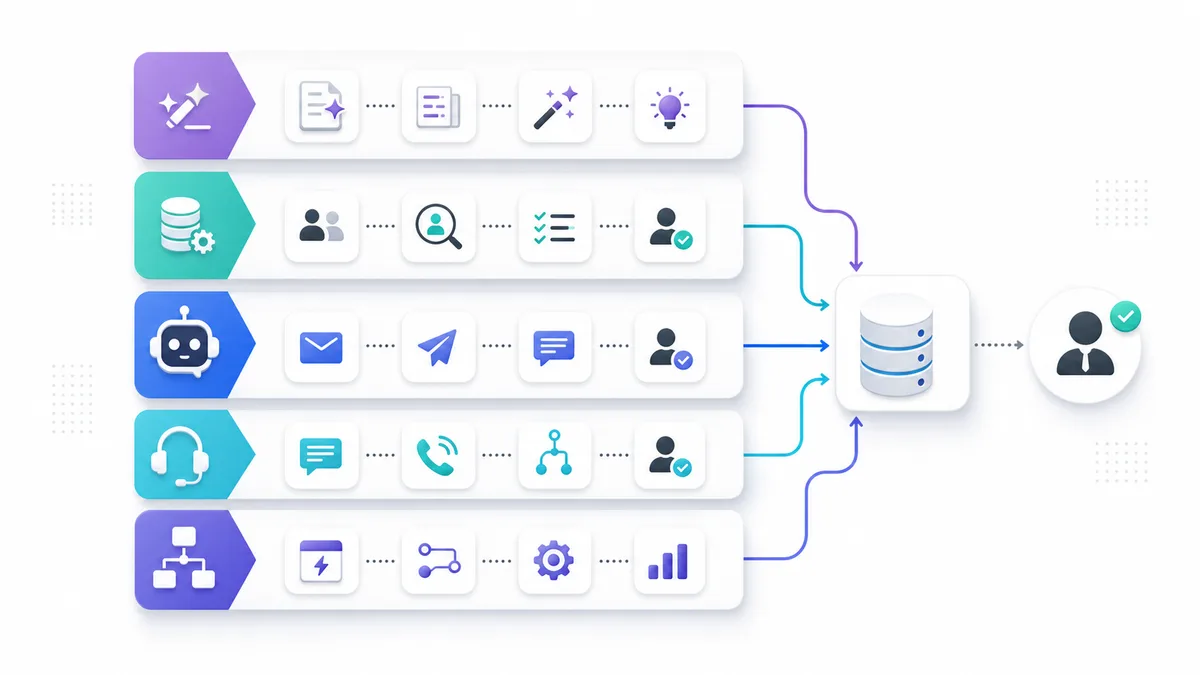
| Category | What it does | Examples of tools to evaluate | Best for | Startup risk |
|---|---|---|---|---|
| AI writing assistant | Drafts emails, messages, call notes, snippets | ChatGPT, Claude, Lavender-style tools | Founder-led learning and message iteration | Still depends on manual execution |
| Data and enrichment agent | Finds accounts, enriches leads, runs research workflows | Clay, Apollo, enrichment providers | Building clean target lists | Can create tool sprawl without handoff |
| Outbound AI SDR | Sources, researches, writes, follows up, classifies replies | GrowthEffect Vera, Artisan Ava, 11x Alice, AiSDR | Repeatable outbound pipeline creation | Can scale poor ICP if guardrails are weak |
| Inbound AI sales rep | Responds to inbound leads, qualifies, routes, books | GrowthEffect Alim, CRM-native agents, chat/inbound systems | Capturing warm demand quickly | Bad if it is asked to do outbound prospecting |
| CRM-native agent | Updates fields, suggests next actions, summarizes activity | Salesforce Agentforce, HubSpot AI, CRM automations | Existing CRM workflows and sales ops | Requires clean data model |
The early-stage mistake is buying the most autonomous option before knowing which category is actually broken.
If your team does not know who to target, start with ICP and data workflows. If your team knows who to target but cannot execute outreach consistently, evaluate outbound AI SDR tools. If inbound leads are waiting too long, fix inbound response with Alim-like qualification and routing. If the CRM is messy, fix source-of-truth and handoff before adding more automation.
How to Evaluate the Best AI Sales Agent Platform
The best AI sales agent platform for an early-stage startup is not the platform with the longest feature list. It is the platform that can safely own the next workflow you need to systemize.
Use this evaluation matrix.
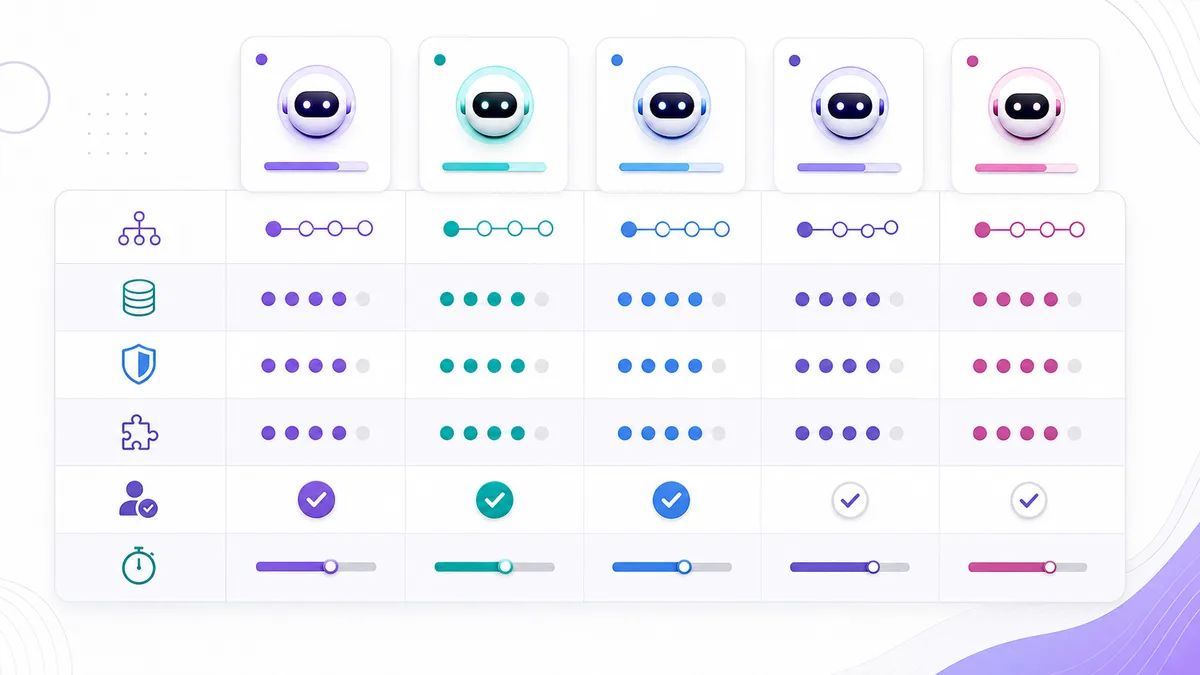
| Evaluation area | What to check | Why it matters |
|---|---|---|
| Workflow ownership | Does the agent own one clear sales job or many vague jobs? | Startups need focus, not complexity |
| Data quality | Where does account and contact data come from? Is confidence visible? | AI outreach is only as good as the lead data |
| ICP controls | Can you define fit, exclusions, regions, roles, and account limits? | Prevents bad-fit volume |
| Research depth | Does the agent produce source-backed account context? | Avoids fake personalization |
| Message guardrails | Can you restrict claims, tone, offers, pricing, and risky language? | Protects brand and trust |
| Channel safety | Does the system respect email, unsubscribe, frequency, and professional-network rules? | Reduces deliverability and account risk |
| Reply handling | Can it classify positive, referral, objection, not-now, opt-out, and out-of-office replies? | Pipeline is made in reply handling, not just sending |
| CRM handoff | Does it write structured notes, source, score reason, next step, and owner? | Makes learning compound |
| Human review | Can humans approve strategic accounts, uncertain research, and high-risk messages? | Keeps judgment where it belongs |
| Time to value | Can the first narrow workflow launch quickly? | Startups cannot wait months for value |
This matrix also prevents the common “agent demo trap.” A sales agent demo may look impressive because it shows a polished workflow on a clean example account. Your buying decision should be based on what happens with your messy CRM, your unclear ICP edges, your real domain reputation, your market, your offer, and your human follow-up capacity.
Tool Landscape: 11x, Artisan, AiSDR, Clay, Apollo, and GrowthEffect
The goal here is not to rank every vendor. Public capabilities change quickly, pricing changes, and startups have different constraints. The useful question is buyer fit.
| Platform type | Public positioning | Startup fit | Watch-out |
|---|---|---|---|
| 11x | Digital workers for GTM; Alice and Julian/Alice-style AI SDR workflows | Teams ready for a more autonomous revenue-worker model | Verify setup depth, CRM fit, channel rules, and budget |
| Artisan Ava | Autonomous AI BDR with data, enrichment, outreach, reply handling, and meeting booking | Startups and SMBs wanting an all-in-one outbound BDR motion | Strong autonomy needs strong guardrails and data QA |
| AiSDR | AI SDR with published pricing, HubSpot integration, and launch process | HubSpot-heavy startups that want a faster entry point | Check data quality, credits, and what humans still approve |
| Clay | Enrichment, research, and AI-powered prospecting workflows | Teams that want flexible data/research automation | Requires RevOps discipline to turn workflows into pipeline |
| Apollo | Sales intelligence, prospecting, enrichment, engagement, CRM workflows | Startups needing database and GTM tooling | Can become another tool unless handoff is clear |
| Salesforce/HubSpot agents | CRM-native AI, next-best-action, workflows, data context | Teams already running CRM-heavy sales ops | Data hygiene matters; CRM agents do not replace GTM strategy |
| GrowthEffect Vera | Outbound AI sales representative for sourcing, enrichment, research, scoring, personalized outreach, follow-up, reply handling, and pipeline generation | Startups that need a digital outbound worker, not more disconnected tools | Requires clear ICP, offer, and human handoff rules |
| GrowthEffect Alim | Inbound AI sales representative for response, qualification, routing, booking, and CRM sync | Startups with inbound leads or demo requests that wait too long | Not the outbound prospecting worker |
The separation between Vera and Alim is important.
Vera is for outbound. She helps create pipeline by finding and engaging the right accounts. Alim is for inbound. He helps protect existing demand by responding, qualifying, routing, and booking fast. A full-funnel startup may need both, but they should not be evaluated as the same agent.
Related GrowthEffect workflow
If your startup already knows the ICP but outbound execution is inconsistent, Vera is the GrowthEffect AI sales representative built to handle sourcing, enrichment, account research, scoring, personalized outreach, follow-up, and CRM handoff.
Use this path when the bottleneck is outbound pipeline creation, not inbound response handling.
The Startup Buying Framework: Assist, Automate, or Hire a Digital Worker
Early-stage companies should not jump straight from manual sales to fully autonomous sales. Use a three-level decision framework.
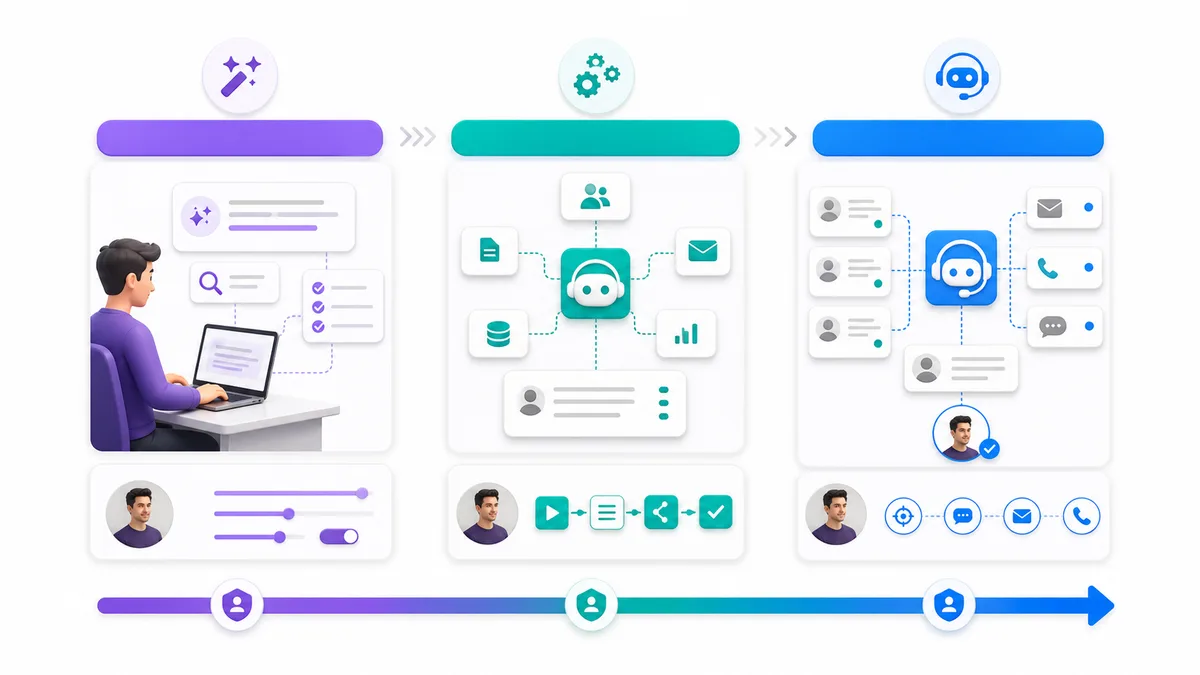
| Level | Use when | What AI should do | Human role |
|---|---|---|---|
| Assist | ICP and message are still changing weekly | Research, summarize, draft options | Founder or seller decides |
| Automate | Workflow is repeatable but needs control | Enrich, score, route, follow up, update CRM | Human reviews edge cases |
| Digital worker | Workflow is stable enough to delegate | Own outbound or inbound first-touch workflow | Human owns strategy, exceptions, closing |
For example:
- If you are still discovering which persona cares, do not buy a fully autonomous AI SDR. Use AI to research and draft, then let founders send and learn.
- If you know the ICP but prospecting is inconsistent, use Vera or a similar outbound AI sales worker to run sourcing, enrichment, research, scoring, outreach, follow-up, and reply handling.
- If demo requests arrive and sit unanswered, use Alim or an inbound AI representative to protect speed-to-lead and qualification.
- If you have closed-lost accounts and old CRM leads, use AI scoring and reactivation workflows before buying more lead volume.
The framework is intentionally conservative. Early-stage teams do not need maximum autonomy. They need reliable learning.
Guardrails for AI SDR Tools for Startups
Agentic sales tools can make a startup look bigger than it is. They can also make a startup’s mistakes louder.
The guardrail layer matters as much as the agent.
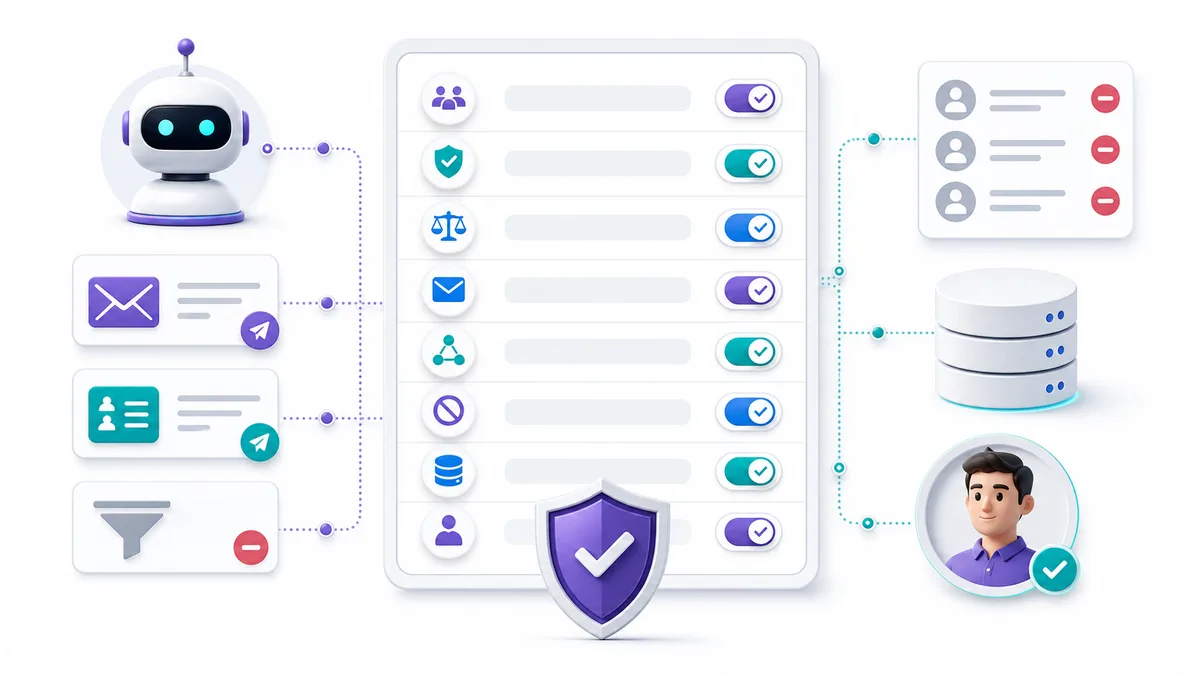
| Guardrail | Rule | Why it matters |
|---|---|---|
| ICP exclusion | Define who not to contact | Prevents irrelevant volume |
| Data confidence | Review low-confidence contacts | Avoids wrong-person outreach |
| Claim safety | Block unsupported ROI, customer logos, pricing, or security claims | Protects trust |
| Email compliance | Use authentication, unsubscribe, suppression, and bounce monitoring | Protects deliverability |
| Professional-network safety | Avoid scraping or blind automation that violates platform rules | Protects accounts and brand |
| Human approval | Review strategic accounts, uncertain research, and sensitive messages | Keeps judgment in the loop |
| Reply stop rules | Pause automation on positive, objection, referral, opt-out, and unclear replies | Prevents awkward follow-up |
| CRM source of truth | Store source, score reason, research signal, message angle, reply intent, and next step | Makes learning compound |
Google’s sender guidelines emphasize authentication, low spam rates, and unsubscribe practices for email senders. The FTC’s CAN-SPAM guide covers commercial email obligations such as truthful header information and honoring opt-outs. LinkedIn’s own help documentation says it does not permit third-party software, crawlers, bots, browser plug-ins, or extensions that scrape, modify, or automate activity on LinkedIn’s website.
This is not legal advice. The practical point is that early-stage startups should not treat AI sales agents as unlimited channel automation. The safer model is smaller segments, better fit, clean suppression, human review, and clear handoff.
Where GrowthEffect Fits for Early-Stage Startups
GrowthEffect is useful when a startup wants digital sales employees instead of a scattered stack of sales tools.
Use Vera, the outbound AI sales representative, when the problem is pipeline creation:
- You know the ICP but do not prospect consistently.
- Founders or AEs are spending too much time building lists.
- Outreach quality varies by person.
- Follow-up is inconsistent.
- Replies are not classified quickly.
- CRM notes do not explain why an account was targeted.
- Old CRM leads could be researched and reactivated.
Use Alim, the inbound AI sales representative, when the problem is demand capture:
- Demo requests wait too long.
- Website chat or social DMs are not qualified.
- Warm leads arrive outside working hours.
- Leads reach sales without enough context.
- Routing and meeting booking are inconsistent.
Use both only when the startup has both sides of the funnel: outbound needs to create new demand, and inbound needs to protect existing intent.
That is the full-funnel GrowthEffect model: Vera creates qualified outbound conversations, Alim captures and qualifies inbound demand, and human sellers handle discovery, trust, negotiation, and closing.
A 30-Day Pilot Plan for Agentic Sales Tools
Do not start by asking an agent to “run sales.” Start with one workflow.
| Week | Goal | What to do | Exit criteria |
|---|---|---|---|
| 1 | Define scope | Pick one segment, one persona, one channel, one success metric | ICP, exclusions, source of truth, and handoff rule are written |
| 2 | Prepare workflow | Enrich 50-100 accounts, score fit, define message guardrails, configure CRM fields | Test records pass QA |
| 3 | Run controlled pilot | Launch limited outreach or inbound qualification flow with human review | No critical data, claim, opt-out, or routing failures |
| 4 | Decide | Compare replies, accepted handoffs, meetings, CRM quality, and manual time saved | Expand, revise, or stop based on quality |
For an outbound pilot, use Vera or another AI SDR workflow on one narrow ICP segment. Measure qualified account rate, positive replies, accepted handoffs, meetings, and CRM completeness.
For an inbound pilot, use Alim or an inbound AI representative on one lead source such as demo requests or website chat. Measure first response time, qualification completion, meetings booked, and sales-accepted handoffs.
If the pilot only increases activity but not qualified conversations, do not scale it. Fix targeting, research, messaging, channel rules, or handoff first.
Who Should Not Buy an AI Sales Agent Yet?
Agentic sales tools are powerful, but they are not the right first move for every startup.
Wait if:
- You cannot describe your ICP in one page.
- Your offer changes every week.
- You do not know why customers buy.
- You have no CRM owner.
- You cannot handle positive replies quickly.
- You want AI mainly to send more cold messages.
- You have no suppression or opt-out process.
- You expect AI to close complex deals without human sellers.
These teams usually need founder-led discovery, CRM cleanup, or message testing before an AI SDR tool.
Buy or pilot when:
- The ICP is clear enough to filter accounts.
- The offer is stable enough to write guardrails.
- There is a human owner for interested replies.
- CRM fields can store source, score, research, reply intent, and next step.
- You want to systemize repeatable first-touch sales work.
That is where agentic sales tools become useful for early-stage companies: not as a magic seller, but as a way to turn first-touch sales work into a repeatable operating system.
Final Recommendation
If you are comparing agentic sales tools for early stage startups, do not start with a vendor leaderboard. Start with the workflow you need to delegate.
Choose an AI writing assistant if you are still learning the market. Choose data and enrichment workflows if the list-building layer is broken. Choose an outbound AI sales representative such as Vera if the team knows the ICP but cannot consistently source, research, personalize, follow up, classify replies, and update the CRM. Choose an inbound AI representative such as Alim if warm leads are waiting, unqualified, or routed poorly.
The best AI sales agent platform is the one that creates more qualified sales conversations without damaging your data, domain, brand, or buyer trust.
If you want to see which first-touch workflow GrowthEffect should own for your startup, book a GrowthEffect demo or start with a revenue leak scan. The right question is not “Can an AI agent replace our SDR?” It is “Which part of our pipeline should stop depending on founder memory and manual follow-up?”
FAQ
What are agentic sales tools for early stage startups?
Agentic sales tools are AI systems that can execute bounded sales workflows for a startup, such as sourcing leads, enriching records, researching accounts, scoring fit, drafting outreach, following up, classifying replies, qualifying inbound leads, and updating CRM fields. They are more operational than simple AI writing assistants.
What are the best AI sales agents in 2026?
The best AI sales agents in 2026 depend on the workflow. 11x and Artisan are positioned around autonomous digital workers or AI BDRs. AiSDR is a more explicit AI SDR option with published pricing and HubSpot integration. Clay and Apollo are strong in data, enrichment, and prospecting workflows. GrowthEffect separates outbound with Vera and inbound with Alim.
Are AI sales agents for startups safe to use?
They are safe only when the workflow has guardrails. Startups need ICP exclusions, data confidence checks, message approval rules, unsubscribe and suppression handling, CRM visibility, reply stop rules, and human handoff for interested or risky conversations.
Should an early-stage startup use an AI SDR tool?
An early-stage startup should use an AI SDR tool when the ICP is clear enough, the offer is stable enough, and a human can handle interested replies. If the startup is still learning who buys and why, founder-led manual outreach plus AI research assistance is usually better than full automation.
What is the difference between Vera and Alim?
Vera is GrowthEffect’s outbound AI sales representative. Vera helps create pipeline through sourcing, enrichment, research, scoring, personalized outreach, follow-up, reply classification, and CRM handoff. Alim is GrowthEffect’s inbound AI sales representative. Alim responds to inbound leads, qualifies them, routes them, books meetings, and syncs context to CRM.
What should startups measure in an AI sales agent pilot?
Measure qualified account rate, data accuracy, positive replies, accepted handoffs, meetings booked, CRM completeness, opt-outs, bounce rate, human override rate, and manual time saved. Avoid relying only on messages sent or contacts processed.
BlogPosting JSON-LD
{
  "@context": "https://schema.org",
  "@type": "BlogPosting",
  "mainEntityOfPage": {
    "@type": "WebPage",
    "@id": "https://www.growtheffect.co/blog/agentic-sales-tools-for-early-stage-startups"
  },
  "headline": "Agentic Sales Tools for Early Stage Startups: 2026 AI Sales Agent Guide",
  "description": "Agentic sales tools for early stage startups: compare AI SDR tools, agent platforms, workflows, guardrails, and 2026 vendor fit.",
  "image": [
    "https://www.growtheffect.co/assets/blog/agentic-sales-tools-for-early-stage-startups/agentic-sales-tools-for-early-stage-startups-hero.webp"
  ],
  "author": {
    "@type": "Person",
    "name": "Can Buyuk"
  },
  "publisher": {
    "@type": "Organization",
    "name": "GrowthEffect AI",
    "url": "https://www.growtheffect.co/"
  },
  "datePublished": "2026-07-10",
  "dateModified": "2026-07-10",
  "url": "https://www.growtheffect.co/blog/agentic-sales-tools-for-early-stage-startups",
  "inLanguage": "en",
  "articleSection": "AI Sales Automation",
  "keywords": [
    "agentic sales tools for early stage startups",
    "best ai sales agents 2026",
    "ai sales agents for startups",
    "agentic sales tools for early stage companies",
    "ai sdr tools for startups",
    "best ai sales agent platform"
  ]
}
Source List
- Salesforce State of Sales 2026 announcement – AI agent adoption, prospecting use, and data hygiene context.
- Gartner, AI-enabled next best actions, May 20, 2026 – AI-enabled next best action and seller workflow redesign context.
- 11x About Us – Official 11x positioning around autonomous digital workers; official site reviewed privately during research.
- Artisan Ava official site – Official Artisan/Ava positioning and workflow claims; official site reviewed privately during research.
- AiSDR pricing page – Published pricing, HubSpot integration, and launch process context; official page reviewed privately during research.
- OpenAI business app listing for Clay – Clay positioning around enrichment, AI agents, account research, and outreach drafting.
- Apollo official site – Sales intelligence, prospecting, enrichment, engagement, and CRM workflow context; official site reviewed privately during research.
- HubSpot Breeze prospecting agent – CRM-native AI sales agent context for HubSpot users.
- Salesforce Agentforce Sales – CRM-native sales agent context for Salesforce users.
- LinkedIn prohibited software and extensions – LinkedIn platform automation and scraping policy.
- Google email sender guidelines – Sender authentication, spam, unsubscribe, and deliverability requirements.
- FTC CAN-SPAM Act compliance guide – Commercial email requirements and opt-out obligations.
Leave a Reply