
AI vs human sales is the wrong question if the answer is “replace everyone.” AI wins at repetitive, high-volume, time-sensitive first-touch work: inbound response, qualification, lead scoring, outbound research, personalized first drafts, follow-up, CRM updates, and routing. Human reps still matter for trust, complex discovery, negotiation, strategic accounts, procurement, judgment, and closing.
The better sales model is human plus AI. In GrowthEffect terms, Alim handles inbound first-touch work, Vera handles outbound pipeline creation, and human closers, AEs, and senior SDRs handle the moments where buyer trust, commercial judgment, and relationship quality decide the deal.
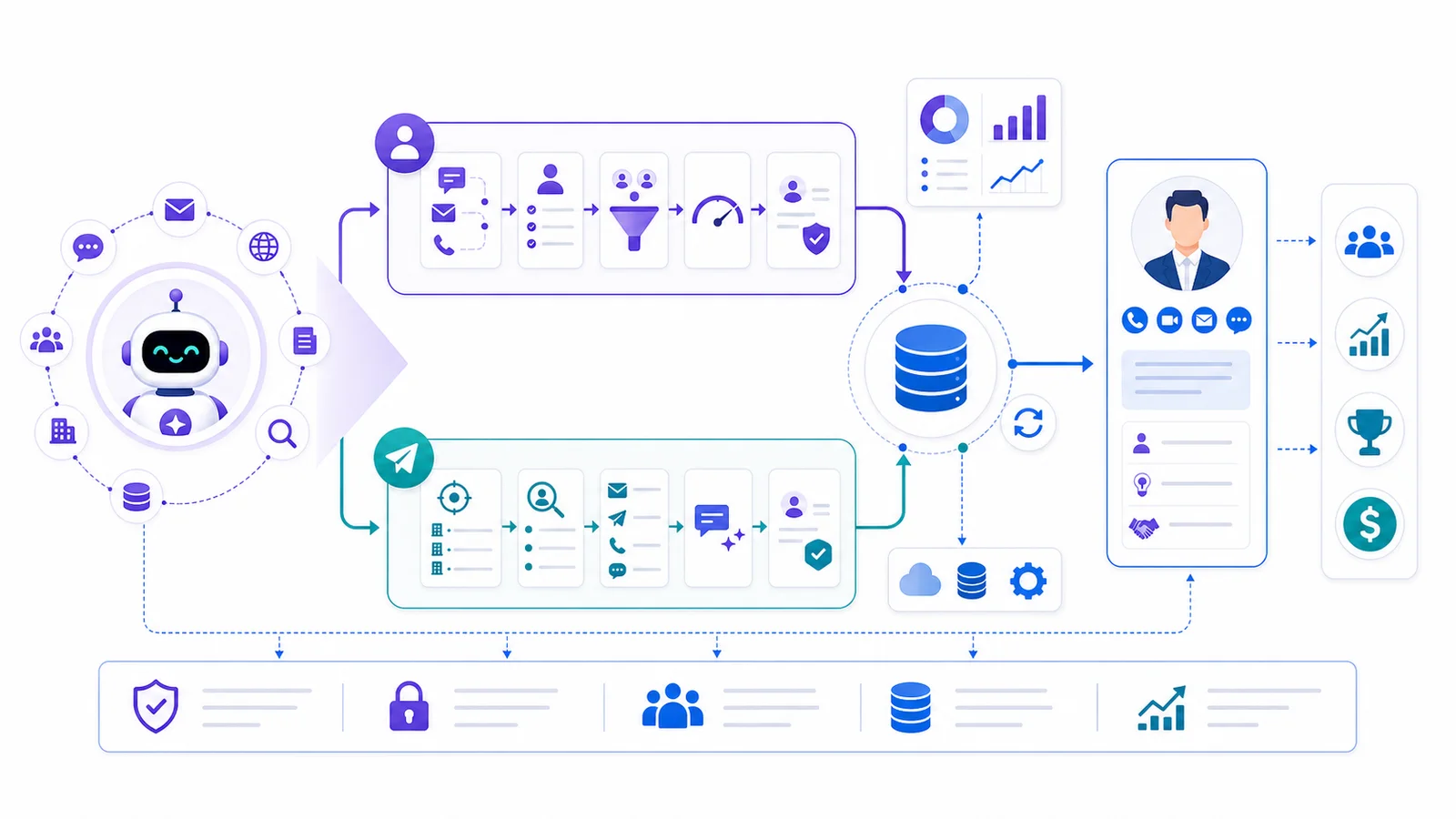
Key Takeaways
– AI sales reps are strongest when the work is repeatable, measurable, fast, and structured.
– Human reps are strongest when the work is ambiguous, emotional, strategic, political, or commercially sensitive.
– Alim and Vera should not be treated as one generic bot: Alim is inbound, Vera is outbound.
– AI should reduce manual SDR workload, not remove humans from the buying process.
– The best operating model is an AI first-touch layer with clear human handoff rules.
– Sales leaders should measure AI and humans differently: AI on speed, coverage, consistency, and data quality; humans on conversion, trust, deal progression, and close quality.
The Direct Answer: AI Wins the Work Humans Should Not Be Doing Manually
AI sales reps win where sales teams need speed, coverage, and consistency. They can respond to inbound leads quickly, qualify every lead with the same logic, research accounts at scale, enrich CRM records, draft personalized outreach, follow up without fatigue, classify replies, and keep the sales system updated.
Human reps win where the buyer needs judgment. That includes complex discovery, emotional intelligence, building trust with a buying committee, navigating politics, negotiating price and scope, handling security or legal concerns, and deciding whether a deal is actually worth pursuing.
That split matters because B2B buying is moving in two directions at once. Buyers want more digital and self-serve control, but they still value human interaction at critical moments. Forrester’s 2025 B2B predictions said more than half of large B2B transactions of $1 million or more would be processed through digital self-serve channels, while Gartner predicted that by 2030, 75% of B2B buyers will prefer sales experiences that prioritize human interaction over AI. The practical conclusion is not “AI or human.” It is “digital execution plus human judgment.”
Salesforce’s 2026 sales research shows why this shift is happening now: 87% of sales organizations already use some form of AI for work such as prospecting, forecasting, lead scoring, or drafting emails. At the same time, the same Salesforce research found that 74% of sales professionals are focusing on data cleansing because AI depends on trusted, connected data.
In other words: AI is becoming normal in sales, but it only works when it is attached to clean process, clean data, and clear human ownership.
AI Sales Rep vs Human Rep: Comparison Framework
Use this framework before hiring another SDR, buying another sales tool, or asking AEs to do more prospecting. The goal is not to pick one winner. The goal is to assign the right work to the right worker.
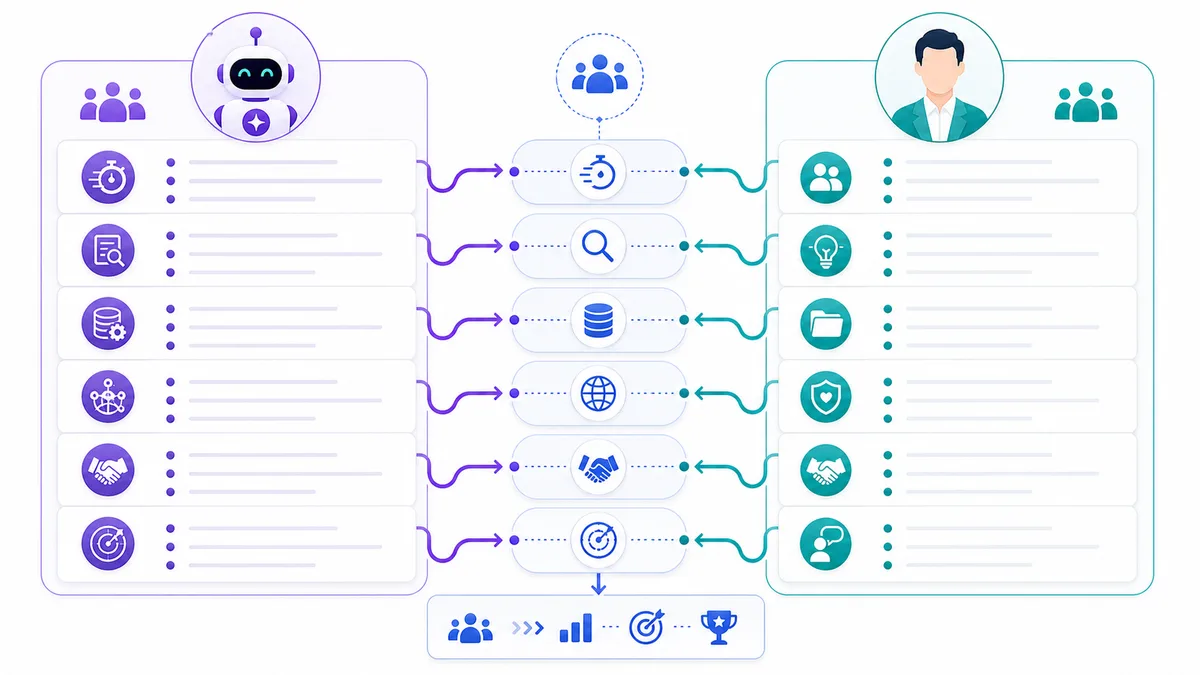
| Sales job | AI sales rep wins when | Human rep wins when | Best operating model |
|---|---|---|---|
| Inbound lead response | Leads need instant acknowledgement, 24/7 coverage, and structured routing | The buyer asks for a nuanced conversation or has a sensitive issue | AI responds and qualifies first; human takes qualified or sensitive conversations |
| Lead qualification | Questions, scoring, and CRM fields can be standardized | The buyer’s context is ambiguous or politically complex | AI gathers facts; human validates high-value opportunities |
| Outbound prospecting | ICP rules, sourcing, enrichment, and research need scale | The target account is strategic or requires executive-level judgment | AI builds and researches the list; human reviews priority accounts |
| Personalization | Messages need relevant first drafts from account signals | The message requires founder voice, industry nuance, or a delicate relationship | AI drafts; human edits for top-tier accounts |
| Follow-up | Timing, reminders, and simple next steps are easy to codify | The reply shows emotion, risk, urgency, or negotiation potential | AI monitors and classifies; human responds when intent is real |
| CRM hygiene | Activity, notes, statuses, and fields need consistent updates | Ownership, disqualification, stage movement, or forecast impact needs accountability | AI suggests and logs routine updates; human owns high-impact fields |
| Closing | Never as the sole owner for complex B2B deals | Trust, discovery, negotiation, procurement, and stakeholder alignment decide the outcome | Human closes with AI-prepared context |
| Compliance and brand risk | Rules are explicit and enforceable | The message could create legal, deliverability, platform, or reputation risk | AI follows guardrails; humans approve risky actions |
The sales leader’s job is to define the boundary. If the boundary is vague, AI creates noise. If the boundary is clear, AI gives the team more coverage without lowering the quality of human sales conversations.
Where AI Sales Reps Win
AI wins at work that is expensive for humans because it is repetitive, fragmented, and easy to drop.
Most SDR teams do not fail because nobody knows sales. They fail because the daily workload is operationally brutal: find accounts, clean lists, enrich contacts, read websites, write first drafts, send follow-ups, update CRM fields, monitor replies, suppress opt-outs, and hand off context. A human can do this well for a small volume. The system breaks when volume grows.
1. Speed-to-lead and inbound coverage
Inbound leads decay when nobody responds. A lead can arrive from a form, website chat, WhatsApp, Instagram DM, Facebook Messenger, email, or another owned channel. If a human team is busy, offline, or unclear on ownership, the buyer waits.
This is where Alim, GrowthEffect’s AI inbound sales representative, fits. Alim’s role is not outbound prospecting. Alim handles inbound first-touch work: instant response, structured qualification, temperature classification, routing, CRM sync, and meeting booking when the lead is ready.
AI is better than humans here because the work is time-sensitive and rule-driven. The system can ask the first questions, capture the buyer’s need, classify intent, and route the lead before human delay kills momentum.
Humans still matter after that. A hot inbound lead should reach a human AE or closer with context, not stay inside an AI conversation forever.
2. Outbound sourcing, enrichment, and research
Outbound is where manual sales work becomes a tax on the team. Reps are asked to build lists, verify data, research accounts, write personalized emails, send LinkedIn messages, follow up, and log everything. The actual selling conversation may be only a small part of the week.
Vera, GrowthEffect’s outbound AI sales representative, is designed for that work. Vera handles ICP-based sourcing, enrichment, hard scoring, AI lead scoring, filtering, research, positioning, copywriting, outreach, follow-up, and learning.
AI wins here because it can apply the same ICP logic across thousands of records and turn account signals into structured next steps. HubSpot’s AI sales prospecting guide describes the core AI prospecting jobs as building and enriching lists, verifying contact data, drafting personalized outreach, logging activity, and scoring prospects.
The human role changes. Instead of spending hours building a list from scratch, the human reviews campaign strategy, approves the riskiest messages, handles replies, and improves the system based on real market feedback.
3. Consistent qualification and scoring
Humans are inconsistent. One SDR asks budget questions too early. Another skips authority. Another forgets to log pain. Another marks a lead qualified because the conversation felt positive.
AI is useful when qualification needs a consistent baseline. It can ask defined questions, apply scoring rules, capture required fields, and classify the next action. It can also make every disqualification visible: bad fit, no urgency, wrong geography, no budget, student/researcher, competitor, duplicate, customer, active opportunity, or opt-out.
That consistency helps the manager more than the individual rep. It creates an operating record. Sales leaders can see which sources create qualified leads, where leads drop, which segments are low quality, and which handoffs convert.
4. Follow-up, reply classification, and CRM hygiene
Follow-up is simple until humans have too many threads. Positive replies get buried. “Not now” replies are never resurfaced. Opt-outs are handled manually. CRM fields go stale. AEs lose context before the call.
AI wins because it can monitor, classify, and update continuously. It can separate positive interest from referrals, objections, pricing questions, timing issues, out-of-office replies, wrong-person replies, complaints, and unsubscribe requests.
The value is not just speed. It is control. A sales team can decide exactly what happens after each reply class:
| Reply type | AI next action | Human next action |
|---|---|---|
| Positive interest | Pause sequence, create task, summarize context | Reply personally or book the next step |
| Referral | Add referred contact, update contact map | Decide whether to contact the referred stakeholder |
| Pricing question | Flag as commercial intent, attach prior context | Answer with judgment and qualify fit |
| Not now | Set nurture date and reason | Decide if the account remains worth pursuing |
| Opt-out | Suppress future outreach | Review if account-level suppression is needed |
| Complaint or risk | Stop automation and escalate | Respond carefully or close the thread |
This is where AI makes human reps look better. The human enters the conversation with the context, timing, and next step already prepared.
Where Human Sales Reps Still Matter
Human reps still matter because sales is not only a workflow. It is a trust transfer.
AI can create a qualified conversation. It can prepare the room. It can make sure no lead falls through the cracks. But in complex B2B sales, the buyer is not only evaluating features. They are evaluating risk, credibility, internal politics, implementation effort, career exposure, and whether the vendor understands their business.
1. Trust and relationship building
Gartner’s 2025 buyer research is a useful warning against the “humanless sales” narrative. Gartner says buyers value AI for speed and convenience, especially early in the process, but predicts that by 2030 most B2B buyers will prefer sales experiences that prioritize human interaction over AI.
That does not mean buyers want to talk to a rep for every small question. It means the human touch becomes more important when the decision carries risk.
Human reps are better at reading hesitation, adapting to emotion, building credibility, and making the buyer feel understood. AI can summarize a buyer’s pain. A strong human rep can hear what the buyer is not saying.
2. Complex discovery and buying committee dynamics
B2B buying is rarely one person making one decision. The economic buyer, champion, technical evaluator, legal reviewer, finance owner, and end users may all see the problem differently.
AI can help prepare discovery. It can summarize account research, identify likely stakeholders, generate question paths, and capture notes. But a human AE should run the deeper conversation:
- What is the business cost of doing nothing?
- Who else will block or influence this decision?
- What internal deadline matters?
- Which risk matters most: budget, implementation, security, adoption, or leadership buy-in?
- Is this a real opportunity or a polite conversation?
These are not just fields. They are judgment calls.
3. Negotiation, pricing, procurement, and legal
AI should not be the final authority on discounts, custom terms, implementation promises, legal commitments, data processing questions, or procurement trade-offs.
Those moments carry commercial and legal risk. A human owner needs to decide what the company is willing to promise, how much margin to protect, whether the account is strategically important, and how to frame trade-offs without damaging trust.
AI can prepare the negotiation brief. Humans should own the negotiation.
4. Strategic accounts and executive-level conversations
Strategic accounts are different from normal leads. The message quality, stakeholder map, relationship path, and timing all matter more. A bad automated touch can cost more than the time saved.
For strategic accounts, AI should act as a research and preparation layer:
- summarize company context
- identify likely buying triggers
- map the account to the ICP
- prepare outreach angles
- surface relationship paths
- draft possible messages
- flag uncertainty
The human decides what to send, who should send it, and whether now is the right time.
How Alim, Vera, and Human Reps Should Split the Work
GrowthEffect’s model is intentionally not “one bot does everything.” Alim and Vera are separate digital sales employees with different jobs.
Alim is inbound. Vera is outbound. Humans close.
That separation keeps the sales system clean.
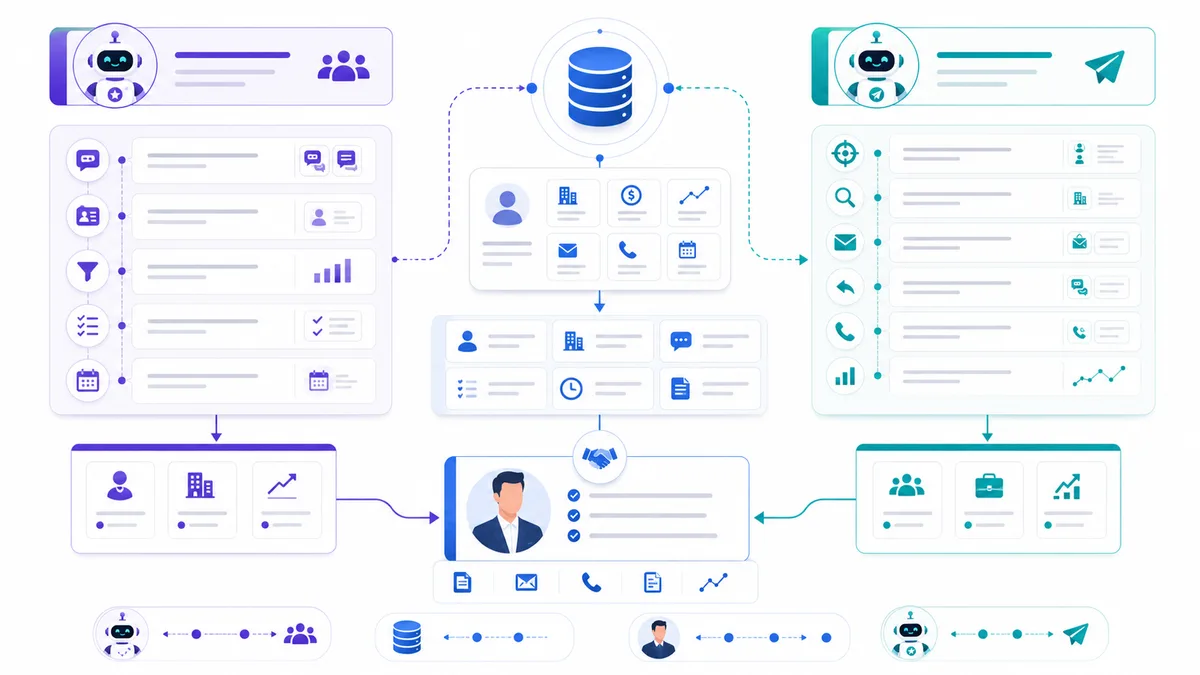
Alim: inbound first-touch and qualification
Alim should own the first-response layer for inbound demand:
- respond to inbound leads quickly
- ask qualification questions
- classify lead temperature
- collect context
- route hot leads
- book meetings when appropriate
- sync qualification notes to CRM
- escalate sensitive or high-value cases
Alim should not be described as a cold outbound prospector. That is Vera’s job.
The human counterpart for Alim is the AE, closer, founder, or senior SDR who receives qualified inbound conversations. That human should not waste time asking the buyer to repeat everything Alim already captured. The handoff should include pain, urgency, fit, qualification status, source, channel, and suggested next step.
Vera: outbound pipeline generation
Vera should own the repeatable outbound pipeline workflow:
- define and apply ICP logic
- source accounts and leads
- enrich records
- score fit
- filter bad-fit records
- research accounts
- choose the outreach angle
- draft personalized email and LinkedIn messages
- run approved follow-ups
- classify replies
- learn from response patterns
Vera should not be described as an inbound chat agent. That is Alim’s job.
The human counterpart for Vera is the sales leader, founder, AE, or SDR who owns campaign strategy, approves risky messaging, handles interested replies, and turns qualified conversations into pipeline.
Human closers, AEs, and senior SDRs: judgment and conversion
Human salespeople should own:
- sales strategy
- ICP decisions
- offer positioning
- high-value account review
- complex discovery
- relationship building
- objection handling
- pricing and procurement
- negotiation
- closing
- post-meeting judgment
The strongest version of AI vs human sales is not a race. It is a division of labor. Alim protects inbound demand from delay. Vera creates outbound conversations. Humans turn the right conversations into revenue.
For a deeper full-funnel view, see GrowthEffect’s guide to AI sales automation tools and the broader examples in AI sales automation workflows.
The Human Plus AI Sales Operating Model
A practical human plus AI sales model has five layers.
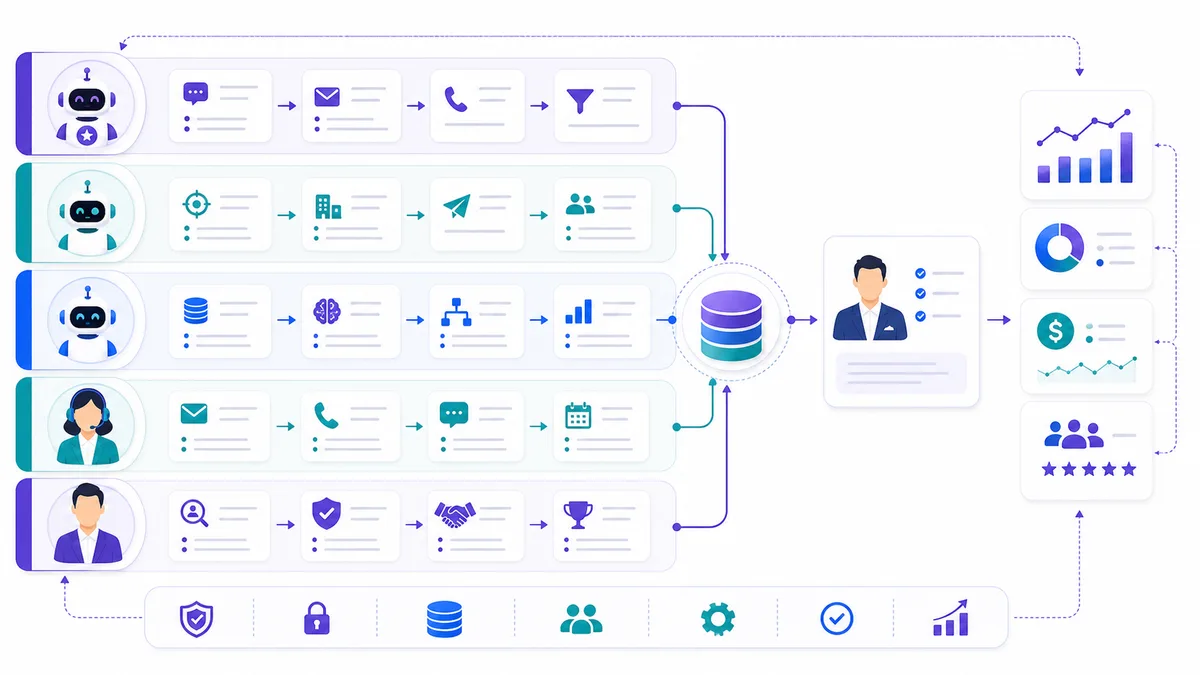
| Layer | Owner | What happens |
|---|---|---|
| Demand capture | Alim | Inbound leads receive instant response and structured qualification |
| Pipeline creation | Vera | Outbound leads are sourced, enriched, researched, scored, and contacted |
| System control | RevOps or sales leader | Rules, fields, CRM sync, suppression, routing, and reporting stay governed |
| Human conversion | AE, closer, founder, or senior SDR | Qualified conversations turn into discovery, negotiation, and close plans |
| Learning loop | Sales leadership plus AI system | Reply data, qualification outcomes, and close feedback improve future execution |
This model works because each owner has a clear job.
It also avoids three common mistakes.
Mistake 1: Treating AI as a magic rep
AI is not a good employee when nobody gives it a territory, rules, data, or a manager. It needs ICP definitions, qualification logic, brand voice, compliance rules, CRM fields, handoff standards, and review thresholds.
Mistake 2: Treating humans as data-entry workers
If AEs spend their day fixing fields, writing first-touch follow-ups, and digging through old replies, the team is wasting expensive judgment on low-leverage work. AI should remove that drag.
Mistake 3: Measuring AI and humans with the same scoreboard
An AI sales rep should be measured on coverage, response time, routing accuracy, qualification completeness, data quality, suppression accuracy, reply classification, and handoff quality.
A human rep should be measured on buyer trust, discovery quality, opportunity progression, multi-stakeholder navigation, forecast quality, negotiation, close rate, and expansion potential.
When those metrics are mixed, teams get distorted incentives. AI gets pushed to send more. Humans get judged on activity instead of deal quality.
Guardrails: Where AI Sales Needs Human Control
AI sales needs guardrails because scale multiplies both good execution and bad execution.
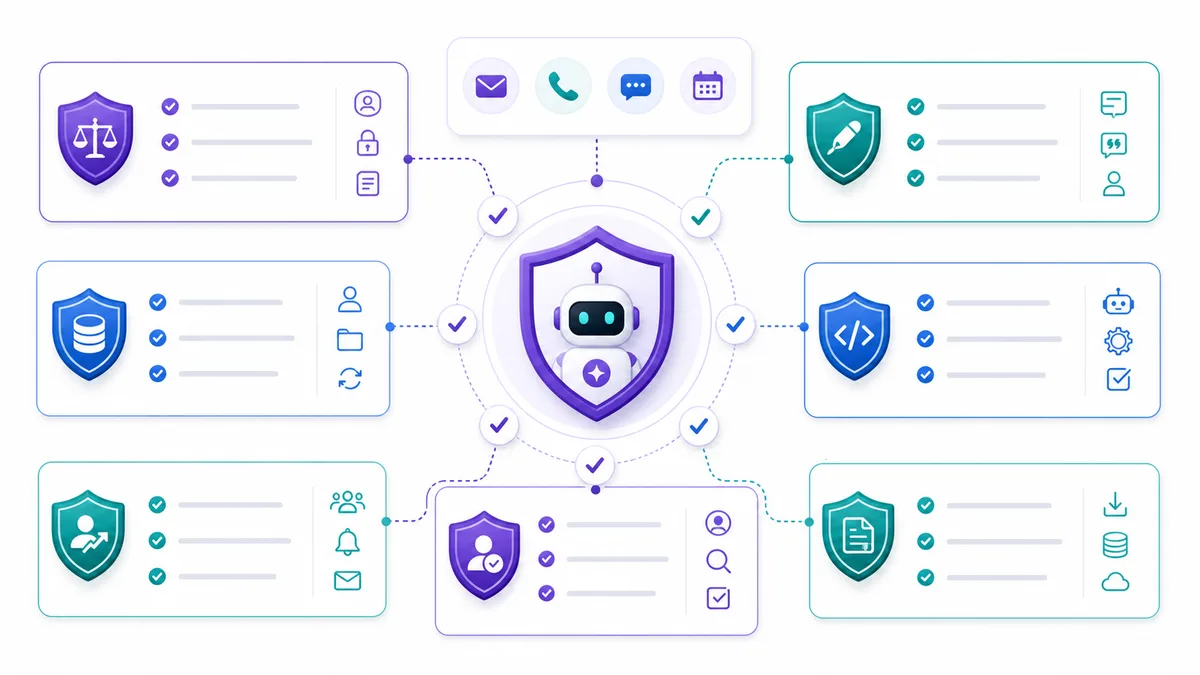
For outbound email, legal and deliverability rules matter. The FTC’s CAN-SPAM guidance says commercial email includes business-to-business email and requires accurate headers, non-deceptive subject lines, sender identification, a valid postal address, opt-out instructions, and timely opt-out handling. Google also requires Gmail senders to use authentication such as SPF or DKIM, keep spam rates low, and meet stricter SPF, DKIM, DMARC, and one-click unsubscribe requirements for higher-volume senders.
For LinkedIn, platform rules matter. LinkedIn’s own help page says it prohibits unauthorized automation, scraping, fake accounts, fake engagement, and tools that access or modify LinkedIn’s services in ways that violate its user agreement.
These rules shape the human plus AI model:
- AI can draft, score, research, classify, and prepare.
- AI can send only inside approved channel, compliance, consent, and suppression rules.
- Humans should approve new campaigns, strategic-account messaging, sensitive claims, high-volume changes, and ambiguous replies.
- Humans should own final decisions on pricing, legal, security, procurement, and account-level relationship risk.
McKinsey’s gen AI work on marketing and sales makes the same governance point in a broader way: AI can create revenue and ROI upside, but companies still need risk mitigation, data privacy, security, human oversight, and accountability.
The goal is not timid automation. The goal is controlled automation.
When to Use AI, Humans, or Both
Use this decision model when you are deciding whether to hire another rep, deploy AI, or redesign the sales process first.
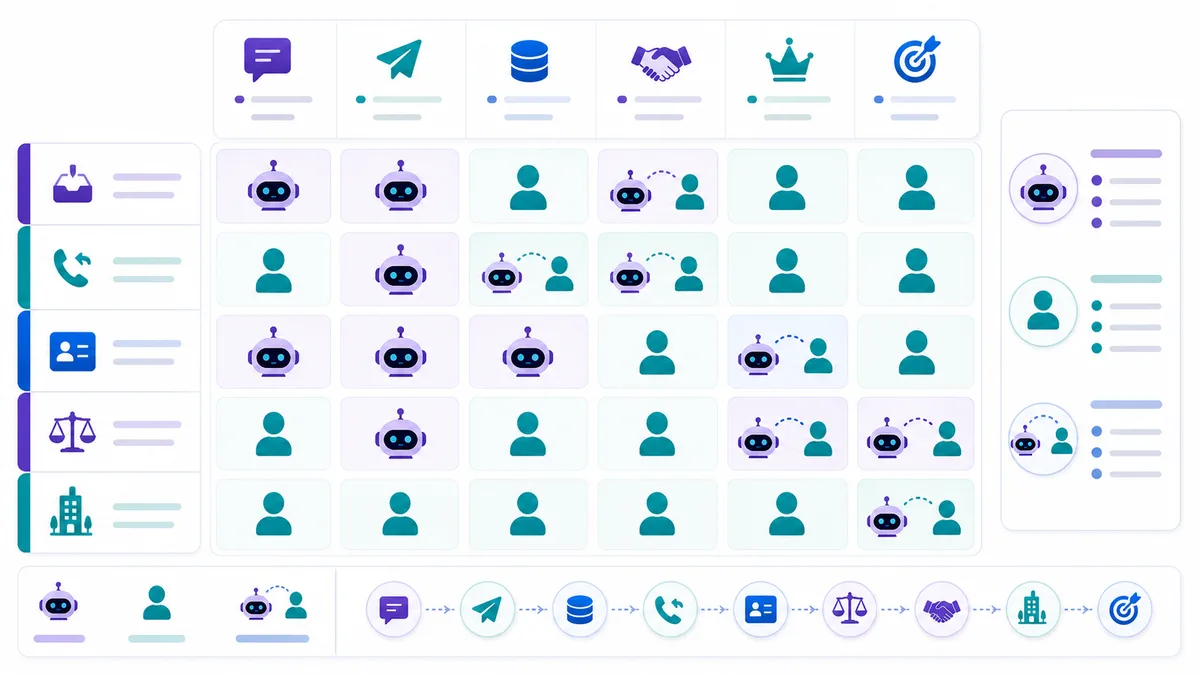
| Situation | Use AI | Use humans | Use both |
|---|---|---|---|
| Inbound leads are going unanswered | Yes, for instant response and routing | Yes, for qualified calls | Best fit for Alim plus human closer |
| Reps spend too much time prospecting | Yes, for sourcing, enrichment, research, and first drafts | Yes, for strategic targeting and replies | Best fit for Vera plus sales leader |
| CRM data is messy | Yes, for routine logging and completeness checks | Yes, for governance decisions | AI suggests; RevOps controls |
| Buyers ask simple questions repeatedly | Yes, if answers are in the knowledge base | Yes, when risk or nuance appears | AI answers common questions and escalates |
| Deal has multiple stakeholders | No, not as sole owner | Yes | AI prepares; human navigates |
| Pricing or contract terms are involved | No, not as final authority | Yes | AI summarizes context; human negotiates |
| Account is high-value or sensitive | Only with review | Yes | AI prepares research; human owns messaging |
| Outreach volume is increasing | Yes, with guardrails | Yes, for quality control | AI scales execution; humans review outcomes |
If your sales motion has no clear ICP, no CRM discipline, no offer clarity, and no agreed handoff rules, start there first. AI will not fix a broken sales process. It will expose it faster.
If your sales motion is clear but your team is losing leads, under-following up, skipping research, or drowning in manual tasks, AI can unlock capacity quickly.
Where GrowthEffect Fits
GrowthEffect is built for companies that want an AI sales team, not another dashboard that humans must operate all day.
The buyer problem is practical: growing companies need more qualified sales conversations, but hiring more junior SDRs creates recruiting cost, ramp time, management overhead, quality variance, tool sprawl, and churn risk. At the same time, asking AEs to do more prospecting and admin pulls them away from the work that closes deals.
GrowthEffect solves the first-touch layer:
- Alim handles inbound response, qualification, routing, CRM sync, and meeting booking.
- Vera handles outbound sourcing, enrichment, research, scoring, personalized outreach, follow-up, and pipeline generation.
- Humans handle closing, relationships, negotiation, strategic accounts, procurement, and judgment.
That is the clean answer to AI vs human sales. AI should do the work humans should not be doing manually. Humans should do the work AI should not be trusted to own alone.
If you want to diagnose where your first-touch sales process is leaking, run a revenue leak scan. If you already know you need inbound and outbound AI coverage, book a GrowthEffect demo and bring one inbound lead source, one outbound ICP, one existing CRM workflow, and one handoff problem. That is enough to map where Alim, Vera, and your human team should each own the work.
Source List
- Salesforce: The Productivity Gap: New Survey Shows 9 in 10 Sellers Are Betting on AI and Agents To Help
- Gartner: AI Agents Will Outnumber Sellers by 10X by 2028
- Gartner: 75% of B2B Buyers Will Prefer Sales Experiences that Prioritize Human Interaction Over AI by 2030
- McKinsey: Five Fundamental Truths: How B2B Winners Keep Growing
- McKinsey: AI-Powered Marketing and Sales Reach New Heights with Generative AI
- Forrester: B2B Marketing and Sales Predictions 2025
- HubSpot: AI Sales Prospecting: A Complete Guide
- Federal Trade Commission: CAN-SPAM Act Compliance Guide for Business
- Google Workspace Admin Help: Email Sender Guidelines
- LinkedIn Help: Prohibited Software and Extensions
Leave a Reply