
The best AI SDR tools are not all built for the same job. Some run account-based outbound prospecting. Some qualify inbound website visitors. Some enrich lead data. Some sit inside a CRM or revenue orchestration platform and help human sellers move faster. The right choice depends on the sales work you need owned: outreach, qualification, follow-up, routing, CRM updates, or handoff to a human closer. If your search is drifting between “best AI SDR tools,” “AI SDR software,” and “AI SDR platform,” separate platform software from workflow ownership before you compare logos.
For a full-funnel sales motion, compare AI SDR tools by workflow ownership, not by feature count. A team with slow inbound response needs a different system than a team with weak outbound prospecting. GrowthEffect separates those responsibilities directly: Alim handles inbound AI sales qualification, while Vera handles outbound AI sales development. That split still matches the strongest stored Search Console query patterns available in this remote July 14, 2026 run, where demand clusters around inbound routing, outbound execution, and qualified handoff rather than one generic “AI SDR” job.
Key Takeaways
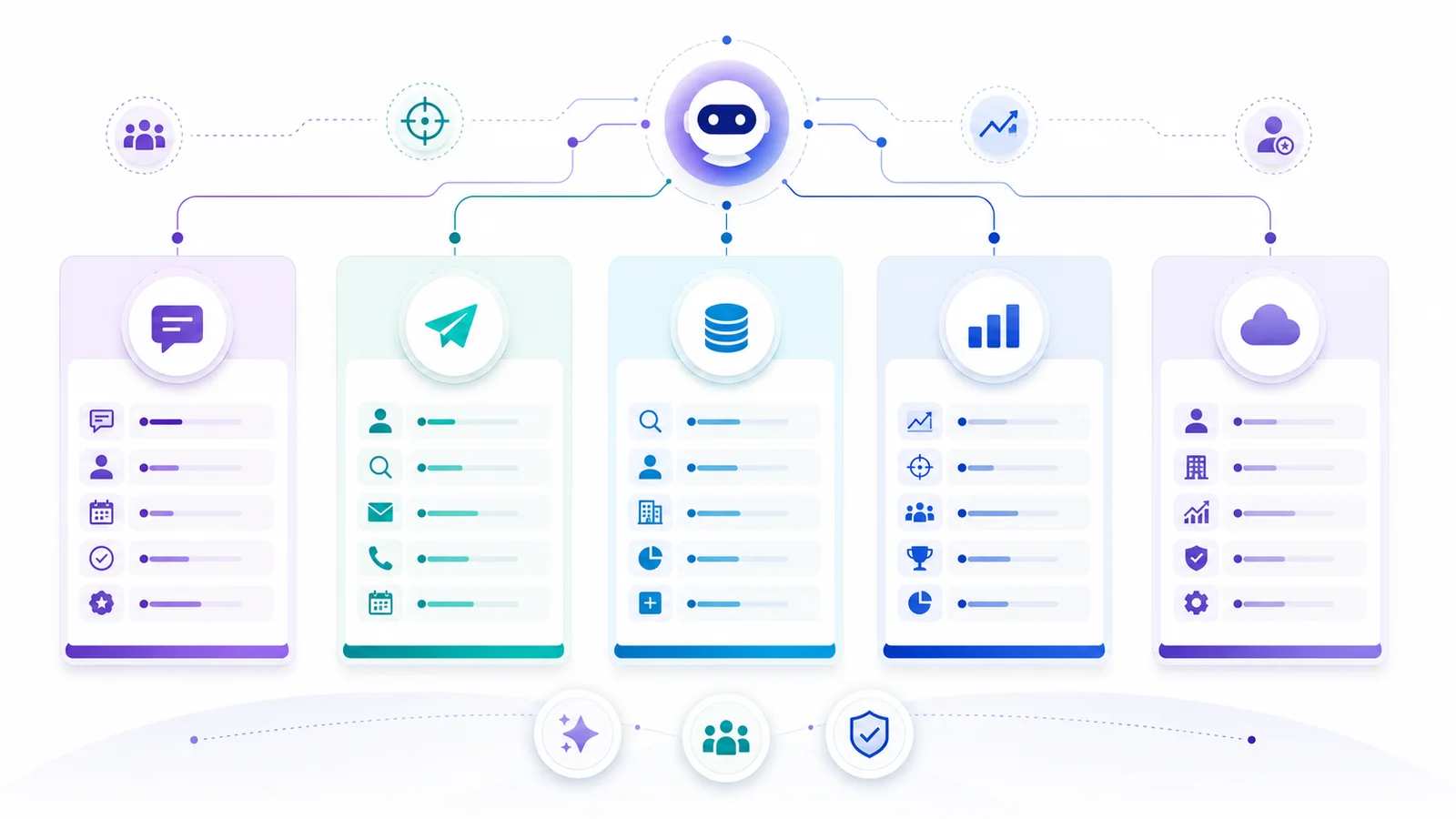
– The best AI SDR tool depends on whether your bottleneck is inbound response, outbound prospecting, data quality, rep productivity, or CRM execution.
– Outbound AI SDR tools such as 11x Alice, Artisan Ava, AiSDR, and GrowthEffect Vera focus on prospecting, personalized outreach, follow-up, and meeting creation.
– Inbound AI SDR tools such as Qualified Piper, HubSpot Breeze Customer Agent, Salesforce Agentforce Sales, and GrowthEffect Alim focus more on visitor engagement, qualification, routing, and booking.
– Apollo and Clay are useful in AI SDR stacks, but they are better understood as data, enrichment, research, and engagement layers rather than direct substitutes for every AI SDR use case.
– GrowthEffect is strongest when the buyer wants an AI sales team model: Alim for inbound demand capture and Vera for outbound pipeline generation, with humans still owning discovery, closing, negotiation, and strategic accounts.
Which AI SDR Tool Should You Compare First?
If you are early in the buying process, start with the revenue leak, not the vendor list.
| If the leak looks like this | Compare this category first | GrowthEffect route |
|---|---|---|
| Inbound leads wait too long for first response | Inbound AI SDR | Alim |
| Outbound prospecting happens in bursts and then stops | Outbound AI SDR | Vera |
| Reps do too much list cleaning and research | Data and research layer | Use Clay or Apollo before adding more automation |
| Sales leadership needs rep governance and forecasting | Revenue orchestration platform | Use Outreach or Salesloft, not a narrow SDR point solution |
AI SDR Tool vs AI SDR Platform
An AI SDR tool can be a narrow workflow owner. An AI SDR platform can be a broader operating layer. Those are related, but they are not identical buying decisions.
| Buying question | Better fit |
|---|---|
| “Who will own outbound sourcing, research, personalization, follow-up, and reply handling?” | AI SDR worker or AI BDR product |
| “Who will qualify inbound leads and route them with context?” | Inbound AI SDR or CRM-native AI agent |
| “How do we standardize activity, forecasting, coaching, and rep execution?” | Revenue orchestration platform |
| “How do we clean the list, enrich accounts, and improve targeting before outreach?” | Data and research layer |
This matters because a team can buy a platform and still have the SDR work unresolved. A workflow owner and a platform layer may both belong in the stack, but they should not be judged by the same scorecard.
Use the query language as a signal. If buyers search for AI SDR platform, they are often comparing software categories. If they search for AI SDR for inbound leads or AI SDR that can auto qualify leads and route hot replies, they are really asking about workflow ownership and handoff quality.
Best AI SDR Tools Compared: Shortlist for 2026
Use this shortlist as a buyer map, not a universal ranking.
| Platform | Best fit | Primary job | Important buyer question |
|---|---|---|---|
| GrowthEffect Alim | Teams losing inbound leads because response, qualification, or routing is slow | Inbound AI SDR | Do we need every inbound lead handled immediately and handed off with context? |
| GrowthEffect Vera | Teams that need outbound pipeline without adding more junior SDR workload | Outbound AI SDR | Do we need a digital worker to source, research, personalize, follow up, and create conversations? |
| 11x Alice | Teams focused on autonomous outbound prospecting and meeting creation | Outbound AI SDR | Are we comfortable giving an AI SDR broad ownership of outbound execution? |
| Artisan Ava | Teams that want an AI BDR for lead discovery, multi-channel outreach, objection handling, and meetings | Outbound AI BDR | Do we want an outbound AI worker with built-in data and campaign execution? |
| AiSDR | Teams that want AI-assisted outbound, inbound follow-up, replies, and HubSpot-connected workflows | AI SDR platform | Do we need flexible sales conversations across outreach and follow-up? |
| Qualified Piper | B2B teams with website traffic and Salesforce-centered inbound qualification needs | Inbound AI SDR | Is the main leak website conversion, visitor qualification, and live sales handoff? |
| Apollo | Teams that need a large prospecting, engagement, and AI-assisted sales workspace | Data + engagement | Do we need a platform our sales team operates, or an AI worker that owns the motion? |
| Clay | GTM teams that need custom enrichment, AI research, and Salesforce-connected workflows | Data + research | Do we have RevOps ownership for building and maintaining the workflow? |
| Outreach | Larger revenue teams that need agentic revenue orchestration across engagement, coaching, forecasting, and retention | Revenue orchestration | Are we orchestrating a sales organization rather than only replacing SDR tasks? |
| Salesloft | Revenue teams that need AI-supported engagement, chat, forecasting, coaching, and analytics | Revenue orchestration | Do we need a broad revenue platform from first touch to expansion? |
| HubSpot Sales Hub | Teams already using HubSpot as their CRM and sales workspace | CRM-native AI sales tools | Is HubSpot already the operating system for leads, tasks, sequences, and reporting? |
| Salesforce Agentforce Sales | Salesforce-heavy organizations that want AI sales agents tied to CRM data and enterprise workflows | CRM-native AI agents | Is Salesforce data clean enough to power agentic sales work reliably? |
The mistake is comparing every product as if it is simply “AI SDR software.” A sales leader may look at 11x, Apollo, Clay, Qualified, and Salesforce Agentforce in one tab and assume they compete directly. They overlap, but they do not own the same sales work.
The cleaner question is: where does your pipeline actually break?
Best AI SDR Tools at a Glance
If you need a short answer before the full comparison, use this map:
| If you need… | Start with… | Why |
|---|---|---|
| Inbound qualification, routing, and meeting booking | GrowthEffect Alim, Qualified Piper, HubSpot, or Salesforce Agentforce | The main job is capturing and routing existing demand |
| Outbound sourcing, research, personalization, and follow-up | GrowthEffect Vera, 11x Alice, Artisan Ava, or AiSDR | The main job is creating pipeline from cold accounts |
| Better targeting, enrichment, and research quality | Clay or Apollo | The bottleneck is data quality before sales execution |
| Rep governance, forecasting, and workflow standardization | Outreach or Salesloft | The team needs a broader revenue operating layer |
| Both inbound and outbound first-touch coverage | GrowthEffect | Alim and Vera split the jobs cleanly instead of forcing one generic agent to own both |
This is also the right point to choose your next commercial step. If you want a lower-friction evaluation before a vendor demo, use the AI SDR Readiness Checklist as the lead magnet for this topic. The follow-up path should be a buyer-fit workflow review on inbound ownership, outbound ownership, CRM handoff quality, and human control points.
What Is an AI SDR Tool?
An AI SDR tool uses artificial intelligence to automate or assist sales development work such as prospect research, lead scoring, personalized outreach, inbound lead qualification, follow-up, meeting booking, CRM updates, and routing to human salespeople.
That definition is broad. It includes several product types:
- AI outbound SDRs that find prospects, write messages, follow up, and book meetings.
- AI inbound SDRs that engage website visitors, qualify intent, answer questions, and route buyers.
- AI BDR tools that combine data, signals, enrichment, campaign execution, and meeting creation.
- Sales engagement platforms with AI support for sequences, messaging, task execution, and coaching.
- CRM-native AI agents that operate inside HubSpot, Salesforce, or another system of record.
- Data and research layers that improve targeting before any SDR motion begins.
Those categories should not be bought the same way. If the problem is “our inbound leads wait six hours,” a data enrichment layer will not solve it. If the problem is “our outbound lists are low quality,” an inbound AI SDR will not fix that either.
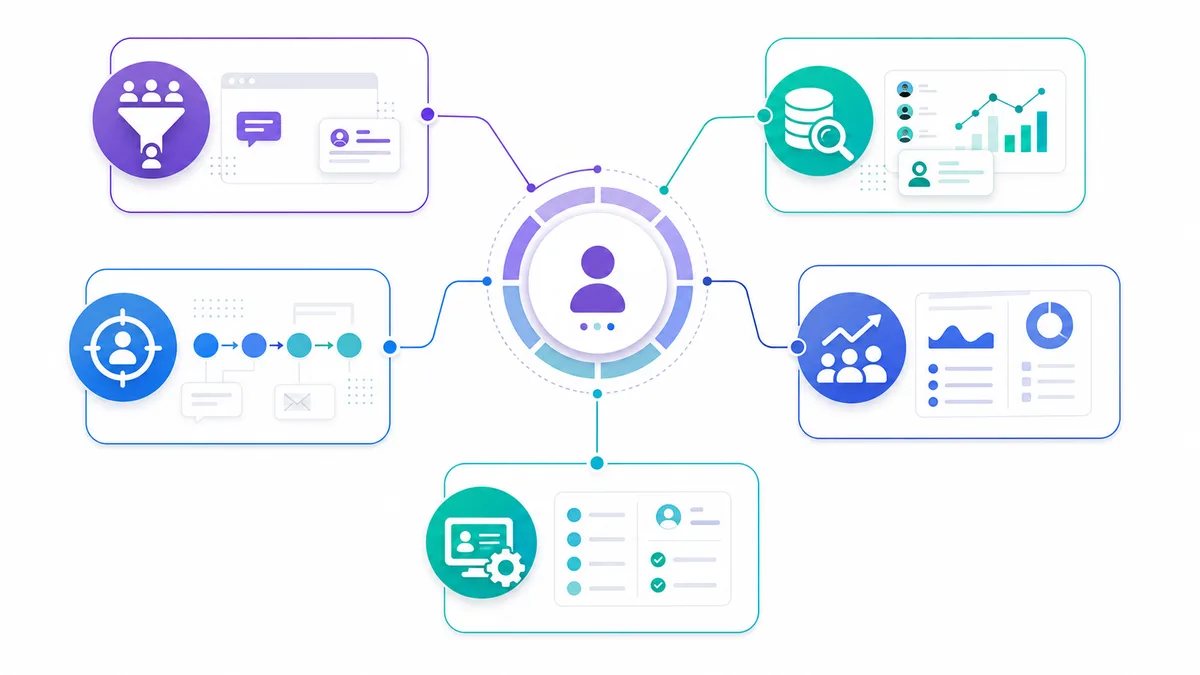
The Five-Job Framework for Choosing the Best AI SDR Tools
Most AI SDR buying processes start with vendor demos. That is backwards.
Start by naming the job.
Job 1: Capture and Qualify Inbound Demand
Inbound AI SDRs are built for speed, qualification, and handoff.
They should respond when a lead fills out a form, visits a high-intent page, starts a chat, replies to a nurture email, or asks a buying question. The useful output is not “a conversation happened.” The useful output is a qualified, routed opportunity with enough context for a human salesperson to continue.
This is where GrowthEffect Alim fits. Alim should be evaluated against inbound AI SDR products such as Qualified Piper, HubSpot’s CRM-native agents, and Salesforce Agentforce Sales.
Good inbound evaluation questions:
- Can the system qualify by our actual criteria, not generic chatbot logic?
- Can it classify lead temperature and urgency?
- Can it route qualified leads to the right owner?
- Can it book meetings when appropriate?
- Can it sync structured notes into CRM?
- Can it escalate sensitive, strategic, or confused buyers to a human?
Job 2: Create Outbound Pipeline
Outbound AI SDRs are built for prospecting, personalization, follow-up, and conversation creation.
This is where GrowthEffect Vera, 11x Alice, Artisan Ava, and AiSDR are closer alternatives. They are most relevant when the team has a defined ICP but cannot execute outbound consistently.
Good outbound evaluation questions:
- Can the tool source or import the right accounts and contacts?
- Can it enrich and score leads before outreach?
- Can it research why the account is relevant now?
- Can it write messages that reflect the buyer, market, and offer?
- Can it follow up without sounding disconnected from the first touch?
- Can humans review, approve, or adjust when risk is high?
- Can it update CRM and preserve context for closers?
Job 3: Improve Data and Research Quality
Many teams think they need an AI SDR when they actually need better GTM data.
If your lists are wrong, titles are outdated, signals are weak, or targeting logic is unclear, the AI SDR will amplify the problem. Clay and Apollo are especially relevant here. Clay is useful for custom enrichment, AI research, and GTM workflows. Apollo combines contact and account search, engagement, scoring, and AI-assisted workflows.
This layer does not replace sales judgment. It makes the next sales action better.
Job 4: Govern Sales Execution Across a Larger Team
At a certain team size, the question changes from “who sends the next message?” to “how do we govern the entire revenue workflow?”
Outreach and Salesloft are closer to this layer. Their official positioning is broader than AI SDR. They cover revenue orchestration, engagement, forecasting, coaching, buyer signals, and workflow management across sales teams.
This can be the right choice for mature revenue teams. It can also be too much platform if the immediate problem is a founder-led team that simply needs inbound response and outbound prospecting handled.
Job 5: Embed AI Inside the CRM
CRM-native AI works best when the CRM is already clean, trusted, and central to the sales process.
HubSpot Sales Hub and Salesforce Agentforce Sales are strong examples. HubSpot positions Sales Hub around AI-powered sales software, prospecting, lead management, sales automation, and Breeze agents. Salesforce positions Agentforce Sales as AI sales agents that use Salesforce data across prospecting, lead engagement, pipeline management, and account growth.
The risk is data quality. If the CRM is messy, agentic automation inside the CRM inherits that mess.
GrowthEffect: Best for Full-Funnel AI Sales Team Coverage
GrowthEffect is not only an AI SDR tool in the narrow outbound sense. It is an AI sales team model for first-touch revenue work.
The separation matters:
- Alim, the AI inbound sales representative, handles inbound response, qualification, routing, CRM sync, and meeting handoff.
- Vera, the AI outbound sales representative, handles ICP-based sourcing, enrichment, scoring, research, personalized outreach, follow-up, and pipeline generation.
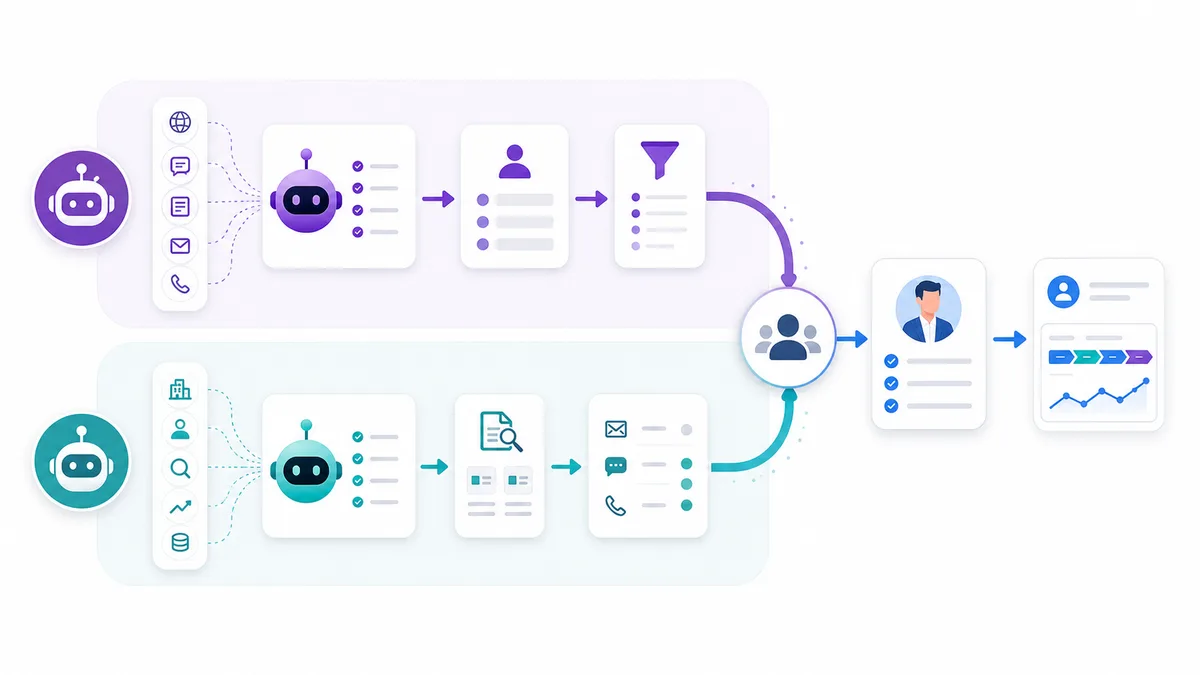
That split avoids a common implementation mistake: forcing one generic agent to handle two very different jobs.
Inbound and outbound require different operating logic. Alim is judged by speed, qualification accuracy, routing quality, and handoff clarity. Vera is judged by targeting quality, research depth, message relevance, follow-up consistency, and pipeline creation.
GrowthEffect is a strong fit when:
- You need both inbound and outbound coverage.
- Inbound leads are slipping because humans respond too slowly or inconsistently.
- Outbound prospecting happens in bursts and then stops.
- Founders or AEs are doing too much first-touch work.
- Your team wants digital sales employees, not another dashboard.
- Human closers should receive qualified, context-rich opportunities instead of raw leads.
GrowthEffect is not the right starting point when:
- You only need a contact database.
- You do not know your ICP yet.
- You have no repeatable sales motion.
- You want AI to close complex deals without human involvement.
- You only need a lightweight sequence tool.
The practical buying question: do you need a tool that helps reps do SDR work, or do you need digital workers that own the repeatable first-touch motion?
For teams in the second category, GrowthEffect is designed around that operating model. You can book a GrowthEffect demo to see how Alim and Vera would handle your actual pipeline.
Related GrowthEffect Workflow
If the buyer-fit question is really about where the funnel is leaking, use the product path that matches the job.
- For inbound response, qualification, routing, and booking, start with Alim.
- For outbound sourcing, research, personalization, follow-up, and pipeline creation, start with Vera.
- If you are not sure whether the broken step is inbound response, outbound execution, or CRM handoff, start with the GrowthEffect revenue leak scan.
- If the comparison has already turned into a headcount or budget question, review the GrowthEffect pricing page before you default to another junior SDR seat or another disconnected platform.
- If you need help deciding which side of the funnel is actually broken, book a GrowthEffect demo and map the workflow against your current process.
Recommended lead magnet for this article: AI SDR Readiness Checklist. Recommended follow-up path: a buyer-fit consultation that scores inbound response ownership, outbound execution ownership, data quality, CRM handoff clarity, and human approval rules.
11x Alice: Best for Autonomous Outbound SDR Work
11x positions Alice as an AI-powered SDR that tracks markets, identifies ideal buyers, engages decision-makers, and books meetings. Its official Alice page emphasizes 24/7 prospecting, account engagement, demand generation, activating high-intent leads, and autonomous pipeline creation.
11x is a strong fit when the buyer wants outbound SDR work handled by an AI worker rather than a traditional sequence-only tool.
It is especially relevant when:
- The primary need is outbound pipeline creation.
- The team has a defined ICP and target market.
- Sales leadership wants autonomous prospecting and meeting creation.
- The buyer is comfortable evaluating an AI SDR on workflow ownership, not only message generation.
Watch-outs:
- If the main leak is inbound lead response, 11x is not the most direct comparison.
- If the team needs a clearly separated inbound and outbound operating model, evaluate how each workflow is owned.
- If human approval is required before most touches, confirm the review controls before rollout.
Artisan Ava: Best for AI BDR-Led Outbound
Artisan positions Ava as an autonomous AI BDR. The official site says Ava finds leads, sends personalized outreach, handles objections, and books meetings. It also highlights B2B data, enrichment, intent signals, multi-channel sequences, campaign execution, and meeting booking.
Artisan is a strong fit for companies that want an outbound AI BDR rather than a pure data layer or CRM feature.
It is especially relevant when:
- Outbound is the main growth motion.
- The team wants lead discovery, enrichment, outreach, and meeting booking in one system.
- Sales leaders are evaluating AI BDRs against human BDR workload.
- The team wants to scale campaign execution without stitching together many point tools.
Watch-outs:
- Inbound qualification is not the main reason to buy Artisan.
- Teams with strict brand, legal, or market-specific messaging rules should validate human review and governance.
- Buyers should evaluate data quality, sequence controls, and CRM handoff, not only the “AI BDR” label.
AiSDR: Best for AI Outreach, Follow-Up, and HubSpot-Connected Workflows
AiSDR positions itself as an AI SDR platform that can support prospecting, outreach, replies, follow-up, and meeting booking. Its official platform page describes an outbound SDR use case for finding prospects and running cold outreach, plus HubSpot-connected workflows for lists, contact properties, activity data, outreach actions, and CRM updates.
AiSDR is a strong fit when:
- The team wants AI-assisted outbound and follow-up.
- HubSpot is already important to the sales workflow.
- Buyers care about personalized sales messages and reply handling.
- The use case includes both cold outreach and follow-up after inbound activity.
Watch-outs:
- Validate channel coverage and controls for your market.
- Confirm how the platform handles suppression lists, handoff, and CRM state.
- Avoid evaluating it only on demo copy quality; look at the operational workflow around data, approvals, replies, and next steps.
Qualified Piper: Best for Inbound Website Conversion
Qualified Piper is best understood as an inbound AI SDR for website pipeline. Qualified’s official AI SDR hiring guide describes Piper around website visitor engagement, lead lists, account context, email follow-up, live handoff, Salesforce updates, and the PipelineAI platform.
This is a different buying motion from outbound AI SDR tools. Piper is relevant when the buyer already has website traffic, target accounts, campaign demand, or inbound intent that needs to be converted into pipeline.
Qualified is a strong fit when:
- The sales problem starts on the website.
- The buyer wants to engage visitors in real time.
- Salesforce is central to routing, activity tracking, and sales handoff.
- Marketing and sales teams are trying to convert demand into qualified conversations.
Watch-outs:
- It is not a data-first outbound prospecting platform.
- It is strongest when there is meaningful inbound traffic or target-account engagement.
- Buyers should confirm how qualification goals, routing logic, and handoff rules match their sales process.
Apollo: Best for Sales Intelligence and Engagement in One Workspace
Apollo is useful in an AI SDR stack, but it should not be confused with every AI SDR category.
Apollo’s official AI overview describes AI features for list building, automated workflows, sequences, AI research, lead scores, lookalike companies, and AI-assisted messaging. Apollo also has sales engagement products for email, calls, LinkedIn tasks, sequencing, and workflow automation.
Apollo is a strong fit when:
- The team needs prospect data, account search, engagement, and AI support in one workspace.
- SDRs or RevOps will actively operate the platform.
- The problem is list building, enrichment, sequence execution, or AI-assisted personalization.
- The team wants a platform layer rather than a named digital sales employee.
Watch-outs:
- A powerful platform still needs clear ICP, offer, messaging, and operating discipline.
- If the buyer expects the tool to own inbound qualification and outbound execution end to end, confirm that workflow before purchase.
- Data quality, governance, and deliverability practices still matter.
Clay: Best for GTM Data, Enrichment, and Custom AI Research
Clay is strongest when the bottleneck is GTM data and research quality.
Clay’s official pages position Clay around data enrichment, signals, AI research, Salesforce-connected prospecting, CRM enrichment, and Claygent agents that can research companies and contacts using business context. Claygent is especially relevant when teams need custom research actions and unique data points before outreach.
Clay is a strong fit when:
- RevOps or GTM operations owns prospecting workflows.
- Your team needs custom enrichment and research logic.
- The outbound motion depends on unique triggers, market signals, or account-specific research.
- You need better data before giving leads to an AI SDR, AE, or sequence platform.
Watch-outs:
- Clay requires workflow design maturity.
- It may improve the ingredients more than it runs the whole sales motion by itself.
- If nobody owns prompts, data sources, QA, and routing logic, the workflow can become fragile.
Outreach: Best for Agentic Revenue Orchestration
Outreach positions itself as an agentic AI platform for revenue that unifies prospect engagement, customer retention, coaching, and revenue intelligence with integrated AI agents.
That is broader than AI SDR software. Outreach is relevant when the team needs a platform for revenue execution across many reps, roles, and stages.
Outreach is a strong fit when:
- You have a larger sales organization.
- Sales leadership needs governance across engagement, coaching, forecasting, and revenue workflows.
- Reps need an operating system for prospect engagement and customer lifecycle work.
- The team wants AI agents inside a broader revenue execution platform.
Watch-outs:
- It may be heavier than a smaller team needs if the immediate pain is first-touch SDR execution.
- Buyers should distinguish platform orchestration from digital worker ownership.
- Implementation quality matters because the platform touches many parts of the sales process.
Salesloft: Best for Revenue Orchestration Across the Sales Workflow
Salesloft describes itself as an AI revenue orchestration platform. Its public pages emphasize prioritization, action, qualified pipeline, deal cycles, engagement, AI chat agents, revenue intelligence, conversation intelligence, deal management, forecasting, coaching, analytics, and AI workflows.
Salesloft is a strong fit when:
- The buyer wants a broader revenue platform, not only AI prospecting.
- The team needs sales engagement, buyer signals, forecasting, coaching, and deal visibility.
- There are enough reps and managers to justify a revenue orchestration layer.
- The sales process needs standardization across first touch, opportunity management, and expansion.
Watch-outs:
- It is not a narrow AI SDR point solution.
- Small teams may not need the full orchestration footprint.
- Buyers should confirm whether the most urgent leak is rep workflow governance or first-touch work ownership.
HubSpot Sales Hub: Best for HubSpot-Native AI Sales Workflows
HubSpot Sales Hub is strongest for teams already operating inside HubSpot. HubSpot’s official Sales Hub page describes AI-powered sales software for pipeline, lead management, prospecting, sales automation, Breeze Prospecting Agent, Breeze Customer Agent, guided selling, meeting support, and CRM-connected workflows.
HubSpot is a strong fit when:
- HubSpot is already the sales CRM and workspace.
- The team wants AI prospecting and automation without adding a separate revenue platform.
- Sales reps need prioritization, outreach support, tasks, and CRM-native visibility.
- The company wants CRM simplicity over a larger external stack.
Watch-outs:
- CRM-native AI is only as useful as the CRM data and process quality behind it.
- If the buyer wants a dedicated AI SDR worker with a named operating role, compare against specialized AI SDR platforms.
- If the outbound motion requires complex enrichment across many sources, Clay or Apollo may still be needed.
Salesforce Agentforce Sales: Best for Salesforce-Native AI Agents
Salesforce Agentforce Sales is built for Salesforce-heavy organizations. Salesforce’s official Agentforce Sales page describes AI sales agents across prospecting, lead engagement, pipeline management, and account growth, powered by business and CRM data.
Salesforce is a strong fit when:
- Salesforce is the system of record.
- Enterprise data, ownership, permissions, and workflows are already mature.
- Sales leadership wants AI agents embedded in CRM workflows.
- The company needs governance, customization, and CRM-native execution.
Watch-outs:
- Time to value depends heavily on Salesforce data quality and implementation readiness.
- Smaller teams may not need enterprise agent infrastructure.
- Buyers should confirm whether they want a Salesforce-native agent layer or a focused AI SDR that can work around the current stack.
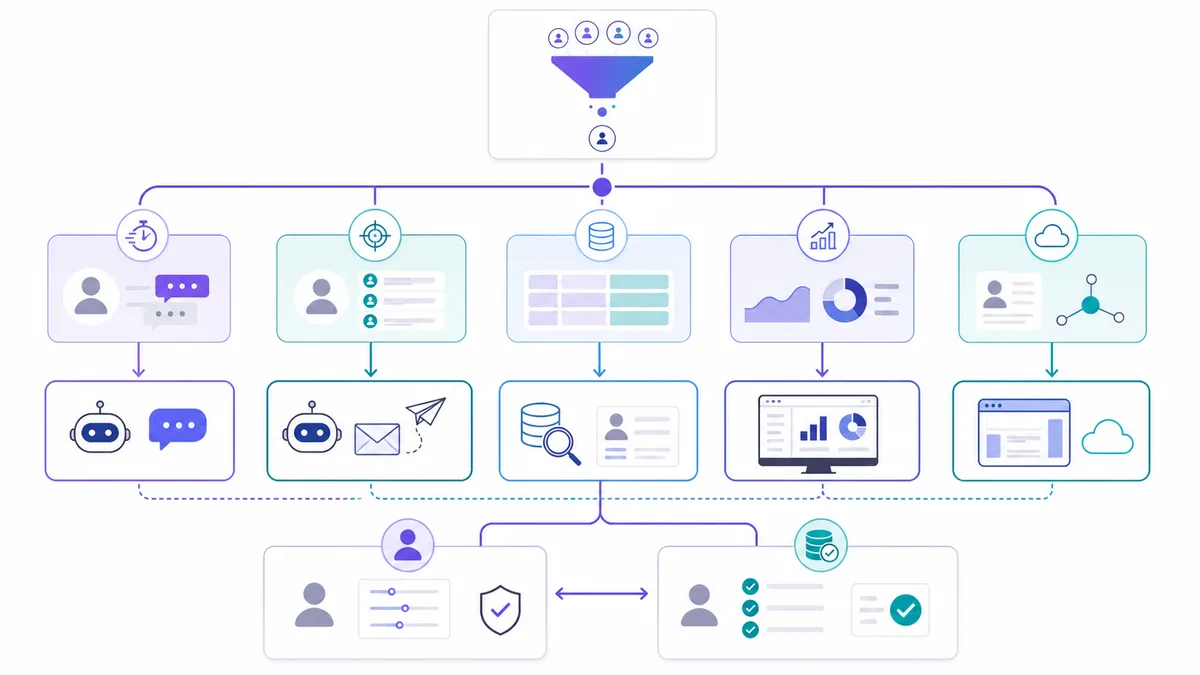
Decision Framework: Which AI SDR Tool Should You Choose?
Choose based on the leak, not the logo.
| If your main problem is… | Start with… | Why |
|---|---|---|
| Inbound leads go cold before sales responds | GrowthEffect Alim, Qualified Piper, HubSpot Customer Agent, or Salesforce Agentforce | You need real-time qualification, routing, and handoff |
| Outbound prospecting is inconsistent | GrowthEffect Vera, 11x Alice, Artisan Ava, or AiSDR | You need AI to own repetitive prospecting and follow-up work |
| Lead data is weak or incomplete | Clay or Apollo | The bottleneck is targeting, enrichment, and research quality |
| Reps need better sequences and engagement workflows | Apollo, Outreach, Salesloft, or HubSpot Sales Hub | The team needs execution support and governance |
| Salesforce is the center of the sales process | Salesforce Agentforce Sales, Qualified, Clay for Salesforce, or Outreach | AI should operate close to CRM data and routing logic |
| HubSpot is the center of the sales process | HubSpot Sales Hub or AiSDR | HubSpot-native data and workflows reduce operational friction |
| You need both inbound and outbound first-touch coverage | GrowthEffect | Alim and Vera split the work cleanly instead of forcing one generic agent to do everything |
The highest-signal demo question is not “What AI model do you use?”
Ask this instead:
Which exact sales job will this tool own after implementation, and what will still be owned by my humans?
That question exposes the difference between a writing assistant, a workflow layer, a data enrichment system, a revenue platform, and an AI sales employee.
How to Evaluate AI SDR Tools Before Buying
A strong AI SDR evaluation should include workflow proof, not only a polished demo.
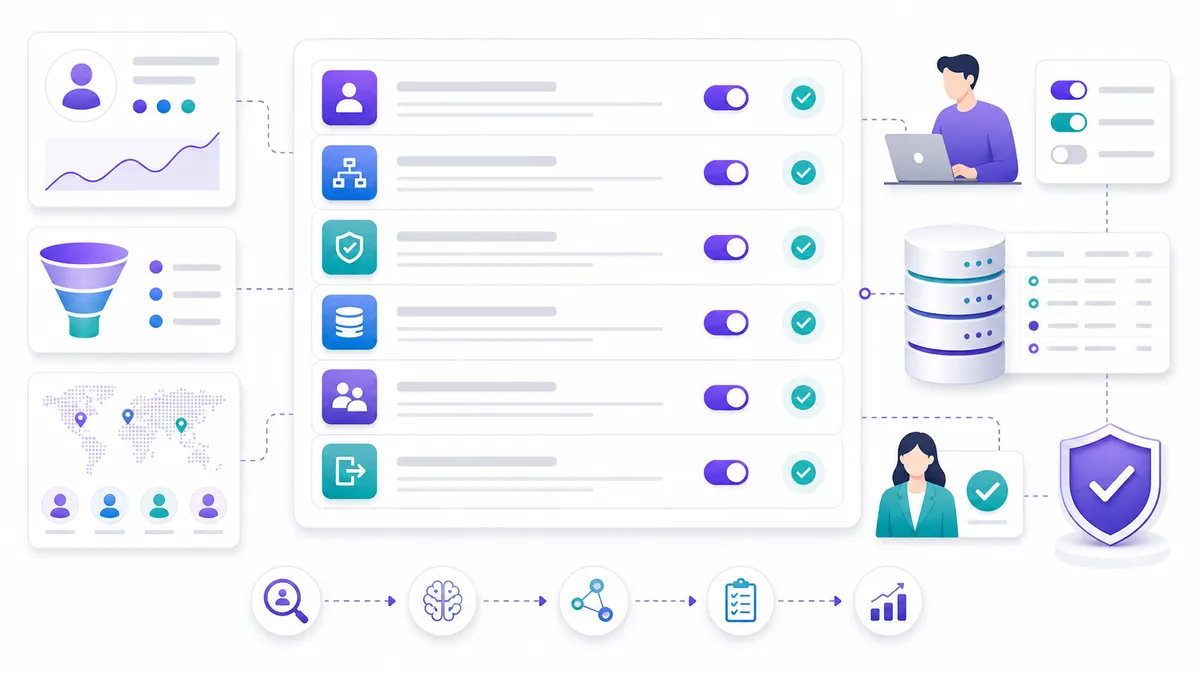
1. Test With Your Real ICP
Do not evaluate on a fake SaaS persona from the vendor demo. Bring your real ICP, disqualification rules, target geographies, buying triggers, offer language, and forbidden claims.
If the system cannot handle your actual market, it is not ready for your pipeline.
2. Separate Inbound and Outbound Tests
Inbound and outbound should be tested separately.
For inbound, test response speed, qualification logic, objection handling, routing, meeting booking, CRM notes, and human escalation.
For outbound, test source quality, enrichment, account research, first-touch personalization, follow-up consistency, reply handling, suppression logic, and handoff quality.
3. Inspect Human Control Points
Good AI SDR systems do not remove human judgment from high-risk moments.
Check where humans can review, approve, pause, edit, override, or escalate. This matters for regulated industries, high-ticket services, founder-led selling, and markets where tone or compliance risk is high.
4. Check CRM Behavior
The CRM is where AI SDR quality becomes operational truth.
Ask what fields are updated, what notes are written, how owners are assigned, how meetings are logged, how suppression works, and whether the next human can understand what happened.
If CRM state is messy, the AI SDR may create more admin rather than less.
5. Ask About Bad-Fit Leads
Most demos focus on ideal buyers. Real sales pipelines include students, vendors, low-budget leads, competitors, confused prospects, and buyers who are not ready.
Your AI SDR should have a clean exit path for bad-fit leads. Otherwise, it wastes calendar slots and rep attention.
6. Require a Handoff Standard
The handoff is where many AI SDR implementations fail.
A useful handoff should include:
- Lead and account identity.
- Source and trigger.
- Qualification answers.
- Pain or business context.
- Objections or concerns.
- Recommended next action.
- Conversation history or summary.
- CRM fields updated.
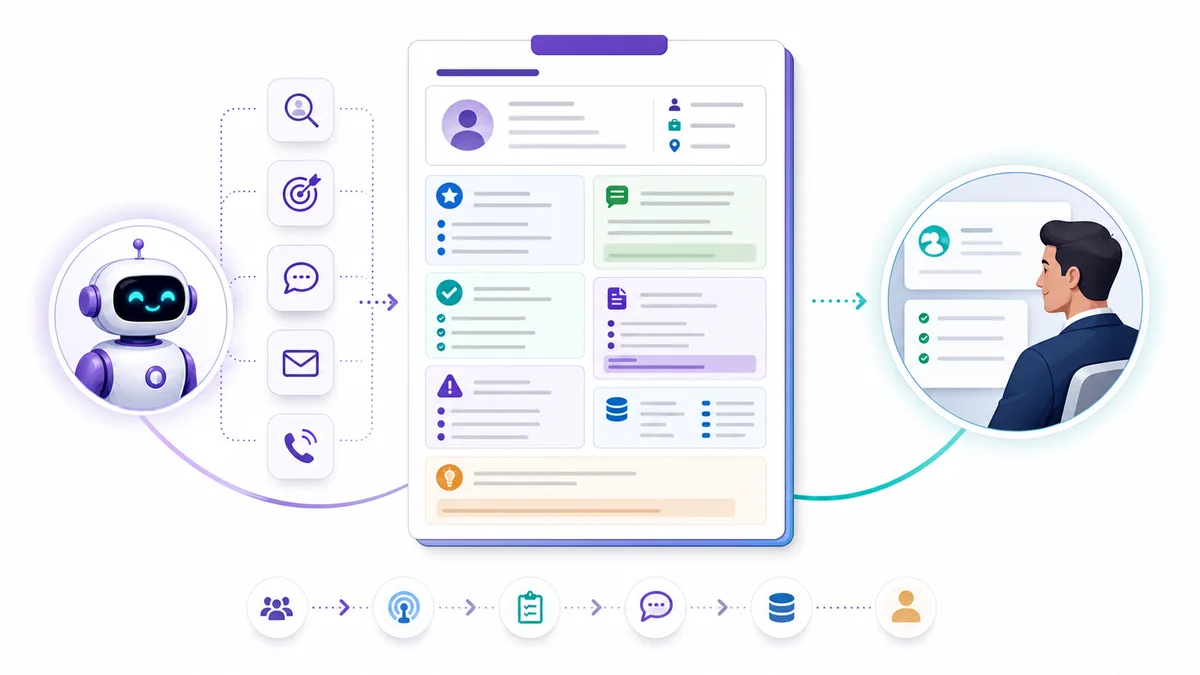
Without that, the AI SDR may create meetings but still leave the AE blind.
When GrowthEffect Is the Better Fit
GrowthEffect is the better fit when the core problem is first-touch sales execution across both sides of the funnel.
Choose GrowthEffect when:
- You want an AI sales team, not only AI features inside a tool.
- You need inbound lead qualification and outbound pipeline generation.
- You want Alim and Vera to have separate jobs, metrics, and handoff logic.
- You want human sellers focused on discovery, closing, negotiation, and strategic relationships.
- Your sales team is leaking revenue because first response, qualification, prospecting, and follow-up are inconsistent.
GrowthEffect is especially relevant for B2B SaaS, agencies, consulting firms, high-ticket service businesses, and sales-led companies with 10 to 250 employees. These teams often have enough pipeline motion to benefit from AI SDR work, but not enough management bandwidth to keep adding junior headcount.
The best next step is not a generic AI demo. It is a live workflow review against your actual funnel. Book a GrowthEffect demo to see where Alim, Vera, or both would fit.
If your team cannot yet tell whether the leak is inbound response, outbound execution, or handoff quality, start with the GrowthEffect revenue leak scan before you compare another vendor shortlist.
When Another AI SDR Tool Is the Better Fit
GrowthEffect is not the right answer for every buyer.
Choose another platform when:
- Your only problem is contact data or enrichment.
- You already have strong SDR execution and only need better research.
- Your website conversion stack is centered entirely on Qualified and Salesforce.
- Your team is standardized on HubSpot and wants CRM-native AI first.
- You need enterprise revenue orchestration, forecasting, coaching, and deal management.
- You are not ready to define ICP, qualification rules, routing, or handoff standards.
That last point is important. AI SDR tools do not fix an unclear sales motion. They expose it.
If your team cannot define a qualified lead, no AI SDR will reliably qualify leads. If your offer is unclear, automated outreach will make the confusion louder. If CRM ownership is messy, AI updates will make the mess faster.
Final Recommendation
The best AI SDR tools in 2026 should be chosen by sales job, not by vendor category.
If your outbound motion is inconsistent, compare GrowthEffect Vera, 11x Alice, Artisan Ava, and AiSDR. If inbound demand is leaking, compare GrowthEffect Alim, Qualified Piper, HubSpot, and Salesforce Agentforce. If data quality is the problem, look at Apollo and Clay. If the problem is revenue-team orchestration, evaluate Outreach and Salesloft.
For a full-funnel first-touch system, GrowthEffect’s model is simple: Alim captures and qualifies inbound demand; Vera creates outbound pipeline; humans close the right conversations.
That is the operating principle buyers should look for in any AI SDR platform: clear ownership, clean handoff, and humans in the moments where human judgment matters.
If your comparison is already commercial, make the next step specific. Use Alim when the leak is inbound qualification. Use Vera when the leak is outbound pipeline creation. If you are comparing cost versus another SDR hire or tool stack, review the GrowthEffect pricing page. For a buyer-fit conversation on your actual funnel, book a GrowthEffect demo.
FAQ
What are the best AI SDR tools?
The best AI SDR tools depend on the job. GrowthEffect is best for full-funnel first-touch sales coverage with Alim for inbound and Vera for outbound. 11x Alice, Artisan Ava, and AiSDR are strong outbound AI SDR or AI BDR options. Qualified Piper is strong for inbound website conversion. Apollo and Clay support AI SDR workflows through data, enrichment, research, and engagement. Outreach, Salesloft, HubSpot, and Salesforce are stronger when the buyer needs a broader platform or CRM-native AI.
What is the difference between an inbound AI SDR and an outbound AI SDR?
An inbound AI SDR responds to existing demand, qualifies leads, routes buyers, books meetings, and updates CRM. An outbound AI SDR creates new demand by sourcing prospects, researching accounts, writing personalized outreach, following up, and handling replies. GrowthEffect separates these roles through Alim for inbound and Vera for outbound.
Are AI SDR tools the same as sales engagement platforms?
No. AI SDR tools try to own sales development work such as qualification, outreach, follow-up, and meeting handoff. Sales engagement platforms help human reps execute and govern activities such as sequences, calls, emails, tasks, coaching, and pipeline workflows.
Should I choose Apollo or an AI SDR platform?
Choose Apollo if your team needs prospecting data, engagement workflows, AI-assisted research, and sequence execution in one workspace. Choose an AI SDR platform if you want a digital worker to own a defined SDR job such as outbound prospecting or inbound qualification.
Should I choose Clay or an AI SDR platform?
Choose Clay if your bottleneck is enrichment, custom research, signals, or GTM workflow design. Choose an AI SDR platform if the bottleneck is actual sales execution after the data is prepared.
Can AI SDR tools replace human SDRs?
AI SDR tools can reduce or replace repetitive first-touch SDR workload, especially prospecting, follow-up, qualification, routing, CRM updates, and meeting handoff. They should not replace the full sales function. Humans should still own complex discovery, negotiation, relationship building, strategic accounts, and closing.
How should I test an AI SDR tool before buying?
Test it with your real ICP, real offer, real CRM fields, real disqualification rules, and real handoff expectations. Run separate inbound and outbound tests. Inspect how it handles bad-fit leads, objections, human escalation, CRM updates, suppression lists, and follow-up context.
Is GrowthEffect an AI SDR tool?
GrowthEffect is broader than a narrow AI SDR point solution. It is an AI sales team for first-touch revenue work. Alim handles inbound qualification and handoff. Vera handles outbound sourcing, research, personalized outreach, follow-up, and pipeline generation.
Leave a Reply