The best AI sales automation tools in 2026 depend on which part of the sales workflow you need to automate: inbound qualification, outbound prospecting, data enrichment, sequence execution, CRM-native AI, or full revenue orchestration. If you are comparing AI sales automation tools for a B2B team, start by matching the platform to the work that keeps breaking in your pipeline. That is especially important when the real buying query is closer to “sales automation platform” or “sales automation tools” than “cool AI demo.” Do not choose a platform because it says “AI” on the homepage. Choose it based on the sales work it can reliably perform and on whether you need software your reps operate or a digital worker that owns the work.
Some tools are digital sales workers. Some are data and enrichment layers. Some are sales engagement systems with AI features. Some are CRM-native agent platforms. If you compare all of them as if they solve the same problem, you will buy the wrong system. The fastest way to narrow the shortlist is to ask whether you need a platform your reps operate or an AI worker that owns first-touch sales work.
Key Takeaways
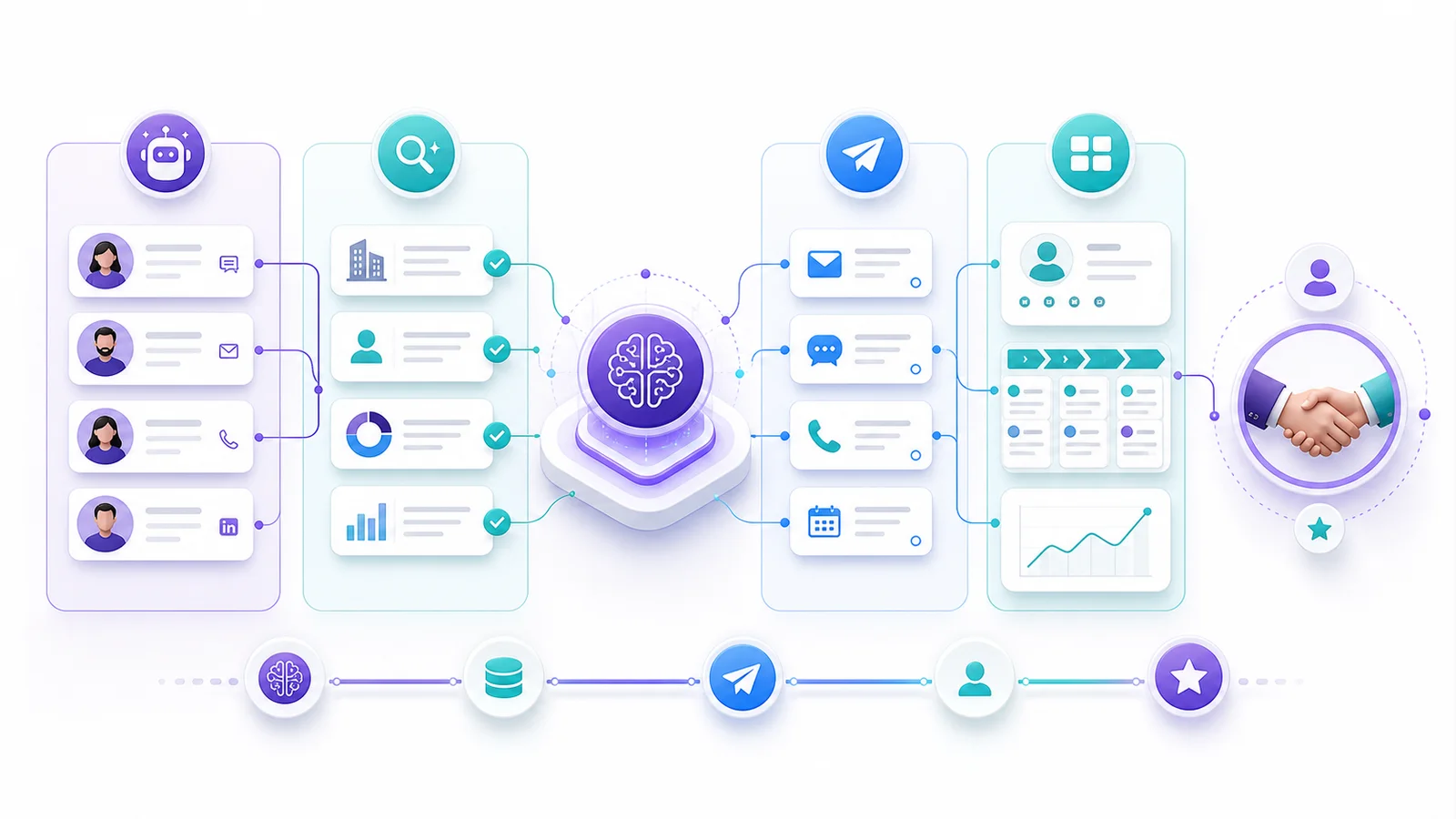
– AI sales automation tools fall into four layers: AI sales workers, data/research layers, engagement platforms, and CRM-native AI.
– GrowthEffect is best understood as an AI sales team for first-touch sales work: Alim for inbound, Vera for outbound.
– 11x, Artisan, and AiSDR are closer to AI SDR or AI BDR platforms, mostly centered on outbound and meeting creation.
– Apollo, Clay, Outreach, Salesloft, HubSpot, and Salesforce solve different parts of the stack and are not interchangeable.
– The right buying question is not “Which tool has the most AI?” It is “Which tool owns the work my team keeps failing to do consistently?”
AI Sales Automation Tools Compared: The 2026 Shortlist
Here is the practical comparison.
| Platform | Best fit | Primary layer | Watch-out |
|---|---|---|---|
| GrowthEffect | Teams that want named digital sales employees for inbound and outbound first-touch work | AI sales team | Not a fit if you only need a database or generic CRM workflow |
| 11x Alice | Teams focused on autonomous outbound prospecting and meeting creation | AI SDR | Strong outbound positioning, less relevant if your main leak is inbound response |
| Artisan Ava | Teams that want an AI BDR for prospecting and outbound workflows | AI BDR | Evaluate how much human review you want before outreach |
| AiSDR | Teams that want AI-led outbound and follow-up across channels | AI SDR | Validate channel, data, and messaging controls for your market |
| Apollo | Teams that need sales intelligence, prospecting data, sequencing, and AI inside one GTM platform | Data + engagement platform | It is still a platform your team must operate well |
| Clay | RevOps or GTM engineering teams that need enrichment, research, and custom workflows | Data and research layer | Powerful but usually requires workflow design maturity |
| Outreach | Larger sales teams that need agentic revenue orchestration across prospecting, deals, forecasting, coaching, and expansion | Revenue orchestration | Heavier fit for teams that only need first-touch SDR work |
| Salesloft | Revenue teams that want orchestration across engagement, chat, deals, forecasting, coaching, and analytics | Revenue orchestration | May be more platform than a small team needs |
| HubSpot Sales Hub | Teams already using HubSpot CRM that want AI prospecting, lead management, and sales automation in one workspace | CRM-native sales platform | Best when HubSpot is already the operating system |
| Salesforce Agentforce Sales | Salesforce-heavy teams that want AI agents embedded in CRM data and enterprise workflows | CRM-native AI agents | Setup depends heavily on Salesforce data, governance, and implementation quality |
The market is noisy because vendors use similar language for different jobs. “AI SDR,” “sales AI agent,” “AI sales automation,” and “revenue orchestration” can mean very different levels of ownership.
The useful distinction is this:
- Does the tool do the work?
- Does it only help a rep do the work?
- Does it prepare data for another tool?
- Does it orchestrate existing systems?
- Does it keep humans in the right moments?
That is the buying frame.
Sales Automation Platform vs AI Sales Worker
This is where most comparisons go wrong. Buyers search for “AI sales automation tools” and land on one list that mixes workflow software, CRM-native AI, data layers, and AI workers as if they all replace the same role.
Use this split before you shortlist vendors:
| If you need… | Start with… | Why |
|---|---|---|
| Reps to work faster inside a platform | HubSpot, Salesforce, Outreach, or Salesloft | The team still owns the work, but the software adds AI guidance and automation |
| Better targeting, enrichment, and GTM research | Apollo or Clay | The bottleneck is data quality before outreach or routing happens |
| First-touch work owned end to end | GrowthEffect, 11x, Artisan, or AiSDR | You are evaluating an AI SDR or AI sales worker, not only workflow software |
| One place to diagnose whether the leak is inbound, outbound, or handoff | GrowthEffect plus the revenue leak scan | The first job is to find the broken workflow before you buy another layer |
If your reps still have to decide who to contact, enrich the account manually, write every first touch, remember every follow-up, and clean the CRM after the fact, you did not automate the sales workflow. You bought a better cockpit.
The Four-Layer Model for Choosing AI Sales Automation Tools
Most bad sales automation decisions start with a category mistake.
A founder compares an AI SDR to Apollo. A RevOps lead compares Clay to Outreach. A sales leader expects a CRM-native AI feature to behave like a digital employee. The tools overlap, but they do not replace each other cleanly.
Use this four-layer model instead.
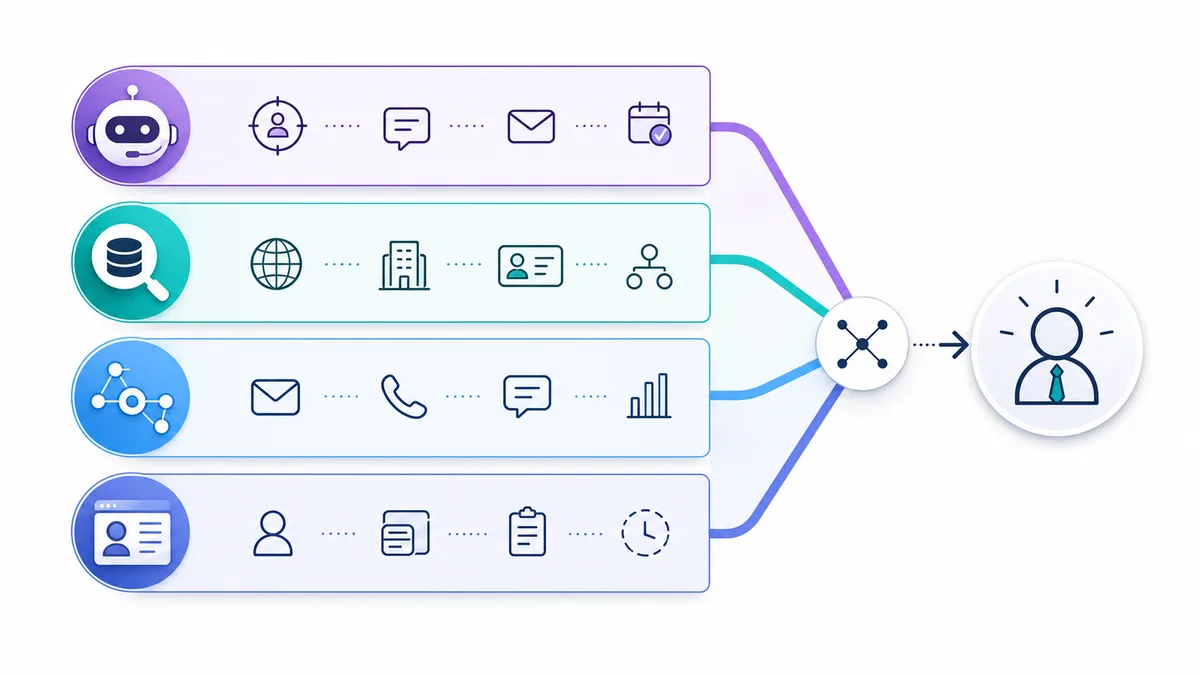
Layer 1: AI Sales Workers
These tools try to perform first-touch sales work.
They can source, qualify, research, write, follow up, route, and book meetings depending on the product. This layer includes GrowthEffect, 11x, Artisan, and AiSDR.
Choose this layer when the problem is not “our reps need another dashboard.” Choose it when the problem is “the work is not getting done consistently.”
Layer 2: Data and Research Layers
These tools help you build better lists, enrich accounts, find signals, and run AI research.
Apollo and Clay sit here in different ways. Apollo combines data, sales intelligence, and engagement workflows. Clay is especially strong as a flexible enrichment and GTM workflow layer.
Choose this layer when your main problem is bad data, weak targeting, incomplete enrichment, or manual research.
Layer 3: Sales Engagement and Revenue Orchestration
These platforms help teams execute, govern, analyze, and improve revenue workflows.
Outreach and Salesloft sit here. They are not just email sequence tools anymore. They position around revenue orchestration, AI workflows, forecasting, coaching, and broader sales execution.
Choose this layer when you have a larger sales team, many reps, complex workflows, and a need for governance across activity and pipeline.
Layer 4: CRM-Native AI
These tools are strongest when the CRM is already the operating system.
HubSpot Sales Hub and Salesforce Agentforce Sales are examples. They can be powerful because they sit close to customer data, lead records, owners, workflows, and reporting.
Choose this layer when your CRM data is clean enough to power automation and you want AI embedded into the system your team already uses.
1. GrowthEffect: Best for Hiring an AI Sales Team, Not More Software
GrowthEffect is built around a different buying frame: companies should hire digital sales employees, not add another tool for humans to operate.
GrowthEffect has two named AI sales employees:
- Alim, the inbound AI sales representative, handles inbound response, qualification, routing, CRM sync, and meeting handoff.
- Vera, the outbound AI sales representative, handles sourcing, enrichment, scoring, research, personalized outreach, follow-up, and pipeline generation.
That separation matters. Alim protects inbound demand from slow response and inconsistent qualification. Vera creates outbound pipeline through structured prospecting and follow-up. Together, they cover the first-touch sales work that often gets pushed onto junior SDRs, founders, or overloaded reps.
GrowthEffect is a strong fit when:
- Your inbound leads are not being answered fast enough.
- Your outbound prospecting is inconsistent.
- Reps are wasting time on manual research and admin.
- You want human closers focused on qualified conversations.
- You need both inbound and outbound coverage, not only cold email.
- You want a sales workforce model instead of another dashboard.
GrowthEffect is not the right starting point if:
- You only need a contact database.
- You have no sales motion yet.
- You have no clear ICP.
- You want AI to close complex deals without human involvement.
- You only need lightweight workflow automation inside your CRM.
The key question is simple: are you buying software, or are you trying to replace repetitive first-touch sales work?
If it is the second, GrowthEffect is designed for that conversation. You can book a GrowthEffect demo to see how Alim and Vera would handle your real pipeline.
Related GrowthEffect workflow
If your comparison starts with a specific pipeline leak, use the route that matches the work:
| If the problem looks like this | Best next step |
|---|---|
| Inbound leads wait too long, arrive unqualified, or hit sales without context | Alim for inbound qualification and routing |
| Outbound prospecting is inconsistent, under-researched, or weak on follow-up | Vera for outbound pipeline creation |
| You are not sure whether the leak is inbound, outbound, handoff, or follow-up | Start with the revenue leak scan |
If the shortlist is already turning into a cost-versus-headcount discussion, use the GrowthEffect pricing page before you add another SDR seat or another disconnected tool layer.
Use this path when the real buying decision is not “which logo looks best?” but “which workflow should stop depending on manual effort first?”
Recommended lead magnet for this cluster: AI SDR Readiness Checklist. The follow-up path should help the reader separate inbound qualification leaks, outbound pipeline gaps, CRM handoff friction, and tool-stack overlap before a live buyer-fit conversation.
2. 11x Alice: Best for Autonomous Outbound SDR Work
11x positions Alice as an AI-powered SDR that tracks markets, identifies ideal buyers, engages decision-makers, and books meetings on autopilot.
The official Alice page emphasizes outbound use cases such as account engagement, demand generation, activating high-intent leads, reviving old leads, and reaching new markets. It also describes buyer targeting, personalized messaging, 24/7 prospecting, reply handling, and meeting scheduling.
11x is a strong fit when:
- Your main problem is outbound pipeline creation.
- You want an AI SDR-style product rather than a data-only platform.
- You have a clear ICP and market to target.
- You want to automate more of the outbound motion from targeting to meetings.
11x may be less ideal when:
- Your biggest leak is inbound speed-to-lead.
- You want a separate inbound and outbound operating model.
- You need a simple, lightweight tool rather than an autonomous outbound worker.
- You want direct control over every outreach step before it happens.
The buying question: do you want an autonomous outbound SDR, or do you need a broader first-touch sales team that also handles inbound?
3. Artisan Ava: Best for AI BDR-Style Outbound Automation
Artisan positions Ava as an AI BDR and its platform around outbound workflow automation. Public descriptions of Artisan focus on prospect research, personalized outreach, sequence management, and business development work.
Artisan is a strong fit when:
- You want an AI BDR for outbound prospecting.
- Your team wants help with research and personalized outreach.
- You are comfortable with an AI worker framing for business development.
- Your core motion is outbound-led.
Artisan may be less ideal when:
- Inbound qualification is your primary revenue leak.
- You need a full-funnel split between inbound response and outbound pipeline generation.
- You want a CRM-native enterprise platform rather than a specialized AI worker.
The buying question: do you need an AI BDR for outbound, or do you need broader sales workflow coverage?
4. AiSDR: Best for AI-Led Outreach and Follow-Up
AiSDR describes itself as an AI-powered sales development representative and sales automation platform for prospecting, outreach, follow-ups, and meeting booking.
Its public pages emphasize personalized sales messages, automated follow-ups, AI-led conversations across email, text, LinkedIn, and other channels, and outbound prospecting.
AiSDR is a strong fit when:
- You want AI to handle outbound outreach and follow-up.
- You care about personalization and response handling.
- You want an AI SDR-style system rather than a general CRM tool.
- You are focused on booked meetings from outbound motion.
AiSDR may be less ideal when:
- You want a platform that also acts as a full CRM or revenue orchestration system.
- You need deep custom GTM data workflows before outreach.
- Your top problem is inbound lead routing and qualification.
The buying question: do you need AI to run outreach and follow-up, or do you need an operating system that separates inbound, outbound, enrichment, routing, and closing?
5. Apollo: Best for Sales Intelligence plus Engagement in One Platform
Apollo is not just an AI SDR tool. It is better understood as a sales intelligence and GTM platform with AI features, prospecting data, workflow support, and engagement capabilities.
Apollo’s AI overview says Apollo uses AI to make sales and marketing workflows more efficient and effective across its platform.
Apollo is a strong fit when:
- You need a large sales intelligence and prospecting platform.
- You want contact/company data, list building, enrichment, and engagement in one place.
- Your team is ready to operate the platform actively.
- You want AI inside an existing GTM workflow, not necessarily a fully autonomous digital worker.
Apollo may be less ideal when:
- You expect the tool to own your sales process end to end without strong setup.
- Your team lacks clear ICP and sequence strategy.
- You want a named AI sales employee model for inbound and outbound handoff.
The buying question: do you need a data and engagement platform your team operates, or do you need digital workers executing defined sales jobs?
6. Clay: Best for GTM Data Enrichment and Custom AI Research Workflows
Clay is strongest as a GTM data and workflow layer. Claygent, Clay’s AI agent capability, is positioned for building, testing, and deploying AI agents inside GTM workflows, with access to business context and data.
Clay also has use cases around CRM enrichment, AI workflows, and syncing enriched data back into systems like Salesforce.
Clay is a strong fit when:
- Your team has a RevOps or GTM engineering owner.
- You need custom account research or enrichment logic.
- You want to combine data sources, AI research, and CRM sync.
- Your outbound quality problem starts with poor targeting and incomplete account data.
Clay may be less ideal when:
- You want a ready-to-run AI SDR without workflow design.
- You do not have someone to own enrichment logic, prompts, and data operations.
- Your top leak is inbound qualification or meeting handoff.
The buying question: do you need better GTM data infrastructure, or do you need someone to actually run the sales work after the data is prepared?
7. Outreach: Best for Agentic Revenue Orchestration in Larger Sales Teams
Outreach positions itself as an agentic AI revenue orchestration platform for prospecting, managing deals, forecasting, coaching, and account expansion.
Its public positioning is broader than outbound automation. Outreach is for teams that want AI and workflows across sales execution, deal management, forecasting, coaching, and revenue operations.
Outreach is a strong fit when:
- You have a larger sales organization.
- You need governance across reps, sequences, opportunities, and forecasting.
- You want AI embedded across the sales execution layer.
- You already have sales operations maturity.
Outreach may be less ideal when:
- You simply need inbound response or outbound SDR work handled.
- You are a small team trying to avoid operational complexity.
- You want a digital sales employee rather than a revenue platform.
The buying question: are you orchestrating a sales organization, or are you trying to replace repetitive first-touch work?
8. Salesloft: Best for Revenue Orchestration Across Engagement, Deals, Forecasting, and Coaching
Salesloft describes itself as an AI revenue orchestration platform that helps teams prioritize and act across the revenue workflow.
Its platform messaging covers sales engagement, AI chat agents, revenue intelligence, conversation intelligence, deal management, forecasting, coaching, and analytics.
Salesloft is a strong fit when:
- You need a broader revenue platform, not only SDR automation.
- Your team wants engagement, forecasting, coaching, and deal visibility in one system.
- You have enough sales team scale to justify a larger orchestration layer.
- You want AI workflows tied to revenue outcomes across the customer lifecycle.
Salesloft may be less ideal when:
- You want a narrow AI SDR or inbound qualification worker.
- You do not yet have the operational maturity to run a revenue orchestration platform.
- You need fast first-touch automation without changing the wider sales stack.
The buying question: do you need revenue orchestration, or do you need AI workers to remove specific sales bottlenecks?
9. HubSpot Sales Hub: Best for HubSpot-Native Sales Automation and AI
HubSpot Sales Hub is a strong fit for teams already using HubSpot as their CRM and sales workspace. HubSpot positions Sales Hub as AI-powered sales software for building pipeline and closing deals, with tools for lead management, prospecting, sales automation, and AI agents: HubSpot Sales Hub.
HubSpot also describes sales automation tools for multi-channel outreach, workflow logic, branching sequences, and AI features across Sales Hub editions: HubSpot sales automation.
HubSpot Sales Hub is a strong fit when:
- Your sales team already works in HubSpot.
- You need CRM-native lead management and sales automation.
- You want AI features without adding a separate sales engagement system.
- Your processes are relatively straightforward and CRM-led.
HubSpot may be less ideal when:
- You need an AI SDR that owns outbound prospecting from source to meeting.
- You want advanced custom enrichment workflows outside the CRM.
- You use Salesforce as the primary operating system.
The buying question: is HubSpot already your sales operating system, or are you trying to add AI outside the CRM?
10. Salesforce Agentforce Sales: Best for Salesforce-Native AI Agents
Salesforce Agentforce is Salesforce’s AI agent platform. Salesforce says Agentforce brings together humans, applications, AI agents, and data. Its public Agentforce page describes a Sales Development Representative use case that engages prospects, answers questions, manages objections, and schedules meetings based on CRM and external data: Salesforce Agentforce.
Salesforce also has Agentforce Sales pages focused on AI sales agents integrated with Salesforce data: Agentforce Sales.
Salesforce Agentforce Sales is a strong fit when:
- Salesforce is already your system of record.
- Your data model, ownership, and workflows are mature.
- You need enterprise governance around AI agents.
- You want AI inside Salesforce rather than another external sales tool.
Salesforce Agentforce may be less ideal when:
- Your Salesforce data is messy.
- You need faster time-to-value than an enterprise agent implementation may require.
- You are not a Salesforce-heavy organization.
- You want a specialized first-touch AI sales team rather than a broad agentic AI platform.
The buying question: do you want AI agents inside Salesforce, or do you need a more focused sales workforce layer around your current stack?
Which AI Sales Automation Tool Should You Choose?
Use this decision matrix.
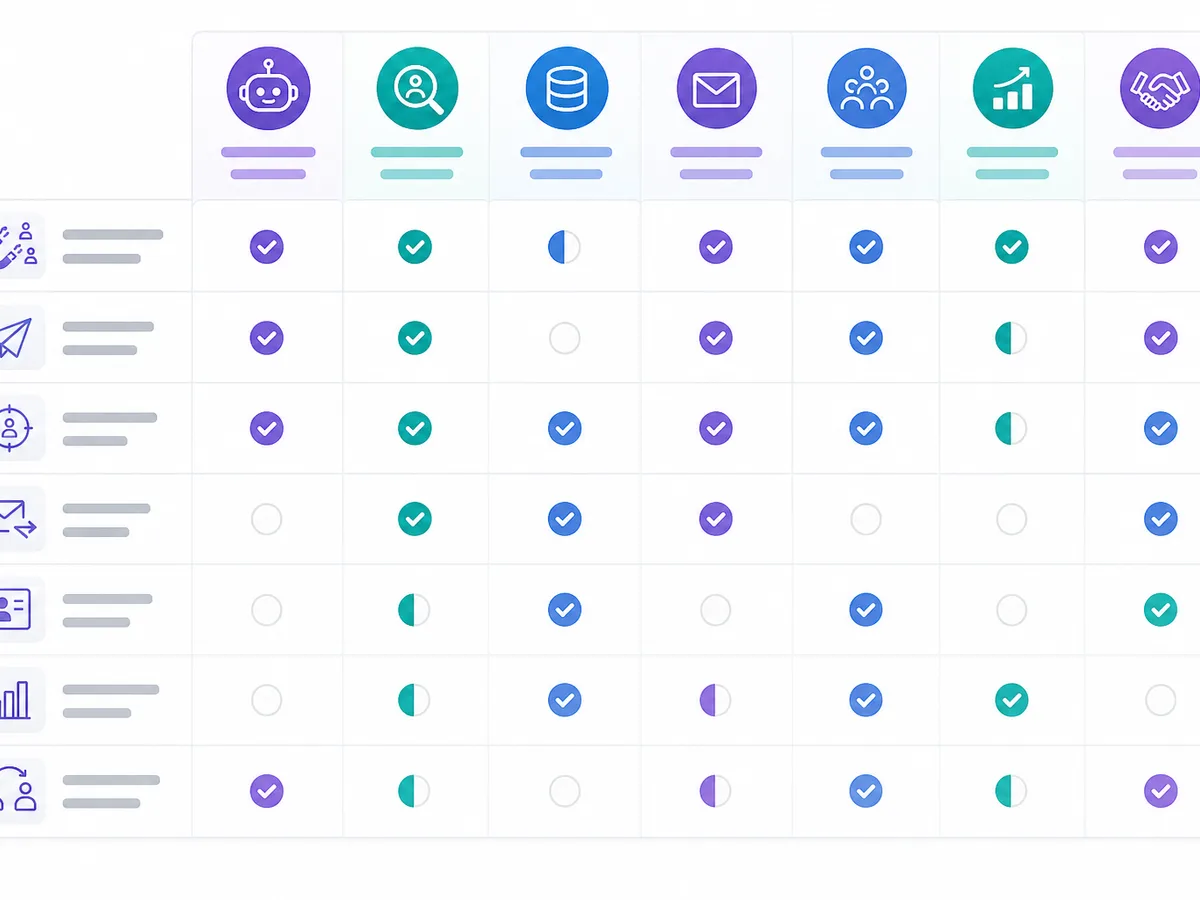
| If your main problem is… | Start with… | Why |
|---|---|---|
| Inbound leads go cold before sales responds | GrowthEffect Alim or CRM-native inbound AI | Speed-to-lead and qualification are the bottleneck |
| Outbound prospecting is inconsistent | GrowthEffect Vera, 11x, Artisan, or AiSDR | You need AI to perform SDR or BDR work |
| Targeting and enrichment are weak | Clay or Apollo | Your outreach quality depends on better data first |
| Reps need sequences, governance, and pipeline execution | Outreach or Salesloft | You need sales execution infrastructure |
| You already run everything in HubSpot | HubSpot Sales Hub | CRM-native automation reduces stack complexity |
| You already run enterprise sales in Salesforce | Salesforce Agentforce Sales | AI can sit close to CRM data and workflows |
| You want inbound and outbound first-touch sales employees | GrowthEffect | The job is not just outreach; it is first-touch sales execution |
The best platform is the one that matches the work.
What Most AI Sales Automation Tool Comparisons Miss
Most comparisons rank tools by features. That is useful, but incomplete.
The deeper issue is ownership.
Ask these questions before buying:
- Who defines the ICP?
- Who finds the accounts?
- Who enriches the data?
- Who scores fit and intent?
- Who writes the first message?
- Who follows up?
- Who handles replies?
- Who qualifies inbound demand?
- Who updates the CRM?
- Who decides when a human takes over?
If the answer is still “our reps,” then the tool may help, but it has not automated the sales work. It has only made the work easier to do.
That is not bad. It may be exactly what you need.
But it is different from hiring digital sales employees that own a defined part of the motion.
When GrowthEffect Is the Better Fit
GrowthEffect is the better fit when the problem is not just software capability. It is execution.
For example:
- Inbound leads arrive but do not get qualified fast enough.
- Outbound prospecting happens in bursts, then stops.
- SDRs spend too much time researching and too little time creating conversations.
- Reps complain that leads are unqualified.
- Founders still chase first responses manually.
- CRM records are incomplete after conversations.
- Human closers get poor handoffs.
In that environment, adding another dashboard rarely solves the root issue. The work needs an owner.
GrowthEffect gives that work to digital employees:
- Alim owns inbound first-touch qualification and handoff.
- Vera owns outbound first-touch pipeline generation.
- Humans own closing, discovery depth, negotiation, and strategic relationships.
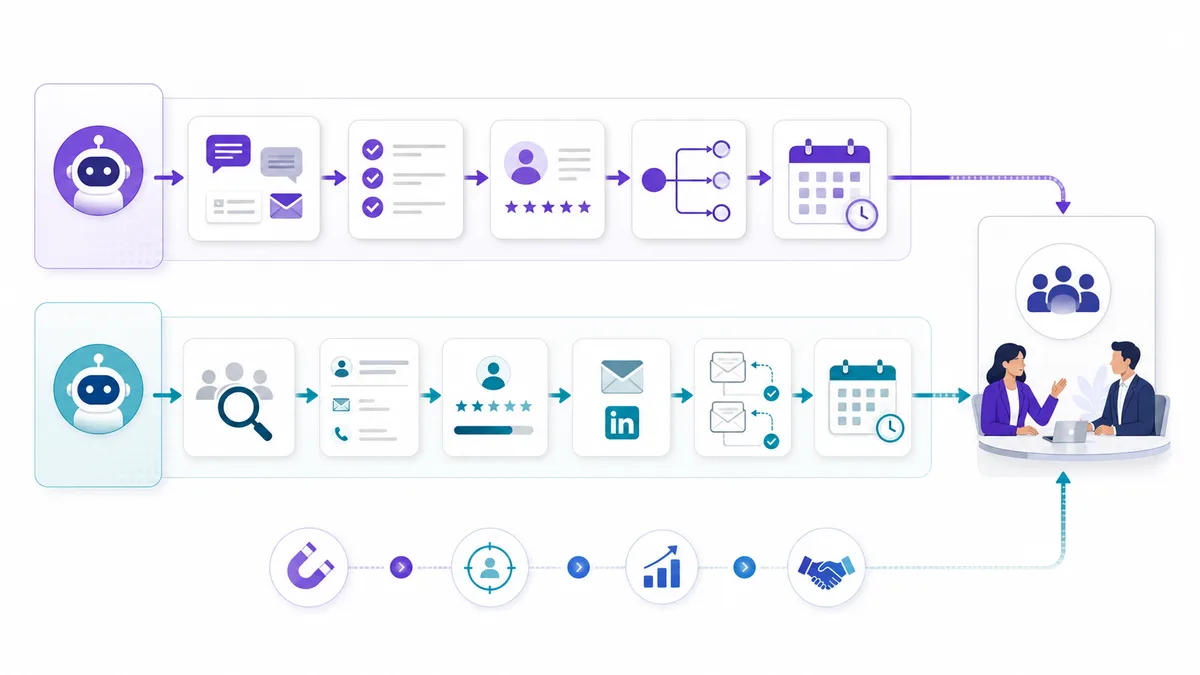
That is the point of an AI sales team: not AI replacing sales, but AI doing the repeatable first-touch work so humans can sell.
When Another Platform Is the Better Fit
GrowthEffect is not the right answer for every team.
Choose another platform if:
- You only need contact data and list building.
- Your team already has strong SDR process but needs better enrichment.
- You need enterprise forecasting, coaching, and deal inspection.
- You are deeply standardized on HubSpot or Salesforce and want native AI first.
- You have a RevOps team that wants to build custom data workflows.
- You are not ready to define ICP, qualification, routing, or handoff rules.
That last point matters. AI sales automation does not fix an unclear sales motion. It exposes it.
If your team cannot describe a qualified lead, no platform will reliably qualify leads for you.
Final Recommendation
For 2026, do not buy AI sales automation tools by feature count.
Buy by workflow ownership.
If you need an AI SDR for outbound, compare 11x, Artisan, AiSDR, and Vera. If you need enrichment and custom research, compare Apollo and Clay. If you need orchestration across a larger revenue team, compare Outreach and Salesloft. If your CRM is the operating system, evaluate HubSpot Sales Hub or Salesforce Agentforce Sales.
If you want digital sales employees that cover inbound and outbound first-touch work, start with GrowthEffect.
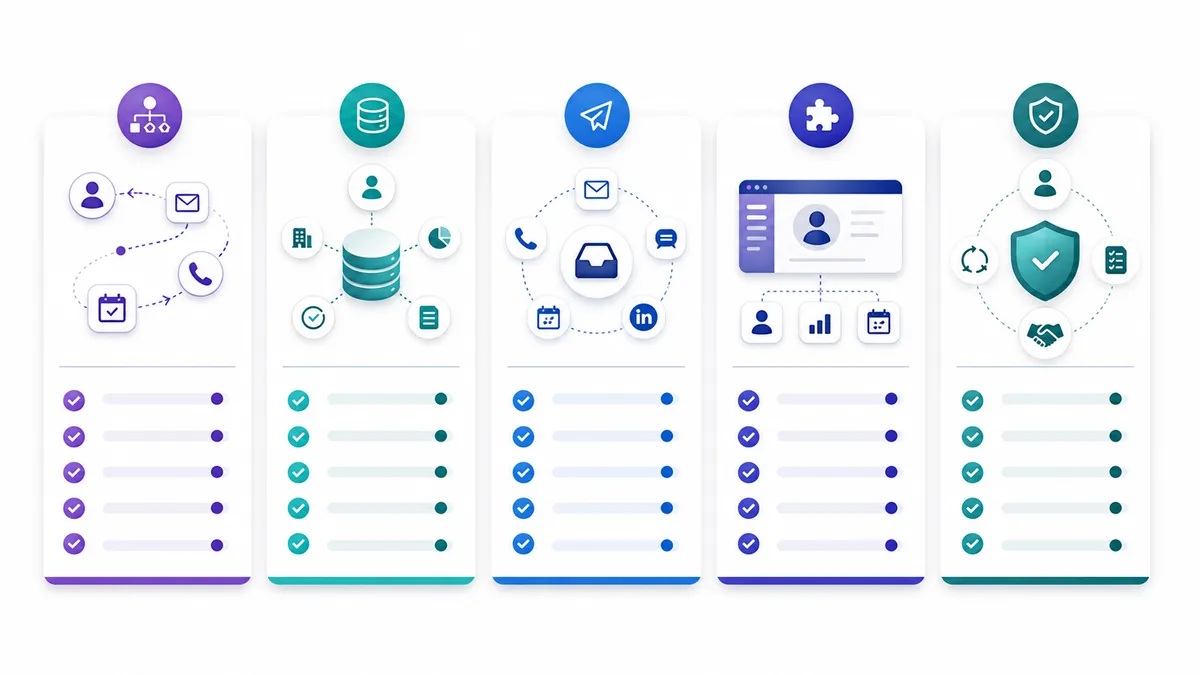
If inbound qualification is the broken workflow, start with Alim. If outbound pipeline creation is the problem, start with Vera. If you want to map either path against your own process, book a GrowthEffect demo. If this comparison is mainly about cost and operating model, use the pricing page as the secondary step.
If you need a lower-friction step before the demo, use the AI SDR Readiness Checklist to score workflow ownership, data quality, review load, and handoff discipline across the shortlist.
Channel Controls Still Matter
The best AI sales automation tool is not the one that creates the most activity. It is the one that keeps the workflow governable.
For email-heavy workflows, Google still expects authenticated sending, low spam rates, and one-click unsubscribe where bulk-sender rules apply. The FTC still expects truthful headers, honest subject lines, and honored opt-outs. If a tool comparison ignores these controls, it is comparing demo output rather than production readiness.
Use this buying filter:
- Can the tool suppress bad-fit records before outreach starts?
- Can it stop or reroute automation when a real reply arrives?
- Can it hand clean context into CRM instead of only logging activity?
- Can a human review strategic or risky accounts before the message leaves?
FAQ
What are AI sales automation tools?
AI sales automation tools use AI to automate or assist sales work such as prospecting, enrichment, lead scoring, personalized outreach, inbound response, follow-up, routing, CRM updates, and meeting handoff.
What is the best AI sales automation tool?
There is no single best tool for every team. GrowthEffect is best for companies that want AI sales employees for inbound and outbound first-touch work. Apollo and Clay are stronger for data and enrichment. Outreach and Salesloft are stronger for revenue orchestration. HubSpot and Salesforce are stronger when the CRM is already the operating system.
Are AI SDR tools the same as sales engagement platforms?
No. AI SDR tools try to perform SDR work such as sourcing, outreach, follow-up, and booking meetings. Sales engagement platforms help teams execute and govern outreach workflows across reps, sequences, activities, and pipeline.
Can AI sales automation replace SDRs?
AI can replace or reduce repetitive first-touch SDR workload, but it should not replace the full sales function. Humans should still own complex discovery, closing, negotiation, relationship management, and strategic accounts.
Should I choose an AI SDR or a CRM-native AI platform?
Choose an AI SDR if your main problem is first-touch sales execution. Choose CRM-native AI if your CRM data is strong and your main need is automation inside HubSpot or Salesforce workflows.
Leave a Reply